Measuring SARS-CoV-2 neutralizing antibody activity using pseudotyped and chimeric viruses
- PMID: 32692348
- PMCID: PMC7372514
- DOI: 10.1084/jem.20201181
Measuring SARS-CoV-2 neutralizing antibody activity using pseudotyped and chimeric viruses
Abstract
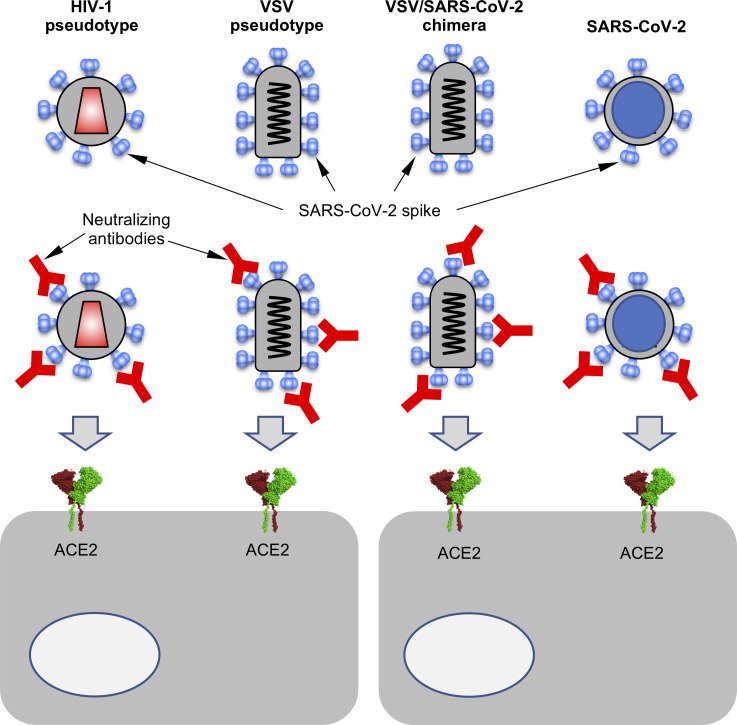
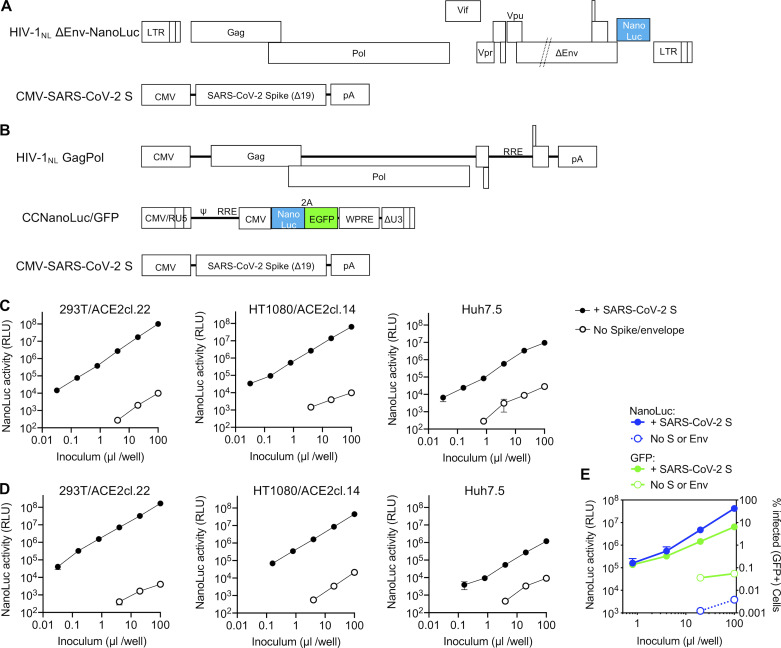
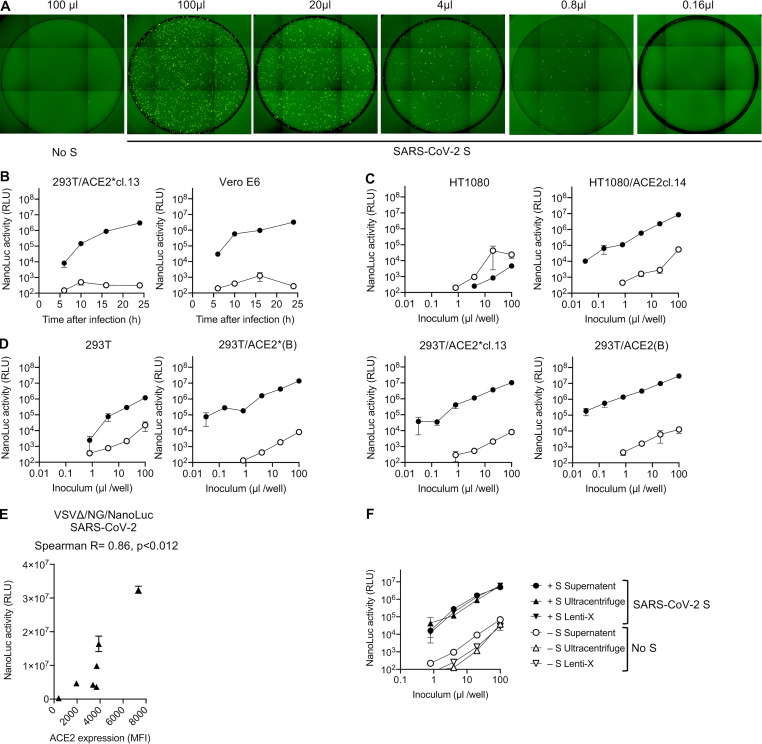
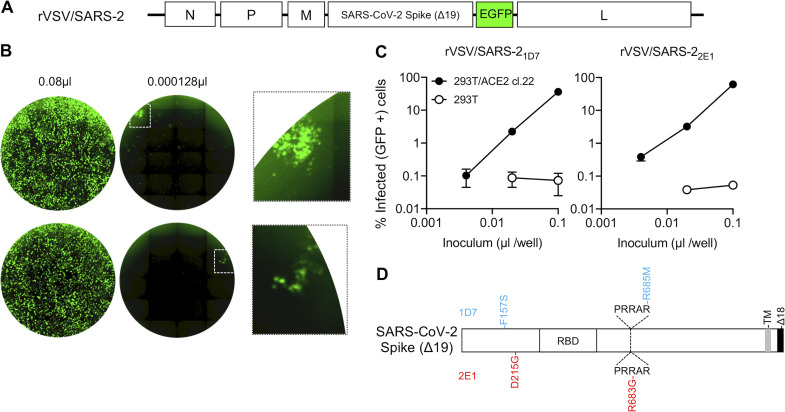
The emergence of SARS-CoV-2 and the ensuing explosive epidemic of COVID-19 disease has generated a need for assays to rapidly and conveniently measure the antiviral activity of SARS-CoV-2-specific antibodies. Here, we describe a collection of approaches based on SARS-CoV-2 spike-pseudotyped, single-cycle, replication-defective human immunodeficiency virus type-1 (HIV-1), and vesicular stomatitis virus (VSV), as well as a replication-competent VSV/SARS-CoV-2 chimeric virus. While each surrogate virus exhibited subtle differences in the sensitivity with which neutralizing activity was detected, the neutralizing activity of both convalescent plasma and human monoclonal antibodies measured using each virus correlated quantitatively with neutralizing activity measured using an authentic SARS-CoV-2 neutralization assay. The assays described herein are adaptable to high throughput and are useful tools in the evaluation of serologic immunity conferred by vaccination or prior SARS-CoV-2 infection, as well as the potency of convalescent plasma or human monoclonal antibodies.
© 2020 Schmidt et al.
Conflict of interest statement
Disclosures: F. Schmidt reported a patent to VSV/SARS-CoV-2 chimeric virus pending. Y. Weisblum reported a patent to patent on VSV/SARS-CoV-2 chimeric virus pending. D.F. Robbiani reported a patent to monoclonal antibodies against SARS-CoV-2 pending. M.C. Nussenzweig reported a patent to anti-SARS-2 antibodies pending, "Rockefeller University," and is an inventor on the anti-SARS-2 antibody patent that has been submitted by the Rockefeller University. P.D. Bieniasz reported a patent to VSV/SARS-CoV-2 patent pending. No other disclosures were reported.
Figures


Update of
-
Measuring SARS-CoV-2 neutralizing antibody activity using pseudotyped and chimeric viruses.bioRxiv [Preprint]. 2020 Jun 9:2020.06.08.140871. doi: 10.1101/2020.06.08.140871. bioRxiv. 2020. Update in: J Exp Med. 2020 Nov 2;217(11):e20201181. doi: 10.1084/jem.20201181. PMID: 32577658 Free PMC article. Updated. Preprint.
References
-
- Adachi A., Gendelman H.E., Koenig S., Folks T., Willey R., Rabson A., and Martin M.A.. 1986. Production of acquired immunodeficiency syndrome-associated retrovirus in human and nonhuman cells transfected with an infectious molecular clone. J. Virol. 59:284–291. 10.1128/JVI.59.2.284-291.1986 - DOI - PMC - PubMed
-
- Bainbridge J.W., Stephens C., Parsley K., Demaison C., Halfyard A., Thrasher A.J., and Ali R.R.. 2001. In vivo gene transfer to the mouse eye using an HIV-based lentiviral vector; efficient long-term transduction of corneal endothelium and retinal pigment epithelium. Gene Ther. 8:1665–1668. 10.1038/sj.gt.3301574 - DOI - PubMed
-
- Barnes C.O., West A.P. Jr., Huey-Tubman K.E., Hoffmann M.A.G., Sharaf N.G., Hoffman P.R., Koranda N., Gristick H.B., Gaebler C., Muecksch F., et al. 2020. Structures of human antibodies bound to SARS-CoV-2 spike reveal common epitopes and recurrent features of antibodies. Cell. S0092-8674(20)30757-1 10.1016/j.cell.2020.06.025 - DOI - PMC - PubMed
Publication types
MeSH terms
Substances
Grants and funding
LinkOut - more resources
Full Text Sources
Other Literature Sources
Medical
Miscellaneous