


How countries can reduce child stunting at scale: lessons from exemplar countries
- PMID: 32692800
- PMCID: PMC7487427
- DOI: 10.1093/ajcn/nqaa153
How countries can reduce child stunting at scale: lessons from exemplar countries
Abstract
Background: Child stunting and linear growth faltering have declined over the past few decades and several countries have made exemplary progress.
Objectives: To synthesize findings from mixed methods studies of exemplar countries to provide guidance on how to accelerate reduction in child stunting.
Methods: We did a qualitative and quantitative synthesis of findings from existing literature and 5 exemplar country studies (Nepal, Ethiopia, Peru, Kyrgyz Republic, Senegal). Methodology included 4 broad research activities: 1) a series of descriptive analyses of cross-sectional data from demographic and health surveys and multiple indicator cluster surveys; 2) multivariable analysis of quantitative drivers of change in linear growth; 3) interviews and focus groups with national experts and community stakeholders and mothers; and 4) a review of policy and program evolution related to nutrition.
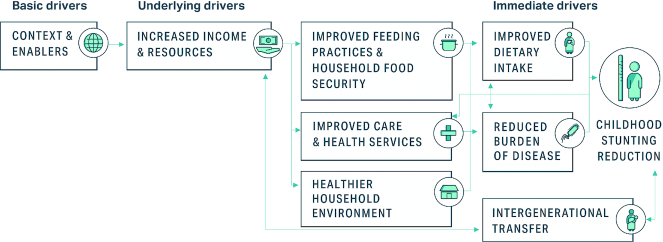
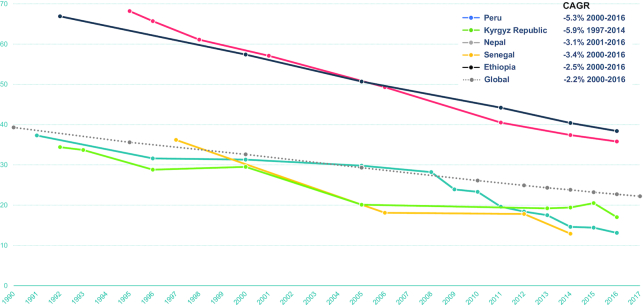
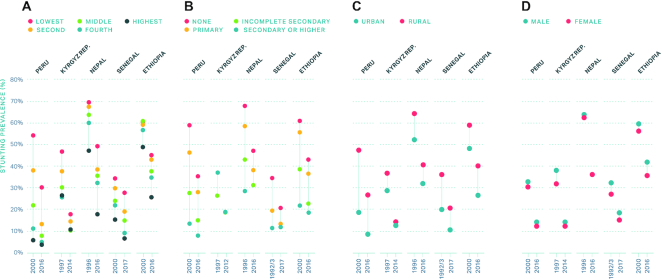
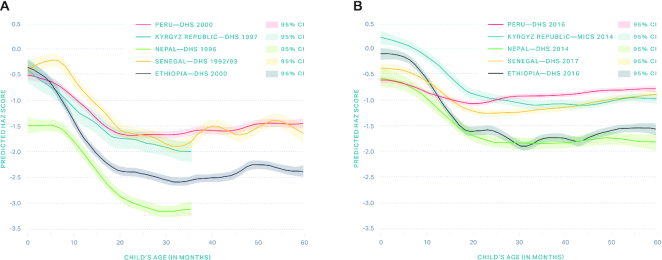
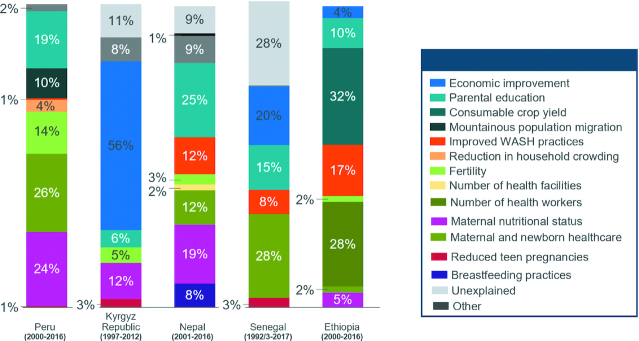
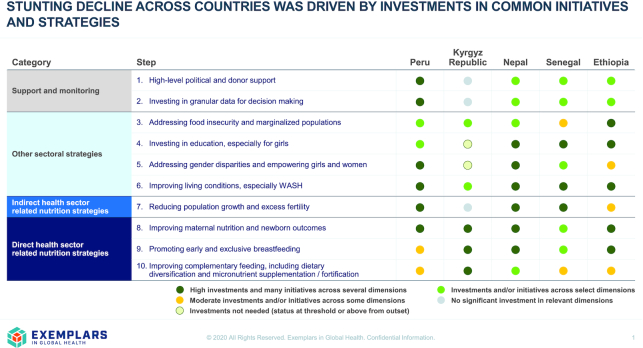
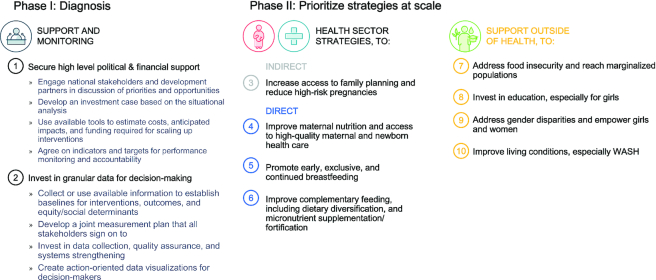
Results: Several countries have dramatically reduced child stunting prevalence, with or without closing geographical, economic, and other population inequalities. Countries made progress through interventions from within and outside the health sector, and despite significant heterogeneity and differences in context, contributions were comparable from health and nutrition sectors (40% of change) and other sectors (50%), previously called nutrition-specific and -sensitive strategies. Improvements in maternal education, maternal nutrition, maternal and newborn care, and reductions in fertility/reduced interpregnancy intervals were strong contributors to change. A roadmap to reducing child stunting at scale includes several steps related to diagnostics, stakeholder consultations, and implementing direct and indirect nutrition interventions related to the health sector and nonhealth sector .
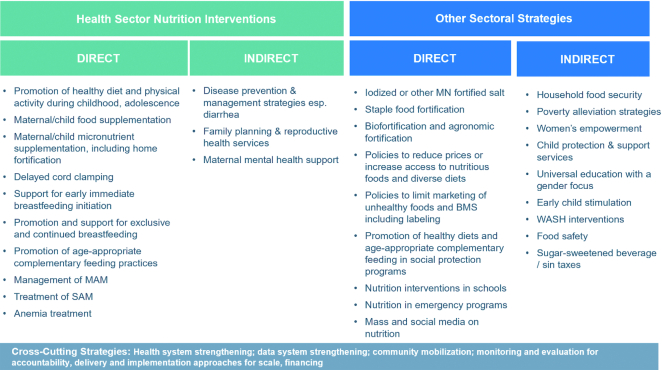
Conclusions: Our results show that child stunting reduction is possible even in diverse and challenging contexts. We propose that our framework of organizing nutrition interventions as direct/indirect and inside/outside the health sector should be considered when mapping causal pathways of child stunting and planning interventions and strategies to accelerate stunting reduction to achieve the 2030 Sustainable Development Goals.
Keywords: children; exemplar; linear growth; mixed methods; nutrition; stunting.
Copyright © The Author(s) on behalf of the American Society for Nutrition 2020.
Figures
References
-
- Victora CG, De Onis M, Hallal PC, Blössner M, Shrimpton R. Worldwide timing of growth faltering: revisiting implications for interventions. Pediatrics. 2010;125(3):e473–80. - PubMed
-
- Leroy JL, Ruel M, Habicht J-P, Frongillo EA. Linear growth deficit continues to accumulate beyond the first 1000 days in low- and middle-income countries: global evidence from 51 national surveys. J Nutr. 2014;144:1460–6. - PubMed
-
- World Health Organization WHO global targets 2025: poster. [Internet] 2012; [cited January 16, 2020]. Available from: https://www.who.int/nutrition/topics/nutrition_globaltargets2025/en/.
Publication types
MeSH terms
LinkOut - more resources
Full Text Sources
Medical
Miscellaneous
