


Immunogenic Potency of Formalin and Heat Inactivated E. coli O157:H7 in Mouse Model Administered by Different Routes
- PMID: 32695283
- PMCID: PMC7368119
Immunogenic Potency of Formalin and Heat Inactivated E. coli O157:H7 in Mouse Model Administered by Different Routes
Abstract
Background: Enterohemorrhagic Escherichia coli (E. coli) (EHEC) O157:H7 is a major foodborne pathogen causing severe disease in humans worldwide. Cattle are important reservoirs of E. coli O157:H7 and developing a specific immunity in animals would be invaluable. The administration of Whole Cell Vaccines (WCV) is a well-established method of vaccination against bacterial infections. Route of administration, inactivation and using suitable adjuvant have significant effects on the characteristics and efficacy of WCV.
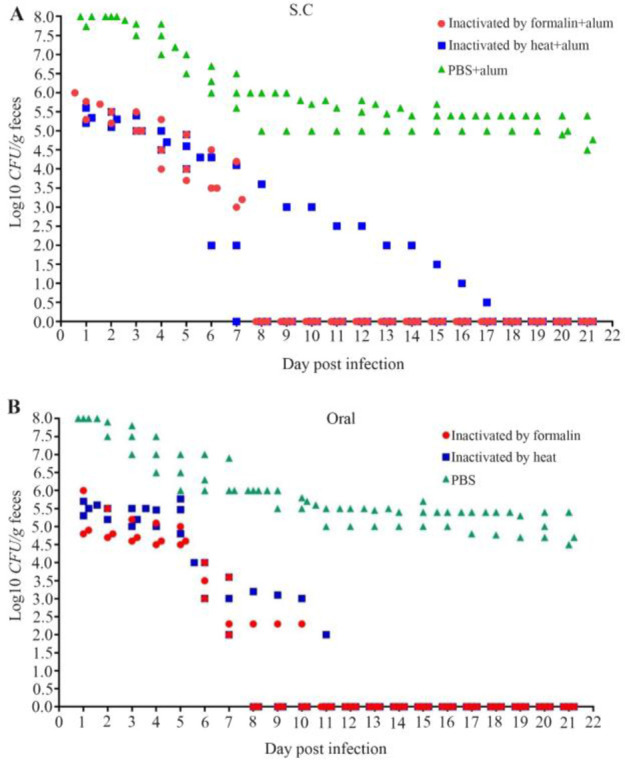
Methods: In the present study, an attempt was made to evaluate the immunogenic potency of heat and formalin inactivated cells administered orally and subcutaneously in mouse model by ELISA. Mice pretreated with streptomycin were used as a model to evaluate the efficacy of subcutaneous versus oral administration of the vaccine. Following immunization, mice were infected with E. coli O157:H7 and feces were monitored for shedding.
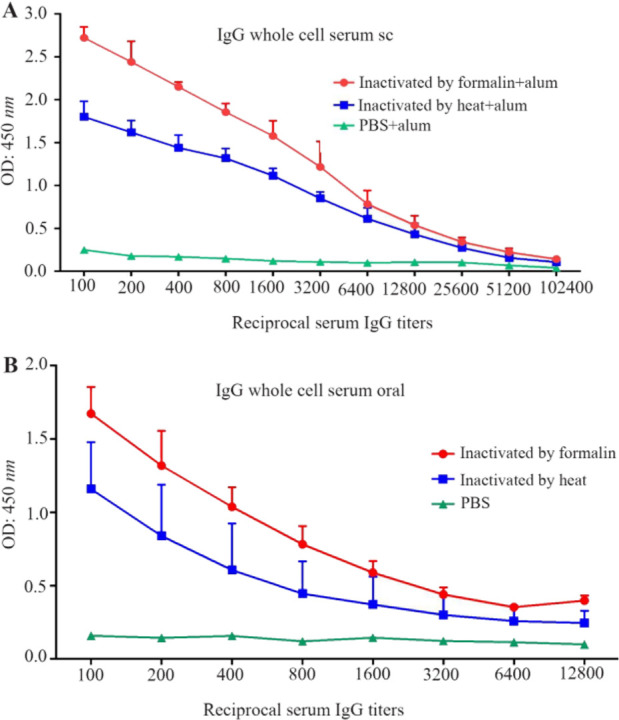
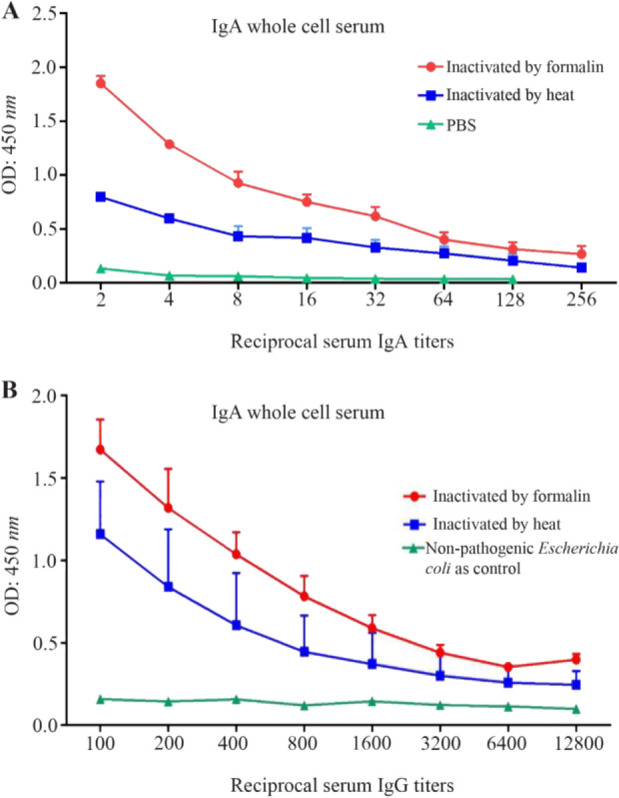
Results: Both forms of inactivated cells induced immune response and hence protection against infectious diseases caused by E. coli O157:H7. However, formalin inactivated cells of E. coli O157:H7 showed superior antigenicity compared to heat inactivated cells. Subcutaneous immunization of mice with both heat and formalin inactivated E. coli O157:H7 induced significant specific levels of IgG antibodies but did not lead to significant antigen-specific IgA rise in feces, whereas oral immunization elicited significant levels of IgG antibodies with some animals developing antigen-specific IgA in feces.
Conclusion: Inactivated E. coli O157:H7 is highly immunogenic and can induce protective immune responses via oral immunization.
Keywords: Escherichia coli O157:H7; Formaldehyde; Hot temperature; Immunization; Mice; Vaccines.
Copyright© 2020 Avicenna Research Institute.
Conflict of interest statement
Conflict of Interest The authors declare that they have no conflict of interest.
Figures
References
-
- McNeilly TN, Mitchell MC, Rosser T, McAteer S, Low JC, Smith DG, et al. Immunization of cattle with a combination of purified intimin-531, EspA and Tir significantly reduces shedding of Escherichia coli O157: H7 following oral challenge. Vaccine 2010;28(5):1422–1428. - PubMed
-
- Yousif A, Al-Taai N, Mahmood N. Humoral and cellular immune response induced by E. coli [O157: H7 and O157: H7: K99] vaccines in mice. Int J Immunol Res 2013;3(1):17.
LinkOut - more resources
Full Text Sources
Molecular Biology Databases
Miscellaneous