


The impact of a multifaceted intervention to reduce potentially inappropriate prescribing among discharged older adults: a before-and-after study
- PMID: 32695426
- PMCID: PMC7367269
- DOI: 10.1186/s40545-020-00236-0
The impact of a multifaceted intervention to reduce potentially inappropriate prescribing among discharged older adults: a before-and-after study
Abstract
Background: Potentially inappropriate prescribing (PIP) is associated with the incidence of adverse drug reactions, drug-related hospitalization and other negative outcomes in older adults. After hospitalization, older adults might be discharged with several types of PIPs. Studies have found that the lack of healthcare professionals' (HCPs) knowledge regarding PIP is one of the major contributing factors in this issue. The purpose of this study is to investigate the impact of a multifaceted intervention on physicians' and clinical pharmacists' behavior regarding potentially inappropriate medication (PIM) and potential prescribing omission (PPO) among hospitalized older adults.
Methods: This is a before-and-after study that took place in a tertiary Malaysian hospital. Discharge medications of patients ≥65 years old were reviewed to identify PIMs/PPOs using version 2 of the STOPP/START criteria. The prevalence and pattern of PIM/PPO before and after the intervention were compared. The intervention targeted the physicians and clinical pharmacists and it consisted of academic detailing and a newly developed smartphone application (app).
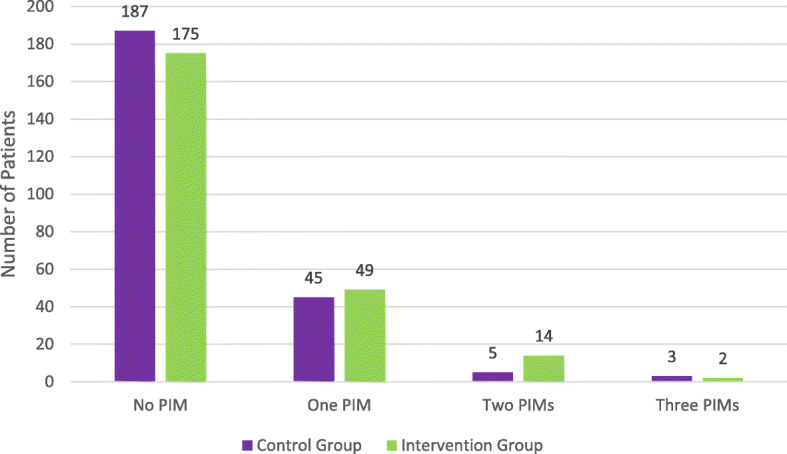
Results: The study involved 240 patients before (control group) and 240 patients after the intervention. The prevalence of PIM was 22% and 27% before and after the intervention, respectively (P = 0.213). The prevalence of PPO in the intervention group was significantly lower than that in the control group (42% Vs. 53.3%); P = 0.014. This difference remained statistically significant after controlling for other variables (P = 0.015). The intervention was effective in reducing the two most common PPOs; the omission of vitamin D supplements in patients with a history of falls (P = 0.001) and the omission of angiotensin converting enzyme inhibitor in patients with coronary artery disease (P = 0.03).
Conclusions: The smartphone app coupled with academic detailing was effective in reducing the prevalence of PPO at discharge. However, it did not significantly affect the prevalence or pattern of PIM.
Keywords: Academic detailing; Older adults; Potential prescribing omission; Potentially inappropriate medication; Smartphone app.
© The Author(s) 2020.
Conflict of interest statement
Competing interestsThe authors disclose no conflict of interest.
Figures

References
-
- MN OC, Gallagher P, O’Mahony D. Inappropriate Prescribing: Criteria. Detect Prevent Drugs Aging. 2012;29(6):437–452. - PubMed
-
- Weir DL, Lee TC, McDonald EG, Motulsky A, Abrahamowicz M, Morgan S, et al.. Both New and Chronic Potentially Inappropriate Medications Continued at Hospital Discharge Are Associated With Increased Risk of Adverse Events. J Am Geriatr Soc. 2020;00(00). Available from: http://doi.wiley.com/10.1111/jgs.16413 [cited 2020 18 May]. - DOI - PMC - PubMed
-
- Komagamine J, Yabuki T, Kobayashi M. Association between potentially inappropriate medications at discharge and unplanned readmissions among hospitalised elderly patients at a single Centre in Japan: a prospective observational study. BMJ Open. 2019;9(11):1–8. doi: 10.1136/bmjopen-2019-032574. - DOI - PMC - PubMed
LinkOut - more resources
Full Text Sources
