


Cytokine storm syndrome in coronavirus disease 2019: A narrative review
- PMID: 32696489
- PMCID: PMC7404514
- DOI: 10.1111/joim.13144
Cytokine storm syndrome in coronavirus disease 2019: A narrative review
Abstract
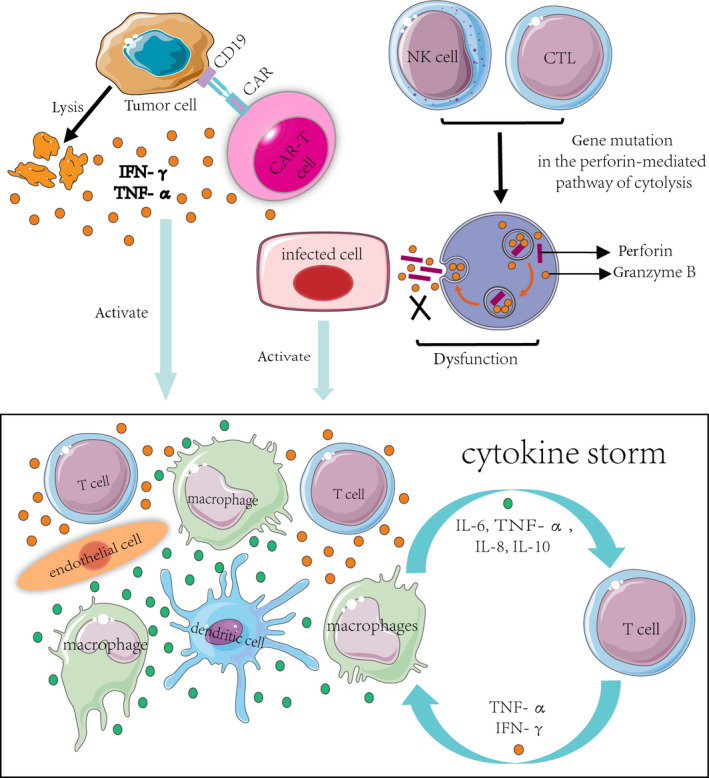
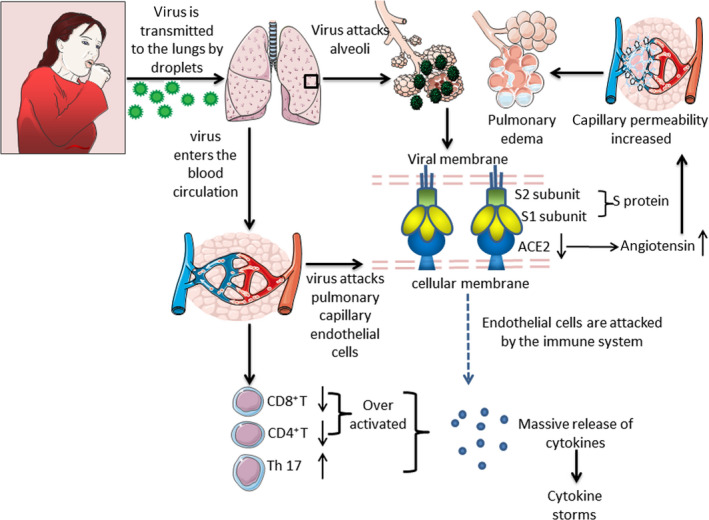
Cytokine storm syndrome (CSS) is a critical clinical condition induced by a cascade of cytokine activation, characterized by overwhelming systemic inflammation, hyperferritinaemia, haemodynamic instability and multiple organ failure (MOF). At the end of 2019, the disease caused by severe acute respiratory syndrome coronavirus 2 (SARS-CoV-2) emerged in Wuhan, China, and rapidly developed into a global pandemic. More and more evidence shows that there is a dramatic increase of inflammatory cytokines in patients with COVID-19, suggesting the existence of cytokine storm in some critical illness patients. Here, we summarize the pathogenesis, clinical manifestation of CSS, and highlight the current understanding about the recognition and potential therapeutic options of CSS in COVID-19.
Keywords: COVID-19; SARS-CoV-2; cytokine storm syndrome; recognition; treatment.
© 2020 The Association for the Publication of the Journal of Internal Medicine.
Conflict of interest statement
The authors declare that the research was conducted in the absence of any commercial or financial relationships that could be construed as a potential conflict of interest.
Figures
References
-
- Behrens EM, Koretzky GA. Review: cytokine storm syndrome: looking toward the precision medicine era. Arthritis Rheumatol 2017; 69: 1135–43. - PubMed
-
- Chen H, Wang F, Zhang P et al. Management of cytokine release syndrome related to CAR‐T cell therapy. Front Med 2019; 13: 610–7. - PubMed
-
- Chousterman BG, Swirski FK, Weber GF. Cytokine storm and sepsis disease pathogenesis. Semin Immunopathol 2017; 39: 517–28. - PubMed
-
- Cron RQ, Behrens EM. Cytokine storm syndrome. Switzerland: Springer Nature, 2019.
Publication types
MeSH terms
Substances
Grants and funding
- 81720108007/the key interantional cooperation program of China National Natural Science Foundation/International
- 81670696/the key interantional cooperation program of China National Natural Science Foundation/International
- 2018YFC1314000/the key research project of the Ministry of China Scinece and Technology/International
LinkOut - more resources
Full Text Sources
Medical
Miscellaneous
