


Effect of concurrent organic cation transporter blockade on norepinephrine clearance inhibiting- and antidepressant-like actions of desipramine and venlafaxine
- PMID: 32697958
- PMCID: PMC10092728
- DOI: 10.1016/j.ejphar.2020.173285
Effect of concurrent organic cation transporter blockade on norepinephrine clearance inhibiting- and antidepressant-like actions of desipramine and venlafaxine
Abstract
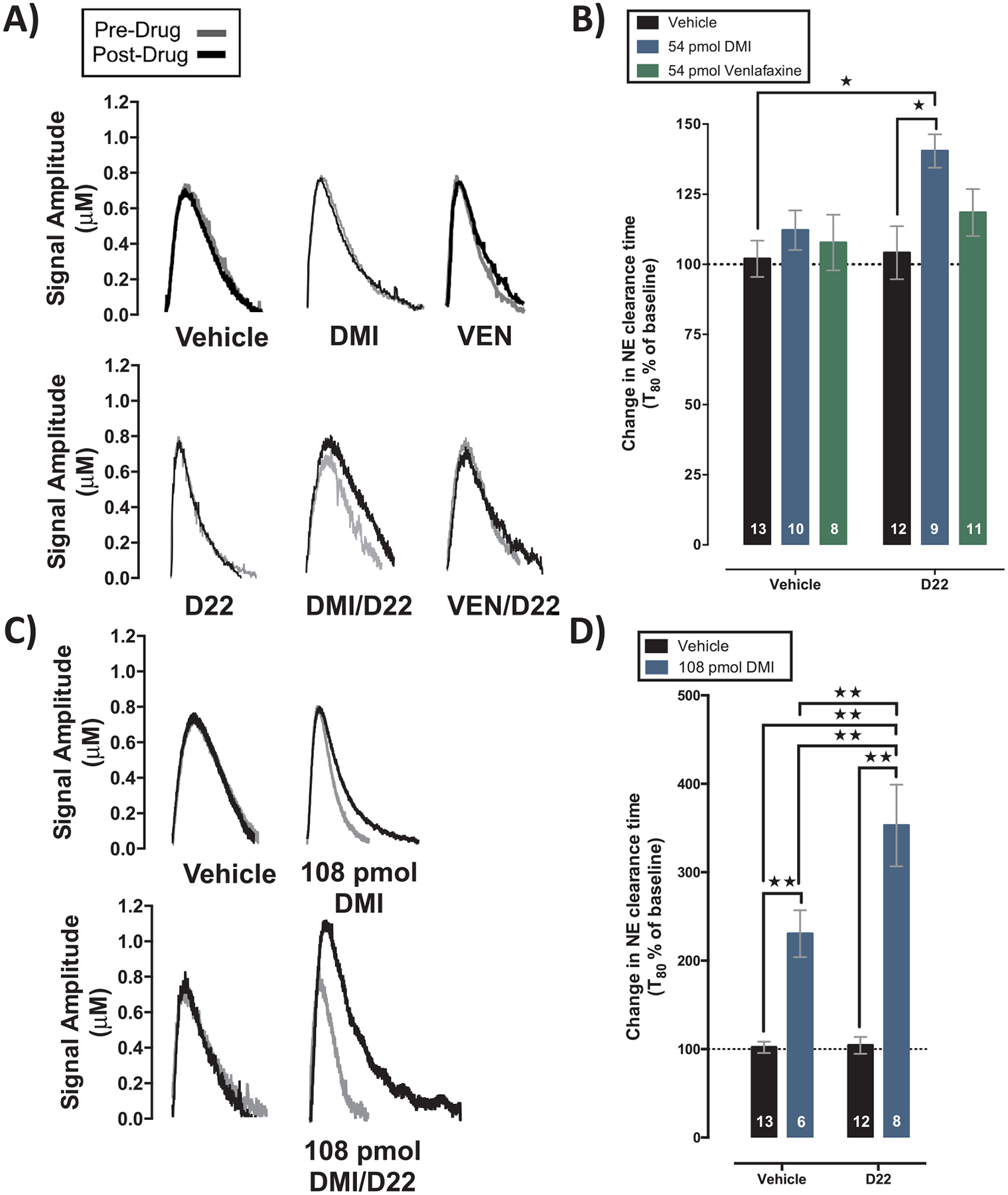
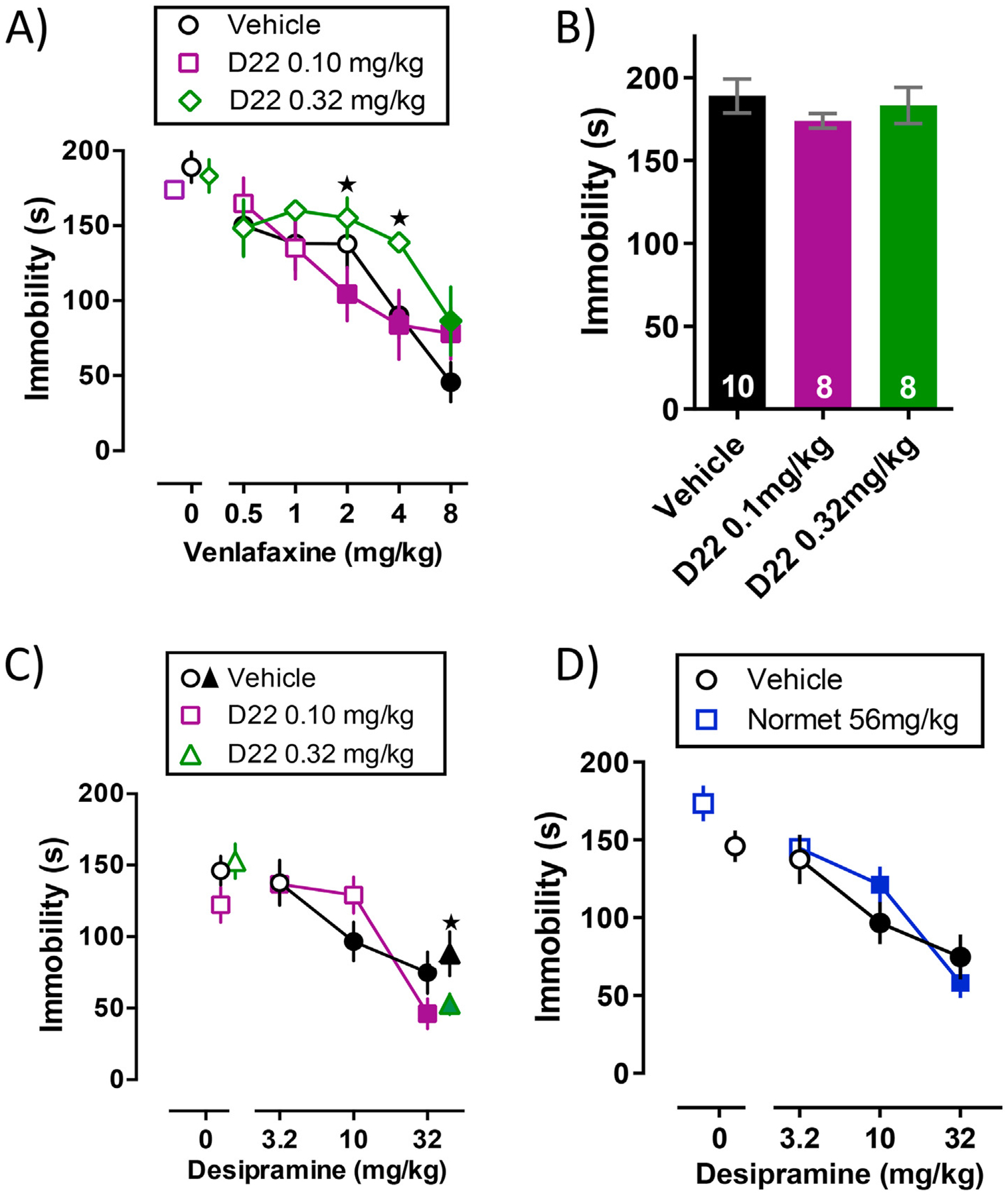
Depression is a major health problem for which most patients are not effectively treated. This underscores a need to identify new targets for the development of antidepressants with improved efficacy. Studies have shown that blockade of low-affinity/high-capacity transporters, such as organic cation transporters (OCTs) and the plasma membrane monoamine transporter (PMAT), with decynium-22 can produce antidepressant-like effects and inhibit serotonin clearance in brain when the serotonin transporter is pharmacologically or genetically compromised. In vitro studies show that OCTs/PMAT are also capable of norepinephrine transport, raising the possibility that decynium-22 might enhance the antidepressant-like effects of norepinephrine transporter inhibitors. Using in vivo electrochemistry, we show that local administration of decynium-22 into dentate gyrus of hippocampus enhanced the ability of the norepinephrine transporter blocker, desipramine, but not the dual norepinephrine/serotonin transporter blocker venlafaxine, to inhibit norepinephrine clearance. In parallel, systemic administration of decynium-22 (0.32 mg/kg) enhanced the antidepressant-like effects of desipramine (32 mg/kg), but not those of venlafaxine, in the tail suspension test, underscoring the heterogeneous response of mice to antidepressants, including those that share similar mechanisms of action. Systemic administration of normetanephrine, a potent blocker of OCT3, failed to potentiate the antidepressant-like effects of desipramine, suggesting that the actions of decynium-22 to augment the antidepressant-like effects of desipramine are likely mediated by another OCT isoform and/or PMAT. Taken together with existing literature, concurrent blockade of OCTs and/or PMAT merits further investigation as an adjunctive therapeutic for desipramine-like antidepressant drugs.
Keywords: Antidepressant; Decynium-22; Desipramine; Norepinephrine transporter; Serotonin transporter; Venlafaxine.
Copyright © 2020. Published by Elsevier B.V.
Conflict of interest statement
Declaration of competing interest
The research was conducted in the absence of any commercial or financial relationships that could be construed as a potential conflict of interest.
Figures
References
-
- Bacq A, Balasse L, Biala G, Guiard B, Gardier AM, Schinkel A, Louis F, Vialou V, Martres M-P, Chevarin C, Hamon M, Giros B, Gautron S, 2012. Organic cation transporter 2 controls brain norepinephrine and serotonin clearance and antidepressant response. Mol. Psychiatr 17, 926–939. - PubMed
-
- Baganz N, Horton RE, Calderon AS, Owens WA, Munn JL, Watts LT, Koldzic-Zivanovic N, Jeske NA, Koek W, Toney GM, Daws LC, 2008. Organic cation transporter 3: keeping the brake on extracellular serotonin in serotonin-transporter-deficient mice. Proc. Natl. Acad. Sci. U.S.A 105, 18976–18981. - PMC - PubMed
-
- Castagné V, Moser P, Roux S, Porsolt RD, 2011. Rodent models of depression: forced swim and tail suspension behavioral despair tests in rats and mice. Curr. Protoc. Neurosci Chapter 8, Unit 8.10A. - PubMed
MeSH terms
Substances
Grants and funding
LinkOut - more resources
Full Text Sources
Medical
