


A Randomized Controlled Study to Evaluate the Safety and Reactogenicity of a Novel rVLP-Based Plant Virus Nanoparticle Adjuvant Combined with Seasonal Trivalent Influenza Vaccine Following Single Immunization in Healthy Adults 18-50 Years of Age
- PMID: 32698532
- PMCID: PMC7564144
- DOI: 10.3390/vaccines8030393
A Randomized Controlled Study to Evaluate the Safety and Reactogenicity of a Novel rVLP-Based Plant Virus Nanoparticle Adjuvant Combined with Seasonal Trivalent Influenza Vaccine Following Single Immunization in Healthy Adults 18-50 Years of Age
Abstract
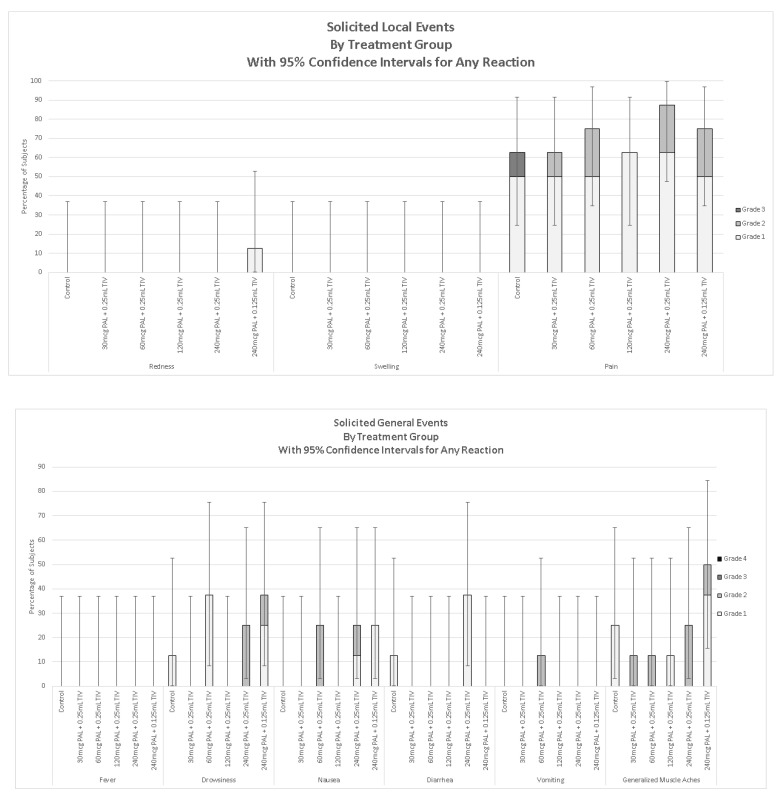
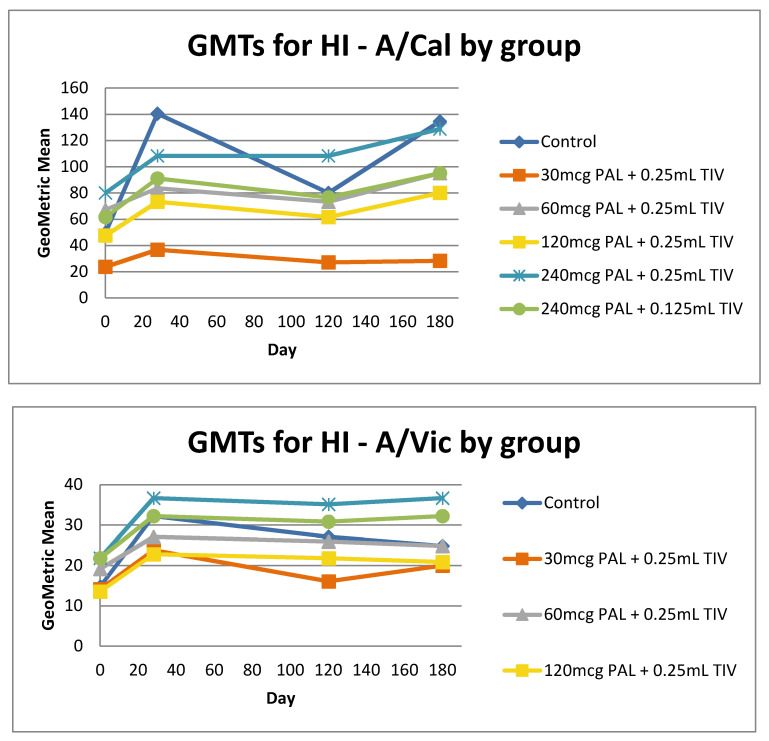
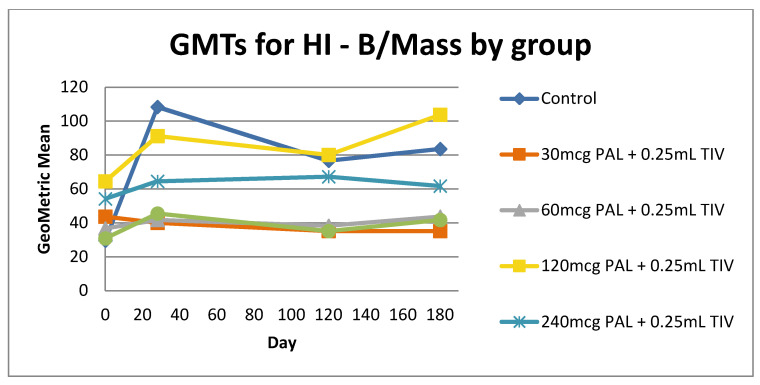
Inactivated influenza vaccines efficacy is variable and often poor. We conducted a phase 1 trial (NCT02188810), to assess the safety and immunogenicity of a novel nanoparticle Toll-like receptor 7/8 agonist adjuvant (Papaya Mosaic Virus) at different dose levels combined with trivalent influenza vaccine in healthy persons 18-50 years of age. Hemagglutination-inhibition assays, antibody to Influenza A virus nucleoprotein and peripheral blood mononuclear cells for measurement of interferon-gamma ELISPOT response to influenza antigens, Granzyme B and IFNγ:IL-10 ratio were measured. The most common adverse events were transient mild to severe injection site pain and no safety signals were observed. A dose-related adjuvant effect was observed. Geometric mean hemagglutination-inhibition titers increased at day 28 in most groups and waned over time, but fold-antibody responses were poor in all groups. Cell mediated immunity results were consistent with humoral responses. The Papaya Mosaic Virus adjuvant in doses of 30 to 240 µg combined with reduced influenza antigen content was safe with no signals up to 3 years after vaccination. A dose-related adjuvant effect was observed and immunogenicity results suggest that efficacy study should be conducted in influenza antigen-naïve participants.
Keywords: adjuvants; immunogenicity; influenza vaccines.
Conflict of interest statement
J.L., S.H. and S.M. have received research funding for influenza vaccines from GlaxoSmithKline, S.P., Novavax, the Public Health Agency of Canada and the Canadian Institutes of Health Research. Board of SAH is a member of the Advisory Boards of Prevent and Folia Biotech. D.L. and P.S. are shareholders of the company Folia Biotech inc. E.P. and L.M. were PREVENT employees at the time of the study. J.L.’s institution has received honoraria for her participation in influenza vaccine advisory boards for Sanofi and for influenza vaccine studies from Sanofi, Medicago and GlaxoSmithKline.
Figures
References
-
- Reed C., Chaves S.S., Kirley P.D., Emerson R., Aragon D., Hancock E.B., Butler L., Baumbach J., Hollick G., Bennett N.M., et al. Estimating influenza disease burden from population-based surveillance data in the United States. PLoS ONE. 2015;10:e0118369. doi: 10.1371/journal.pone.0118369. - DOI - PMC - PubMed
-
- World Health Organization Influenza Vaccines. [(accessed on 3 March 2020)]; Available online: https://www.who.int/immunization/research/development/influenza/en/
-
- Grohskopf L.A., Alyanak E., Broder K.R., Walter E.B., Fry A.M., Jernigan D.B. Prevention and control of seasonal influenza with vaccines: Recommendations of the advisory committee on immunization practices—United States, 2019–2020 influenza season. MMWR Recomm. Rep. 2019;68:1–21. doi: 10.15585/mmwr.rr6803a1. - DOI - PMC - PubMed
LinkOut - more resources
Full Text Sources
