


Shared decision making in surgery: A scoping review of the literature
- PMID: 32700367
- PMCID: PMC7696205
- DOI: 10.1111/hex.13105
Shared decision making in surgery: A scoping review of the literature
Abstract
Background: Shared decision making (SDM) has been increasingly implemented to improve health-care outcomes. Despite the mixed efficacy of SDM to provide better patient-guided care, its use in surgery has not been studied. The aim of this study was to systematically review SDM application in surgery.
Design: The search strategy, developed with a medical librarian, included nine databases from inception until June 2019. After a 2-person title and abstract screen, full-text publications were analysed. Data collected included author, year, surgical discipline, location, study duration, type of decision aid, survey methodology and variable outcomes. Quantitative and qualitative cross-sectional studies, as well as RCTs, were included.
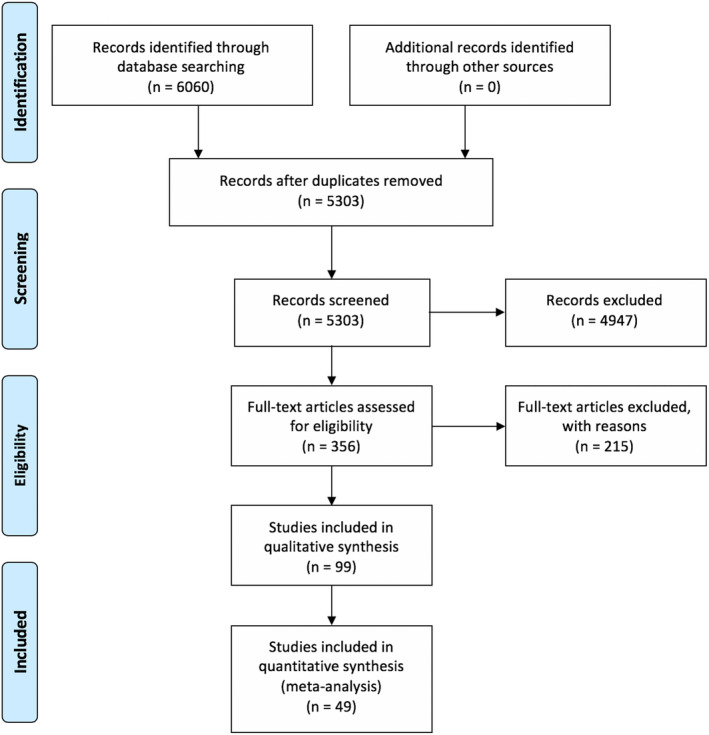
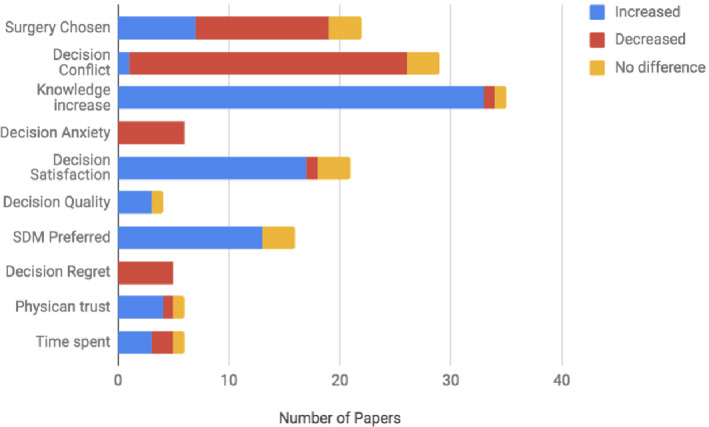
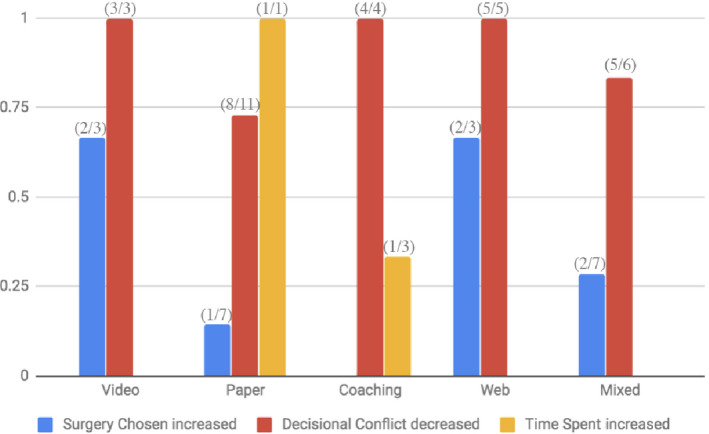
Results: A total of 6060 studies were retrieved. A total of 148 were included in the final review. The majority of the studies were in plastic surgery, followed by general surgery and orthopaedics. The use of SDM decreased surgical intervention rate (12 of 22), decisional conflict (25 of 29), and decisional regret (5 of 5), and increased decisional satisfaction (17 of 21), knowledge (33 of 35), SDM preference (13 of 16), and physician trust (4 of 6). Time increase per patient encounter was inconclusive. Cross-sectional studies showed that patients prefer shared treatment and surgical treatment varied less. The results of SDM per type of decision aid vary in terms of their outcome.
Conclusion: SDM in surgery decreases decisional conflict, anxiety and surgical intervention rates, while increasing knowledge retained decisional satisfaction, quality and physician trust. Surgical patients also appear to prefer SDM paradigms. SDM appears beneficial in surgery and therefore worth promoting and expanding in use.
Keywords: patient-centred care; shared decision making; surgery.
© 2020 The Authors. Health Expectations published by John Wiley & Sons Ltd.
Figures
References
-
- Charles C, Gafni A, Whelan T. Shared decision‐making in the medical encounter: what does it mean? (or it takes at least two to tango). Soc Sci Med. 1997;44(5):681‐692. - PubMed
-
- Joosten EAG, DeFuentes‐Merillas L, de Weert GH, Sensky T, van der Staak CPF, de Jong CAJ. Systematic review of the effects of shared decision‐making on patient satisfaction, treatment adherence and health status. Psychother Psychosom. 2008;77(4):219‐226. - PubMed
-
- O’Connor AM, Bennett CL, Stacey D, et al. Decision aids for people facing health treatment or screening decisions. Cochrane Database of Systematic Reviews. 200928(1). - PubMed
-
- O’Connor AM, Bennett CL, Stacey D, et al. Decision aids for people facing health treatment or screening decisions,In: The Cochrane Database of Systematic Reviews, 8 Hoboken, NJ: John Wiley and Sons; 2003.
Publication types
MeSH terms
LinkOut - more resources
Full Text Sources
