. 2020 Oct;68(10):2240-2248.
doi: 10.1111/jgs.16636. Epub 2020 Jul 23.

National Trends in Potentially Preventable Hospitalizations of Older Adults with Dementia

Affiliations

National Trends in Potentially Preventable Hospitalizations of Older Adults with Dementia

Timothy S Anderson et al. J Am Geriatr Soc. 2020 Oct.

Abstract

Background/objectives: Dementia is associated with higher healthcare expenditures, in large part due to increased hospitalization rates relative to patients without dementia. Data on contemporary trends in the incidence and outcomes of potentially preventable hospitalizations of patients with dementia are lacking.

Design: Retrospective cohort study using the National Inpatient Sample from 2012 to 2016.

Setting: U.S. acute care hospitals.

Participants: A total of 1,843,632 unique hospitalizations of older adults (aged ≥65 years) with diagnosed dementia.

Measurements: Annual trends in the incidence of hospitalizations for all causes and for potentially preventable conditions including acute ambulatory care sensitive conditions (ACSCs), chronic ACSCs, and injuries. In-hospital outcomes including mortality, discharge disposition, and hospital costs.

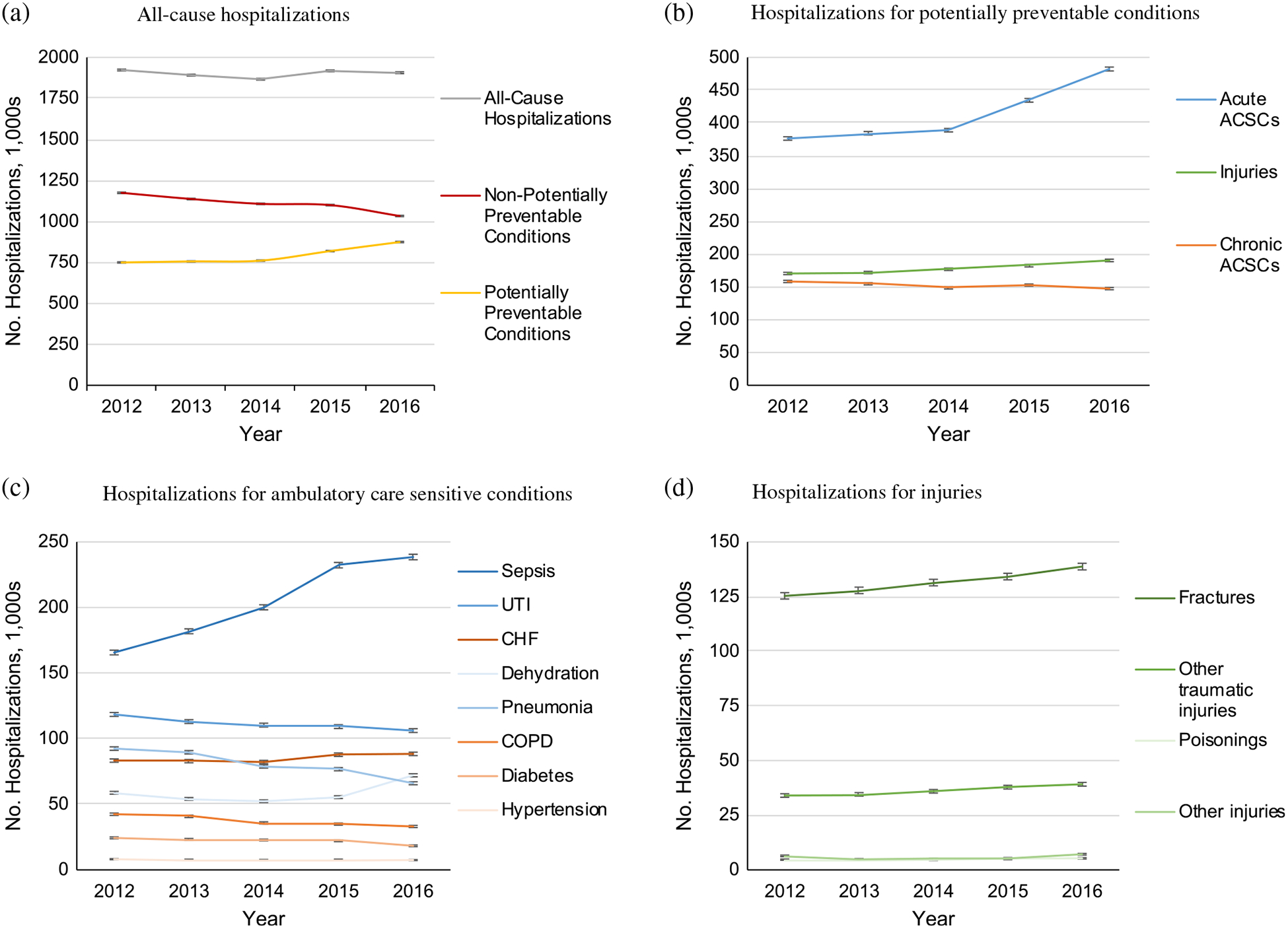
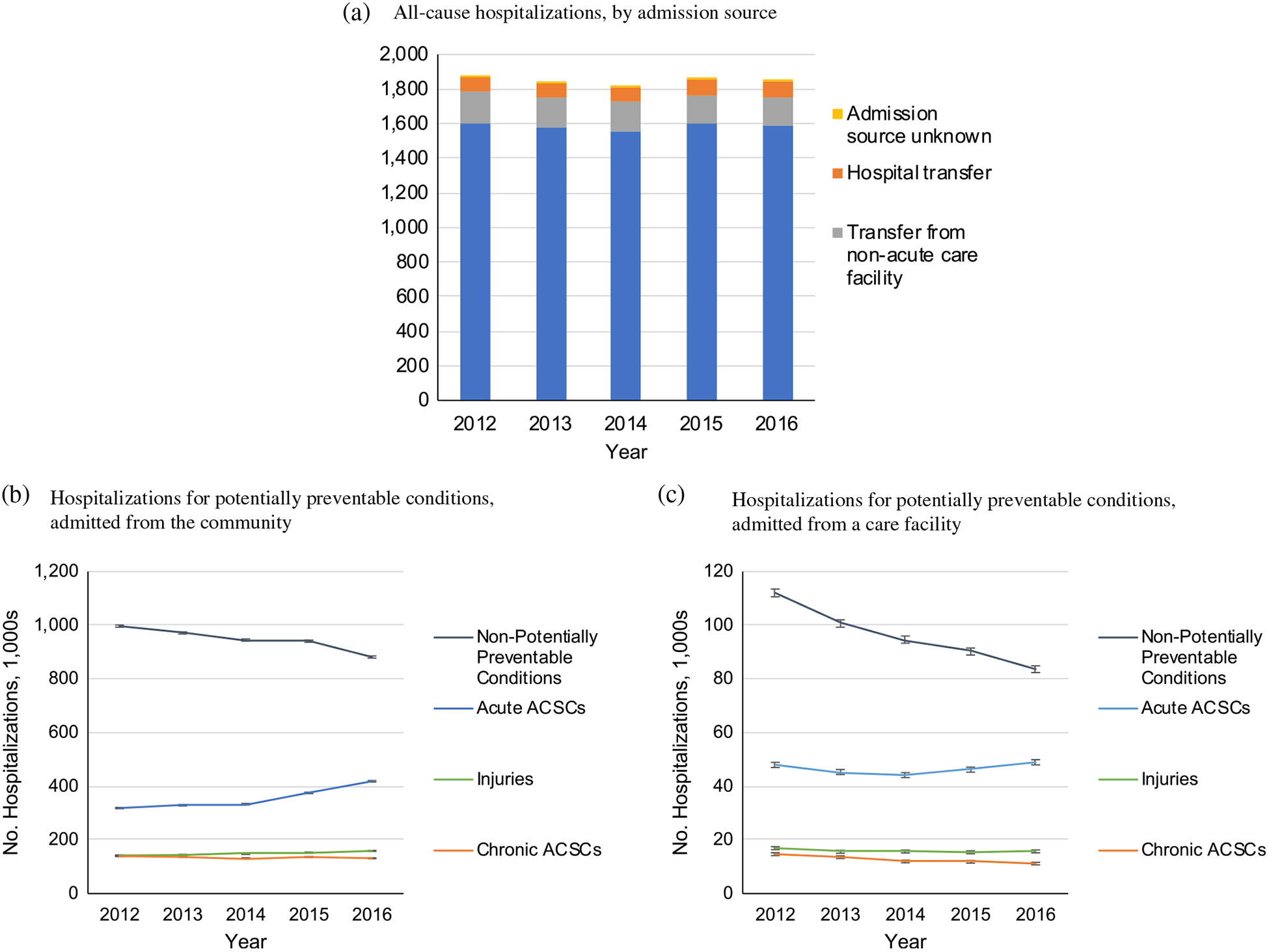
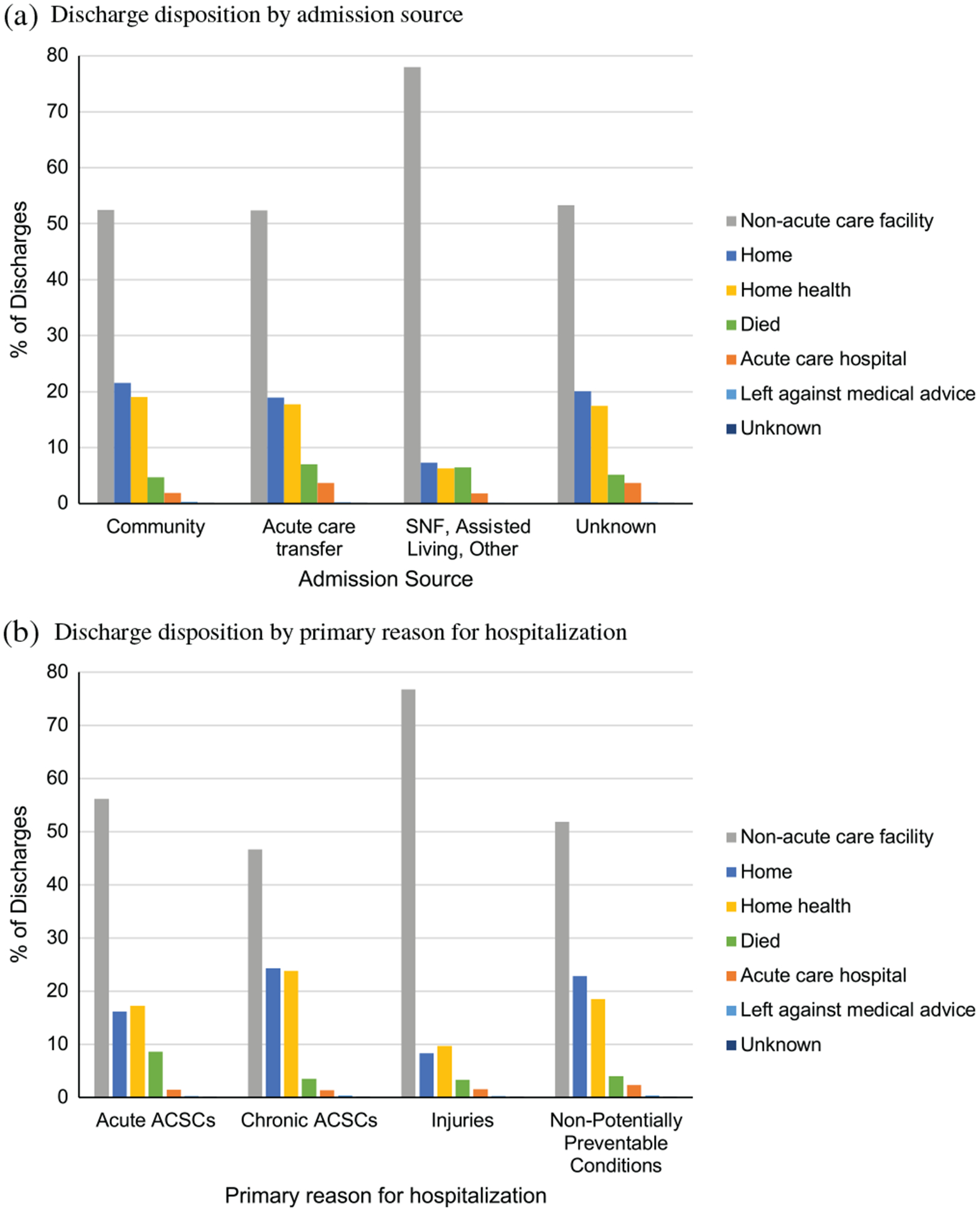
Results: The survey weighted sample represented an estimated 9.27 million hospitalizations for patients with diagnosed dementia (mean [standard deviation] age = 82.6 [6.7] years; 61.4% female). In total, 3.72 million hospitalizations were for potentially preventable conditions (40.1%), 2.07 million for acute ACSCs, .76 million for chronic ACSCs, and .89 million for injuries. Between 2012 and 2016, the incidence of all-cause hospitalizations declined from 1.87 million to 1.85 million per year (P = .04) while the incidence of potentially preventable hospitalizations increased from .75 million to .87 million per year (P < .001), driven by an increased number of hospitalizations of community-dwelling older adults. Among patients with dementia hospitalized for potentially preventable conditions, inpatient mortality declined from 6.4% to 6.1% (P < .001), inflation-adjusted median costs increased from $7,319 to $7,543 (P < .001), and total annual costs increased from $7.4 to $9.3 billion. Although 86.0% of hospitalized patients were admitted from the community, only 32.7% were discharged to the community.

Conclusion: The number of potentially preventable hospitalizations of older adults with dementia is increasing, driven by hospitalizations of community-dwelling older adults. Improved strategies for early detection and goal-directed treatment of potentially preventable conditions in patients with dementia are urgently needed. J Am Geriatr Soc 68:2240-2248, 2020.

Keywords: dementia; healthcare utilization; hospitalization.


Conflict of interest statement

Conflict of Interest: The authors have declared no conflicts of interest for this article.

Figures

Figure 1.
Figure 1.
Trends in hospitalizations of older adults with diagnosed dementia, 2012 to 2016. (a) All-cause hospitalizations. (b) Hospitalizations for potentially preventable conditions. (c) Hospitalizations for ambulatory care sensitive conditions (ACSCs). (d) Hospitalizations for injuries. Note: Potentially preventable conditions include injuries, acute ACSCs, and chronic ACSCs. Non-potentially preventable conditions include all other conditions. Acute ACSCs (shown in blue) include sepsis, urinary tract infection, pneumonia, and dehydration. Chronic ACSCs (shown in red) include congestive heart failure, chronic obstructive pulmonary disease, diabetes, and hypertension. Injuries (shown in green) include fractures, other traumatic injuries, poisonings, and other injuries. All data are weighted to be nationally representative. Error bars indicate 95% confidence intervals. Panel A: P = .04 for all-cause hospitalizations, P < .001 for potentially preventable conditions, P < .001 for non-potentially preventable conditions. Panel (B): P = <.001 for acute ACSC; P = .84 for injuries and P < .001 for chronic ACSCs. Panel (C): All trends statistically significant (P < .001), except for hypertension (P = .06). Panel (D): P < .001 for fractures, P < .001 for other traumatic injuries, P = .004 for poisonings, and P < .001 for other injuries.
Figure 2.
Figure 2.
Trends in hospitalizations of older adults with diagnosed dementia, by admission source. (a) All-cause hospitalizations, by admission source. (b) Hospitalizations for potentially preventable conditions, admitted from the community. (c) Hospitalizations for potentially preventable conditions, admitted from a care facility. ACSC, ambulatory care sensitive condition. Note: Preventable conditions include injuries, acute ambulatory care sensitive conditions (ACSCs), and chronic ACSCs. Acute ACSCs include sepsis, urinary tract infection, pneumonia, and dehydration. Chronic ACSCs include congestive heart failure, chronic obstructive pulmonary disease, diabetes, and hypertension. Injuries include fractures, other traumatic injuries, medical and surgical complications, poisonings, and other injuries. Non-acute care facilities include skilled nursing, other non-acute care facility, and home health care. All data are weighted to be nationally representative. Error bars indicate 95% confidence intervals. Panel (A): All trends statistically significant (P < .001) except for admissions from source unknown (P = .80). Panel (B): All trends statistically significant (P < .001) except for injuries (P = .85). Panel (C): All trends statistically significant (P < .001).
Figure 3.
Figure 3.
Discharge disposition of older adults with diagnosed dementia. (a) Discharge disposition by admission source. (b) Discharge disposition by primary reason for hospitalization. Note: Non-acute care facilities include skilled nursing facilities, intermediate care facilities, long-term care hospitals, inpatient hospice, and psychiatric hospitals. ACSC, ambulatory care sensitive condition; SNF, skilled nursing facility.

References

    1. Hurd MD, Martorell P, Delavande A, Mullen KJ, Langa KM. Monetary costs of dementia in the United States. N Engl J Med. 2013;368(14):1326–1334. - PMC - PubMed
    1. Phelan EA, Borson S, Grothaus L, Balch S, Larson EB. Association of incident dementia with hospitalizations. JAMA. 2012;307(2):165–172. - PMC - PubMed
    1. Feng Z, Coots LA, Kaganova Y, Wiener JM. Hospital and ED use among Medicare beneficiaries with dementia varies by setting and proximity to death. Health Aff (Millwood). 2014;33(4):683–690. - PubMed
    1. Shepherd H, Livingston G, Chan J, Sommerlad A. Hospitalisation rates and predictors in people with dementia: a systematic review and meta-analysis. BMC Med. 2019;17(1):130. - PMC - PubMed
    1. Bynum JP, Rabins PV, Weller W, Niefeld M, Anderson GF, Wu AW. The relationship between a dementia diagnosis, chronic illness, Medicare expenditures, and hospital use. J Am Geriatr Soc. 2004;52(2):187–194. - PubMed

Publication types