Periodontitis and Alzheimer´s disease
- PMID: 32701930
- PMCID: PMC7806353
- DOI: 10.4317/medoral.23940
Periodontitis and Alzheimer´s disease
Abstract
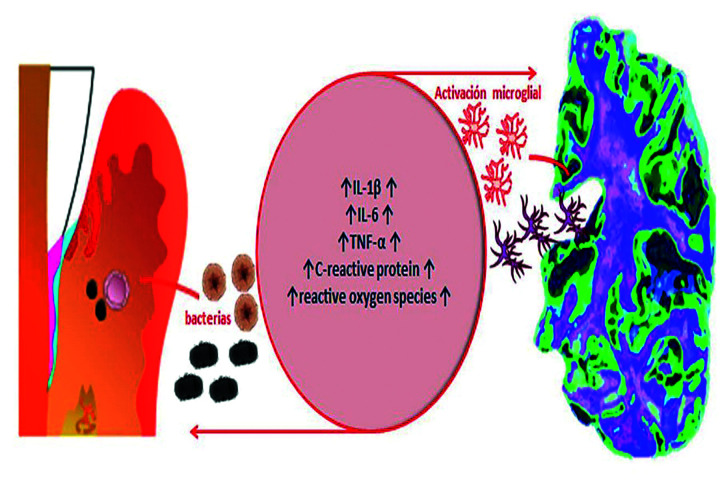
Background: Alzheimer's disease (AD), the main cause of dementia in the adult population, is characterized by a progressive loss of cognitive function. It is considered that neuroinflammation plays a fundamental role in its onset and progression. The bacteria present in the disbiotic microbiome generated during the course of periodontitis (PE) are capable of inducing a systemic inflammatory response, exacerbating the production of proinflammatory mediators that have the potential to spread to the systemic circulation.
Material and methods: A literature review was made using the databases Scielo, PubMed, EBSCO and key words "Alzheimer disease", "Periodontitis", "Neurodegeneration", "Inflammation mediators", "Elderly".
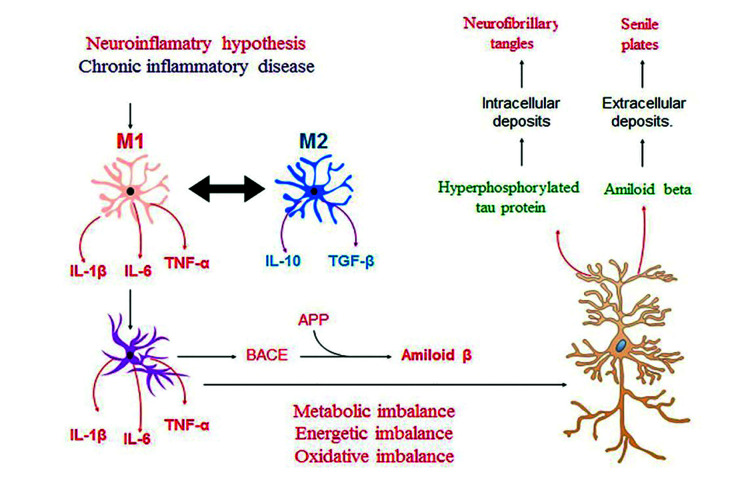
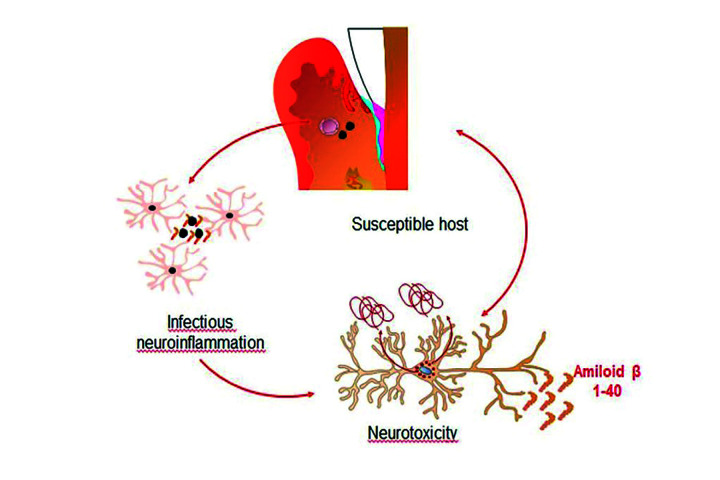
Results: Several hypotheses point to similar pathophysiological pathways in the establishment of AD and PE, sharing cellular and molecular proinflammatory characteristics. In periodontitis, locally produced cytokines and pro-inflammatory products spread from the ulcerated periodontal pocket into the systemic circulation, or around the trigeminal nerve terminals, which allows the passage of bacteria or their products to the brain. This fact leads to the formation of plaques of amyloid peptide and intraneuronal neurofibrillar tangles (NFTs) that activate the glial cells producing a significant increase in proinflammatory cytokines in the affected regions that lead to a loss of neuronal synapses and neurodegeneration, contributing to the progression of AD.
Conclusions: This review of the literature contributes to the understanding of the pathological pathways shared by both diseases such as oxidative damage and inflammation. There is not enough evidence to determine an association between this two pathologies, so it is considered necessary to conduct studies for determine if periodontitis is capable of inducing or exacerbating the neuroinflammation that will trigger AD.
Conflict of interest statement
Conflicts of interest The authors declare that in this study there are not conflicts of interests.
Figures
References
-
- Knopman DS, De-Kosky ST, Cummings JL, Chui H, Corey-Bloom J, Relkin N. Practice parameter: Diagnosis of dementia (anevidence-based review). Report of the Quality Standards Sub-committee of the American Academy of Neurology. Neurology. 2001;56:1143–53. - PubMed
-
- Kamer AR, Craig RG, Dasanayake AP, Brys M, Glodsik-Sobranzka L, De-Leon MJ. Inflammation and Alzheimer's disease: Possible role of periodontal diseases. Alzheimers Dement. 2008;4:242–50. - PubMed
Publication types
MeSH terms
LinkOut - more resources
Full Text Sources
Other Literature Sources
Medical