Effect of delays in the 2-week-wait cancer referral pathway during the COVID-19 pandemic on cancer survival in the UK: a modelling study
- PMID: 32702311
- PMCID: PMC7116538
- DOI: 10.1016/S1470-2045(20)30392-2
Effect of delays in the 2-week-wait cancer referral pathway during the COVID-19 pandemic on cancer survival in the UK: a modelling study
Abstract
Background: During the COVID-19 lockdown, referrals via the 2-week-wait urgent pathway for suspected cancer in England, UK, are reported to have decreased by up to 84%. We aimed to examine the impact of different scenarios of lockdown-accumulated backlog in cancer referrals on cancer survival, and the impact on survival per referred patient due to delayed referral versus risk of death from nosocomial infection with severe acute respiratory syndrome coronavirus 2.
Methods: In this modelling study, we used age-stratified and stage-stratified 10-year cancer survival estimates for patients in England, UK, for 20 common tumour types diagnosed in 2008-17 at age 30 years and older from Public Health England. We also used data for cancer diagnoses made via the 2-week-wait referral pathway in 2013-16 from the Cancer Waiting Times system from NHS Digital. We applied per-day hazard ratios (HRs) for cancer progression that we generated from observational studies of delay to treatment. We quantified the annual numbers of cancers at stage I-III diagnosed via the 2-week-wait pathway using 2-week-wait age-specific and stage-specific breakdowns. From these numbers, we estimated the aggregate number of lives and life-years lost in England for per-patient delays of 1-6 months in presentation, diagnosis, or cancer treatment, or a combination of these. We assessed three scenarios of a 3-month period of lockdown during which 25%, 50%, and 75% of the normal monthly volumes of symptomatic patients delayed their presentation until after lockdown. Using referral-to-diagnosis conversion rates and COVID-19 case-fatality rates, we also estimated the survival increment per patient referred.
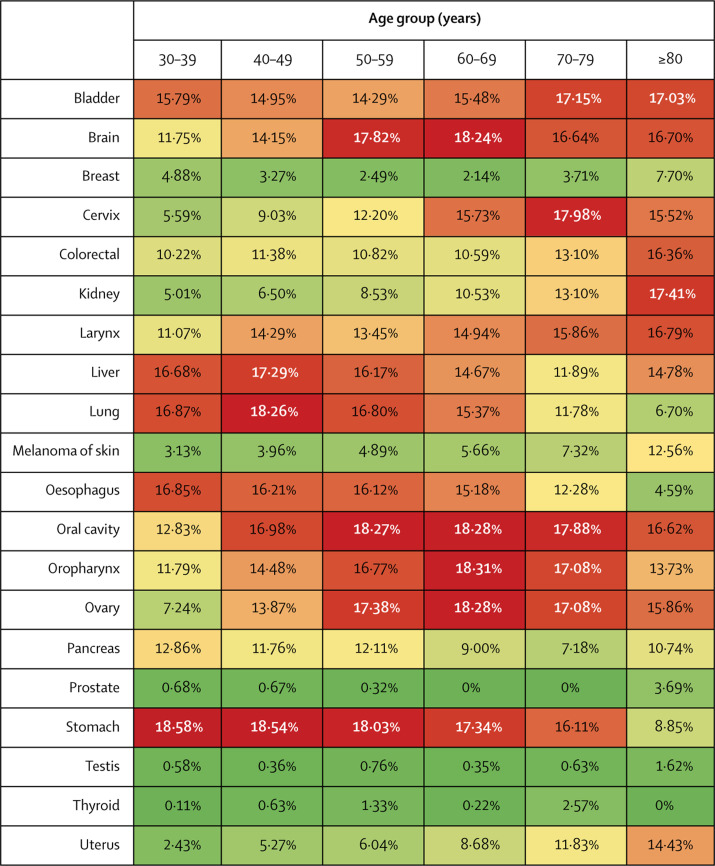
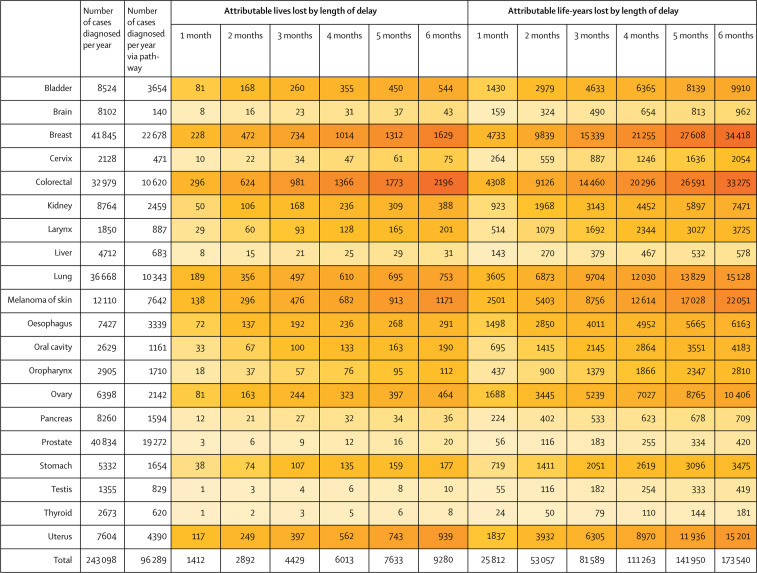
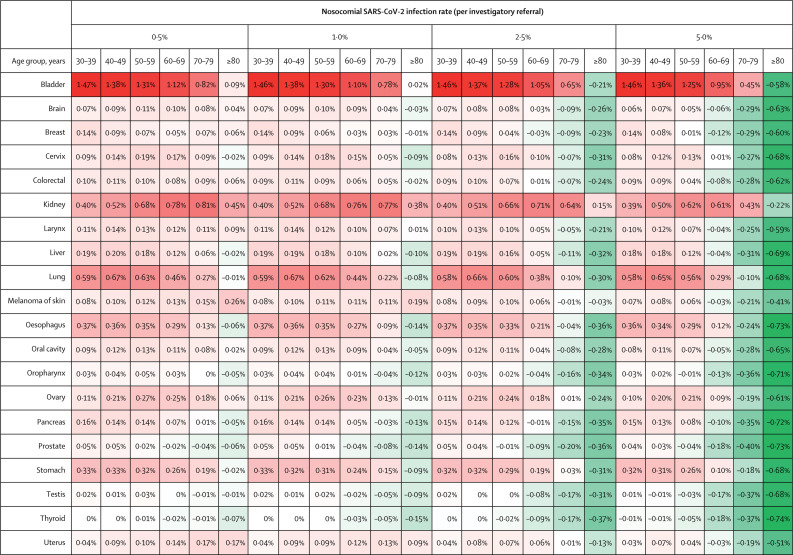
Findings: Across England in 2013-16, an average of 6281 patients with stage I-III cancer were diagnosed via the 2-week-wait pathway per month, of whom 1691 (27%) would be predicted to die within 10 years from their disease. Delays in presentation via the 2-week-wait pathway over a 3-month lockdown period (with an average presentational delay of 2 months per patient) would result in 181 additional lives and 3316 life-years lost as a result of a backlog of referrals of 25%, 361 additional lives and 6632 life-years lost for a 50% backlog of referrals, and 542 additional lives and 9948 life-years lost for a 75% backlog in referrals. Compared with all diagnostics for the backlog being done in month 1 after lockdown, additional capacity across months 1-3 would result in 90 additional lives and 1662 live-years lost due to diagnostic delays for the 25% backlog scenario, 183 additional lives and 3362 life-years lost under the 50% backlog scenario, and 276 additional lives and 5075 life-years lost under the 75% backlog scenario. However, a delay in additional diagnostic capacity with provision spread across months 3-8 after lockdown would result in 401 additional lives and 7332 life-years lost due to diagnostic delays under the 25% backlog scenario, 811 additional lives and 14 873 life-years lost under the 50% backlog scenario, and 1231 additional lives and 22 635 life-years lost under the 75% backlog scenario. A 2-month delay in 2-week-wait investigatory referrals results in an estimated loss of between 0·0 and 0·7 life-years per referred patient, depending on age and tumour type.
Interpretation: Prompt provision of additional capacity to address the backlog of diagnostics will minimise deaths as a result of diagnostic delays that could add to those predicted due to expected presentational delays. Prioritisation of patient groups for whom delay would result in most life-years lost warrants consideration as an option for mitigating the aggregate burden of mortality in patients with cancer.
Funding: None.
Copyright © 2020 Elsevier Ltd. All rights reserved.
Figures
References
-
- Philpotts E. GPs made 30% fewer referrals to secondary care during March. Pulse. May 14, 2020. http://www.pulsetoday.co.uk/clinical/gps-made-30-fewer-referrals-to-seco...
-
- Daily updates: Thursday 14 May. Providers NHS. 2020. https://nhsproviders.org/topics/covid-19/coronavirus-member-support/nati...
-
- Lai AG, Pasea L, Banerjee A. Estimating excess mortality in people with cancer and multimorbidity in the COVID-19 emergency. medRxiv. 2020 doi: 10.1101/2020.05.27.20083287. published online June 1. (preprint) - DOI
-
- Bower E. Urgent referrals rejected for one in three GPs during COVID-19 outbreak. GPonline. May 5, 2020. https://www.gponline.com/urgent-referrals-rejected-one-three-gps-during-...
-
- Bostock N. Patients waiting more than a month for urgent cancer checks amid COVID-19 crisis. GPonline. May 20, 2020. https://www.gponline.com/patients-waiting-month-urgent-cancer-checks-ami...
Publication types
MeSH terms
Grants and funding
LinkOut - more resources
Full Text Sources
Other Literature Sources
Medical