


Integrated metabolomic and transcriptomic analysis of the anthocyanin regulatory networks in Salvia miltiorrhiza Bge. flowers
- PMID: 32703155
- PMCID: PMC7379815
- DOI: 10.1186/s12870-020-02553-7
Integrated metabolomic and transcriptomic analysis of the anthocyanin regulatory networks in Salvia miltiorrhiza Bge. flowers
Abstract
Background: The objectives of this study were to reveal the anthocyanin biosynthesis metabolic pathway in white and purple flowers of Salvia miltiorrhiza using metabolomics and transcriptomics, to identify different anthocyanin metabolites, and to analyze the differentially expressed genes involved in anthocyanin biosynthesis.
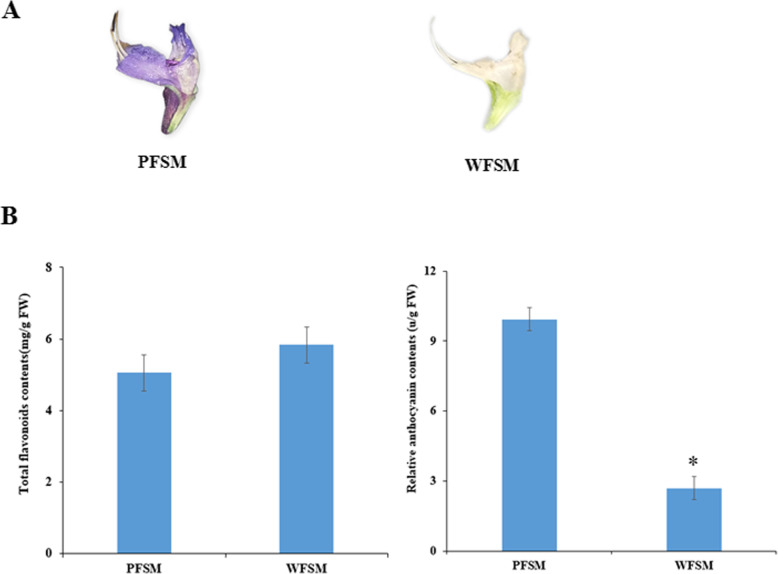
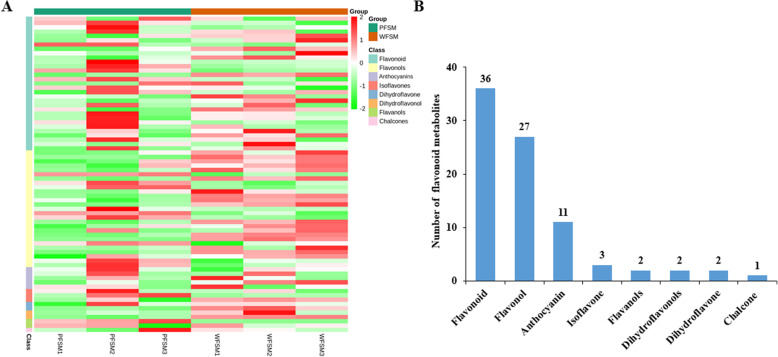
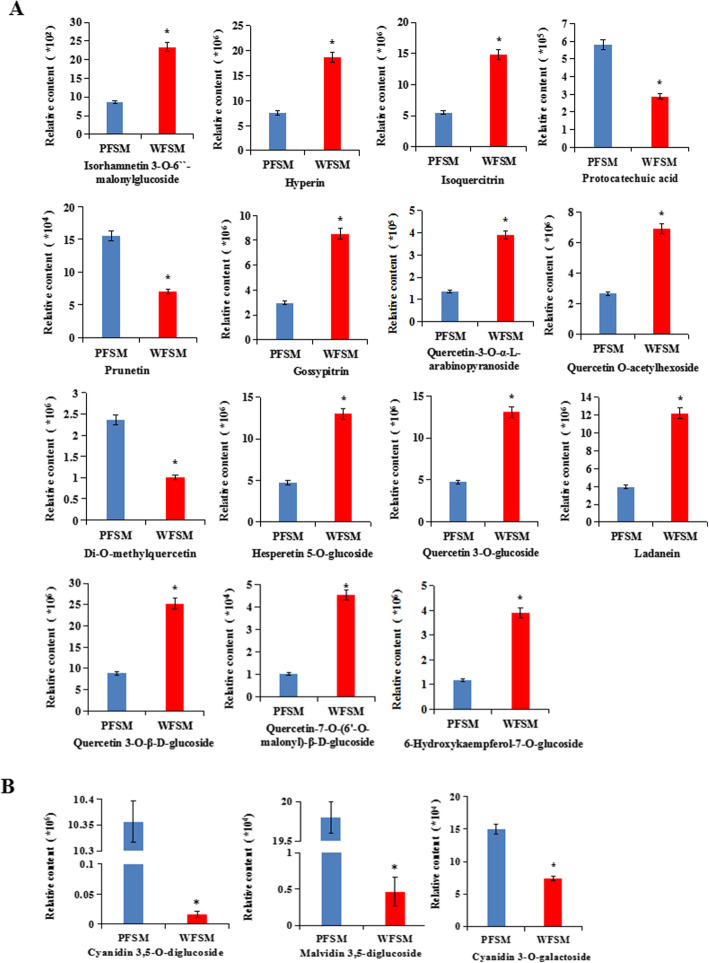
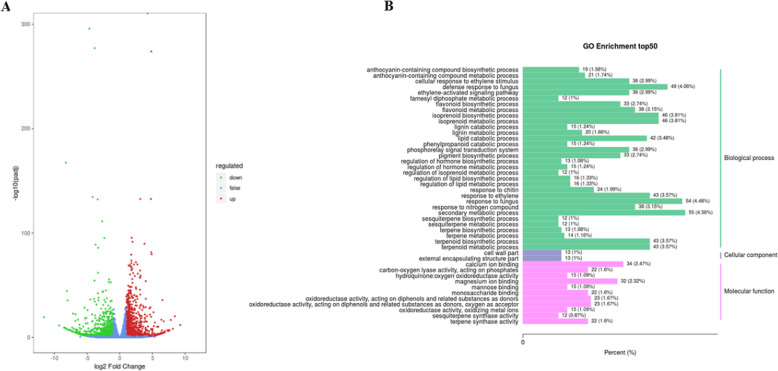
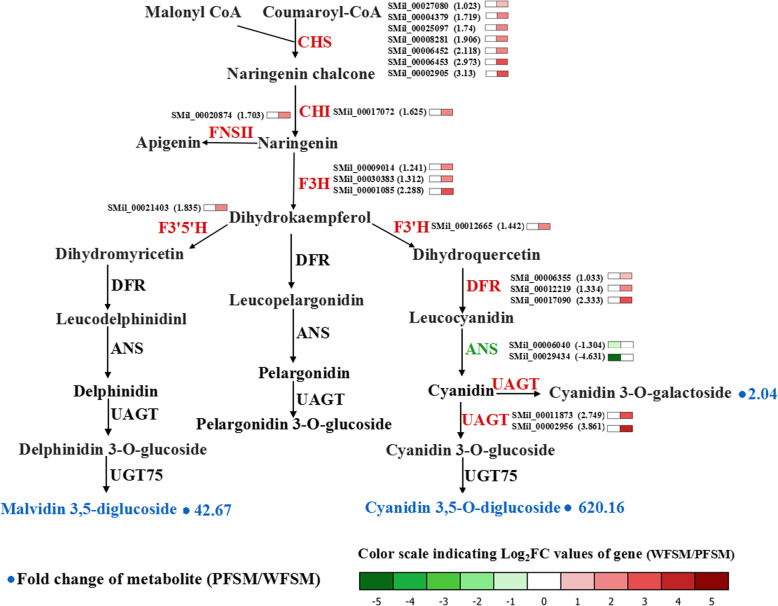
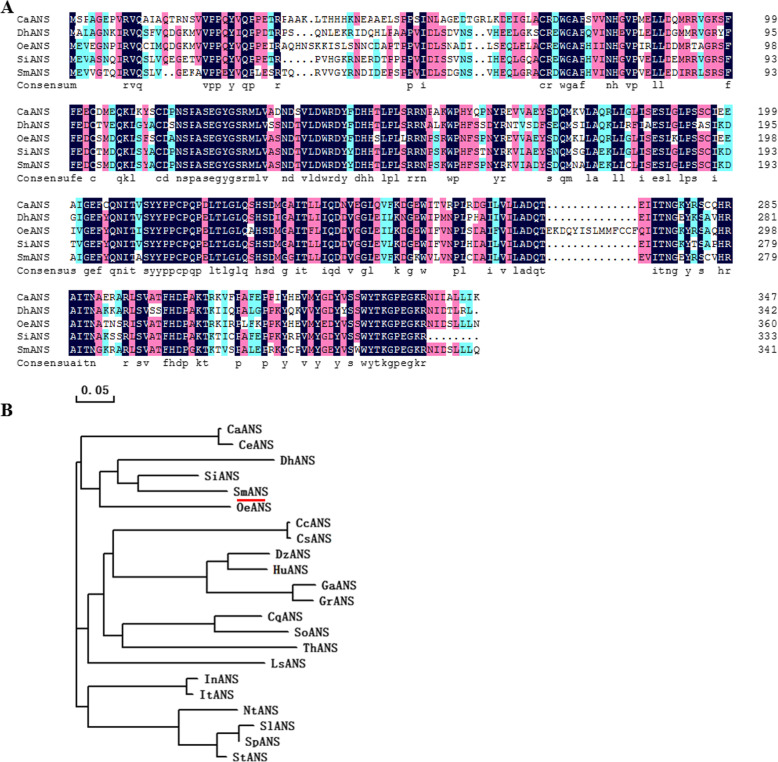
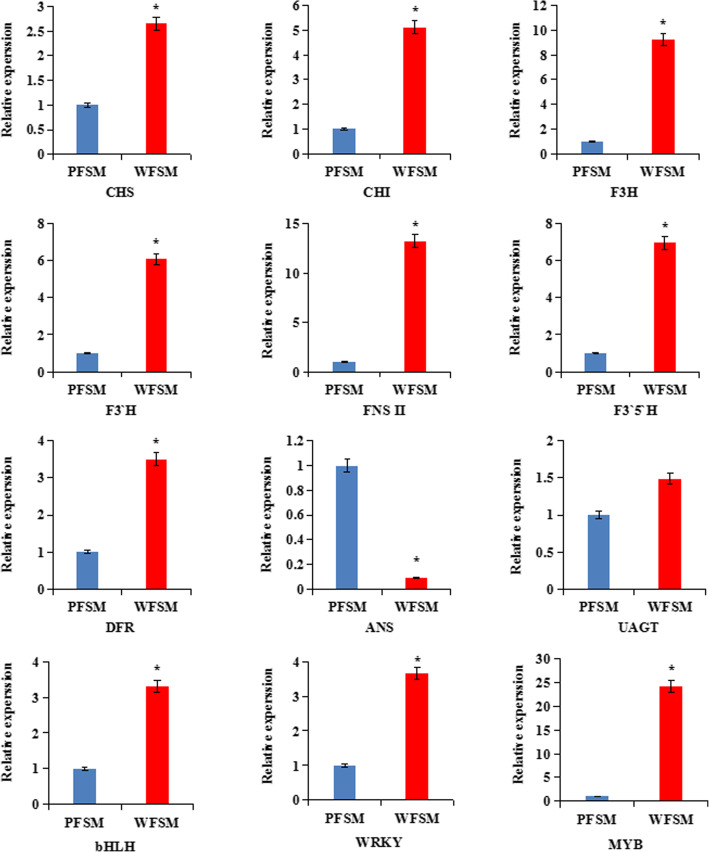
Results: We analyzed the metabolomics and transcriptomics data of S. miltiorrhiza flowers. A total of 1994 differentially expressed genes and 84 flavonoid metabolites were identified between the white and purple flowers of S. miltiorrhiza. Integrated analysis of transcriptomics and metabolomics showed that cyanidin 3,5-O-diglucoside, malvidin 3,5-diglucoside, and cyanidin 3-O-galactoside were mainly responsible for the purple flower color of S. miltiorrhiza. A total of 100 unigenes encoding 10 enzymes were identified as candidate genes involved in anthocyanin biosynthesis in S. miltiorrhiza flowers. Low expression of the ANS gene decreased the anthocyanin content but enhanced the accumulation of flavonoids in S. miltiorrhiza flowers.
Conclusions: Our results provide valuable information on the anthocyanin metabolites and the candidate genes involved in the anthocyanin biosynthesis pathways in S. miltiorrhiza.
Keywords: Anthocyanin; Medicinal plant; Metabolite; S. Miltiorrhiza; Transcriptome.
Conflict of interest statement
The authors declare that they have no conflict of interest.
Figures
References
-
- Zhou L, Zuo Z, Chow MS. Danshen: an overview of its chemistry, pharmacology, pharmacokinetics, and clinical use. J Clin Pharmacol. 2005;45:1345–1359. - PubMed
-
- Zhang XZ, Qian SS, Zhang YJ, Wang RQ. S. miltiorrhiza: a source for anti−Alzheimer’s disease drugs. Pharm Biol. 2016;54(1):18–24. - PubMed
-
- He J, Giusti MM. Anthocyanins: natural colorants with health−promoting properties. Annu Rev Food Sci Technol. 2010;1:163–187. - PubMed
MeSH terms
Substances
LinkOut - more resources
Full Text Sources
