


An unusual presentation of propylthiouracil-induced anti-MPO and PR3 positive ANCA vasculitis with associated anti-GBM antibodies, IgA nephropathy and an IgG4 interstitial infiltrate: a case report
- PMID: 32703233
- PMCID: PMC7379830
- DOI: 10.1186/s12882-020-01964-w
An unusual presentation of propylthiouracil-induced anti-MPO and PR3 positive ANCA vasculitis with associated anti-GBM antibodies, IgA nephropathy and an IgG4 interstitial infiltrate: a case report
Abstract
Background: A number of disease processes can culminate in rapidly progressive glomerulonephritis, including pauci-immune focal segmental necrotising glomerulonephritis, usually seen with positive serum antineutrophil cytoplasmic antibodies (ANCA). Propylthiouracil (PTU) has been associated with drug-induced ANCA-associated vasculitis (AAV), with antibodies against myeloperoxidase (MPO) and proteinase 3 (PR3) present individually and together having been recognised. 'Double-positive' vasculitis with ANCA and anti-glomerular basement membrane (GBM) antibodies has also been reported in association with PTU treatment. We present a case of PTU-induced anti-MPO and PR3 positive ANCA vasculitis with associated anti-GBM antibodies, IgA nephropathy and an IgG4 interstitial infiltrate.
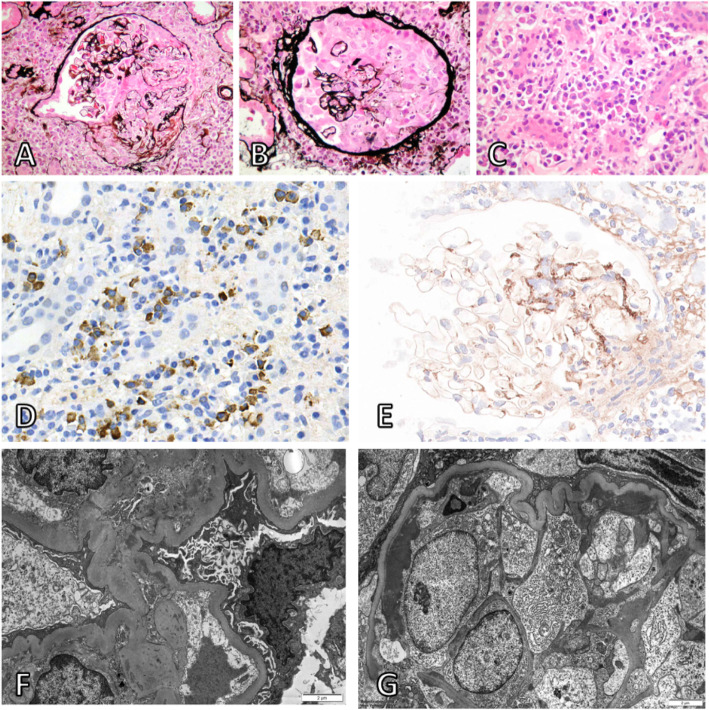
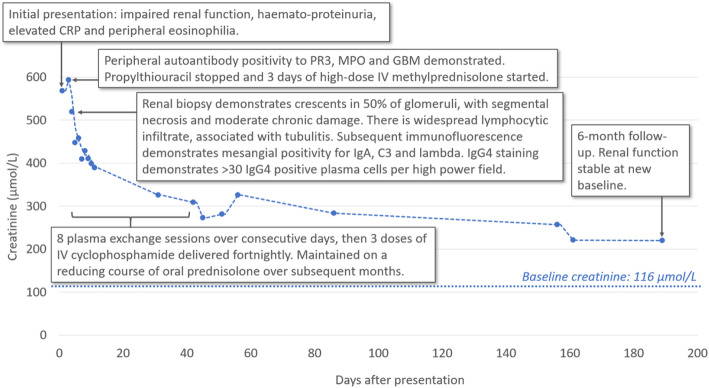
Case presentation: A 51-year-old man presented 2 weeks after re-commencing propylthiouracil (PTU) treatment for Graves' disease, with a severe acute kidney injury and haemato-proteinuria. He demonstrated positive titres for autoantibodies to PR3 (76.9 IU/mL), MPO (28.8 IU/mL) and GBM (94 IU/mL). Renal biopsy demonstrated numerous glomerular crescents, widespread IgG4-positive lymphoplasmacytic infiltrate and mesangial positivity for IgA. PTU was stopped and he was treated with steroids, plasma exchange and cyclophosphamide with sustained improvement in his renal function.
Conclusions: This case of drug-induced AAV presented a unique and intriguing collection of serological and histological features. We propose that the PTU-induced AAV resulted in epiphenomena of anti-GBM antibody production and an IgG4-cell-rich tubulointerstitial infiltrate. It is uncertain whether the mesangial IgA deposition preceded or resulted from the AAV.
Keywords: Anti-GBM disease; Case report; IgA nephropathy; IgG4-related disease; NCA-associated vasculitis; Propylthiouracil.
Conflict of interest statement
None.
Figures
References
-
- Kantachuvesiri P, Chalermsanyakorn P, Phakdeekitcharoen B, Lothuvachai T, Niticharoenpong K, Radinahamed P, et al. Propylthiouracil-associated rapidly progressive crescentic glomerulonephritis with double positive anti-glomerular basement membrane and antineutrophil cytoplasmic antibody: the first case report. CEN Case Rep. 2014;4(2):180–184. doi: 10.1007/s13730-014-0163-9. - DOI - PMC - PubMed
-
- McAdoo SP, Tanna A, Hrušková Z, Holm L, Weiner M, Arulkumaran N, et al. Patients double-seropositive for ANCA and anti-GBM antibodies have varied renal survival, frequency of relapse, and outcomes compared to single-seropositive patients. Kidney Int. 2017;92(3):693–702. doi: 10.1016/j.kint.2017.03.014. - DOI - PMC - PubMed
Publication types
MeSH terms
Substances
LinkOut - more resources
Full Text Sources
Research Materials
Miscellaneous
