


What Works in Mindfulness Interventions for Medically Unexplained Symptoms? A Systematic Review
- PMID: 32704524
- PMCID: PMC7373253
- DOI: 10.31372/20200501.1082
What Works in Mindfulness Interventions for Medically Unexplained Symptoms? A Systematic Review
Abstract
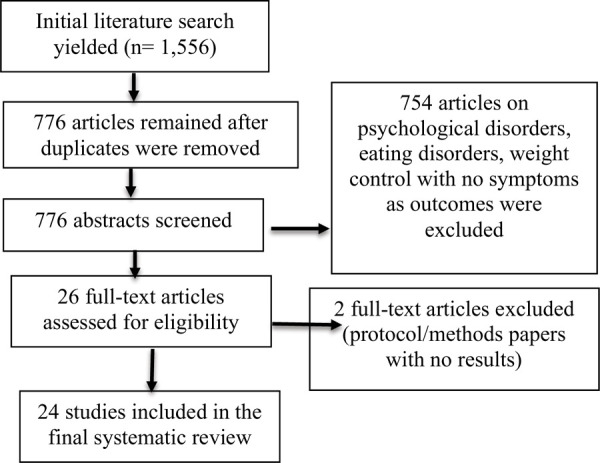
Background/Purpose: Mindfulness-based interventions (MBIs) have been used in medically unexplained symptoms (MUS). This systematic review describes the literature investigating the general effect of MBIs on MUS and identifies the effects of specific MBIs on specific MUS conditions. Methods: The Preferred Reporting Items for Systematic Reviews and Meta-Analysis Guidelines (PRISMA) and the modified Oxford Quality Scoring System (Jadad score) were applied to the review, yielding an initial 1,556 articles. The search engines included PubMed, ScienceDirect, Web of Science, Scopus, EMBASE, and PsychINFO using the search terms: mindfulness, or mediations, or mindful or MBCT or MBSR and medically unexplained symptoms or MUS or Fibromyalgia or FMS. A total of 24 articles were included in the final systematic review. Results/Conclusions: MBIs showed large effects on: symptom severity (d = 0.82), pain intensity (d = 0.79), depression (d = 0.62), and anxiety (d = 0.67). A manualized MBI that applies the four fundamental elements present in all types of interventions were critical to efficacy. These elements were psycho-education sessions specific to better understand the medical symptoms, the practice of awareness, the nonjudgmental observance of the experience in the moment, and the compassion to ones' self. The effectiveness of different mindfulness interventions necessitates giving attention to improve the gaps that were identified related to home-based practice monitoring, competency training of mindfulness teachers, and sound psychometric properties to measure the mindfulness practice.
Keywords: cancer; chronic fatigue syndrome; fatigue; fibromyalgia; irritable bowel movement syndrome; mindfulness; pain.
Asian/Pacific Island Nursing Journal, Volume 5(1): 21–34, ©Author(s) 2020, https://kahualike.manoa.hawaii.edu/apin/.
Conflict of interest statement
The authors have no conflicts of interest to declare.
Figures
References
-
- Abbott, R. A., Whear, R., Roegers, L. R., Bethel, A., Thompson, C., Kuyken, W., … Dickens, C. (2014). Effectiveness of mindfulness-based stress reduction and mindfulness based cognitive therapy in vascular disease: A systematic review and meta-analysis of randomised controlled trials. Journal of Psychosomatic Research, 76, 341–351. 10.1016/j.jpsychores.2014.02.012 - DOI - PubMed
-
- Ameli, R. (2014). 25 lessons in mindfulness. Now time for healthy living. Washington, D.C.: American Psychological Association.
-
- Astin, J., Berman, B., Bausell, B., Lee, W.-L., Hochberg, M., & Forys, K. (2003). The efficacy of mindfulness meditation plus Qigong movement therapy in the treatment of fibromyalgia: A randomized controlled trial. The Journal of Rheumatology, 30, 2257–2262. - PubMed
LinkOut - more resources
Full Text Sources
Medical
Miscellaneous
