Review
. 2020 Nov;72(11):1459-1480.
doi: 10.1111/jphp.13331. Epub 2020 Jul 24.

Benzothiazoles as potential antiviral agents

Affiliations
Review

Benzothiazoles as potential antiviral agents

Yahya I Asiri et al. J Pharm Pharmacol. 2020 Nov.

Abstract

Objectives: The recent viral pandemic poses a unique challenge for healthcare providers. Despite the remarkable progress, the number of novel antiviral agents in the pipeline is woefully inadequate against the evolving virulence and drug resistance of current viruses. This highlights the urgent need for new and improved vaccines, diagnostics and therapeutic agents to obviate the viral pandemic.

Key findings: Benzothiazole plays a pivotal role in the design and development of antiviral drugs. This is evident from the fact that it comprises many clinically useful agents. The current review is aimed to provide an insight into the recent development of benzothiazole-based antiviral agents, with a special focus on their structure-activity relationships and lead optimisation. One hundred and five articles were initially identified, and from these studies, 64 potential novel lead molecules and main findings were highlighted in this review.

Summary: We hope this review will provide a logical perspective on the importance of improving the future designs of novel broad-spectrum benzothiazole-based antiviral agents to be used against emerging viral diseases.

Keywords: COVID-19; HIV; antiviral; benzothiazole; dengue.


Figures

Figure 1
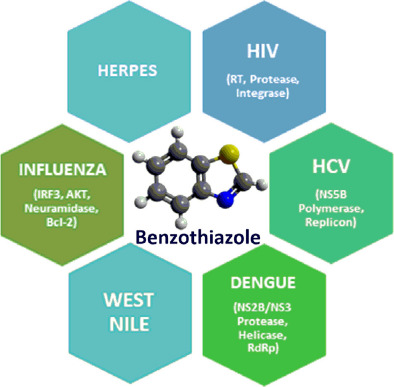
Figure 1
Antiviral potential of benzothiazole.
Figure 2
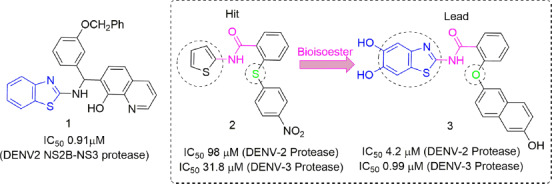
Figure 2
Benzothiazole as DENV NS2B/NS3 PIs.
Figure 3
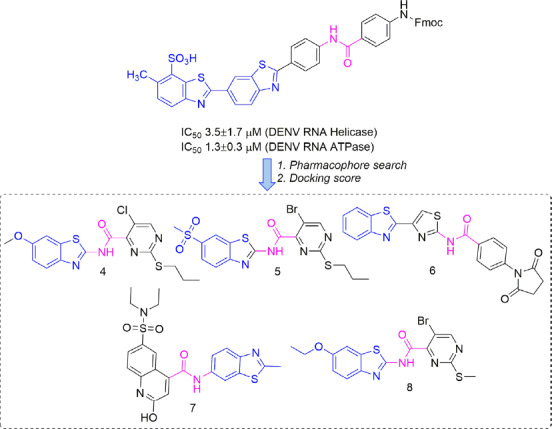
Figure 3
Development of DENV helicase inhibitors by pharmacopore-based ligand search.
Figure 4
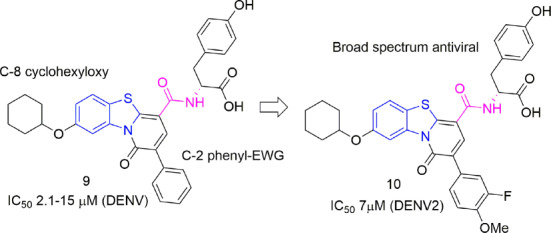
Figure 4
DENV RdRp inhibitors.
Figure 5
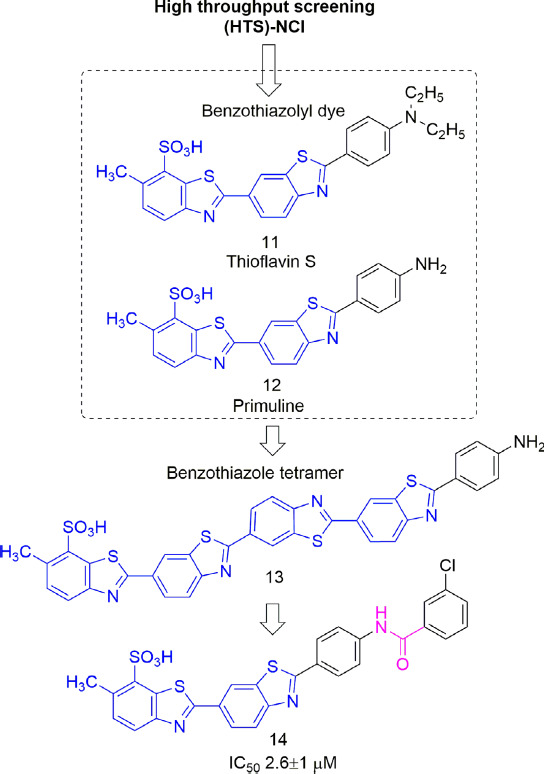
Figure 5
Benzothiazolyl dyes as potent NS3 helicase inhibitors.
Figure 6
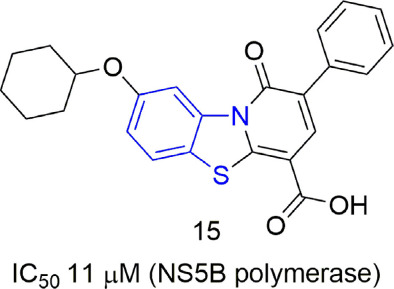
Figure 6
Pyridobenzothiazoles as NS5B polymerase inhibitors.
Figure 7
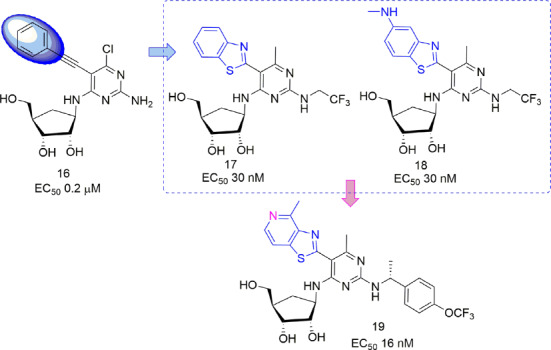
Figure 7
Benzothiazolyl-carbanucleoside as NS5B polymerase inhibitors.
Figure 8
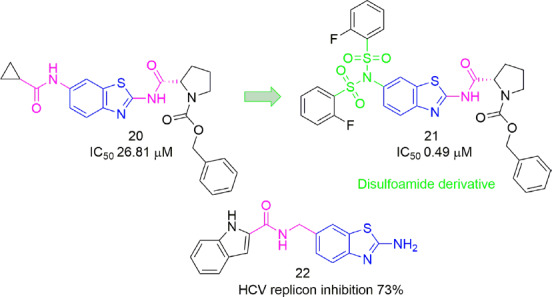
Figure 8
Benzothiazolyl-carboxamide as HCV replicon inhibitors.
Figure 9
Figure 9
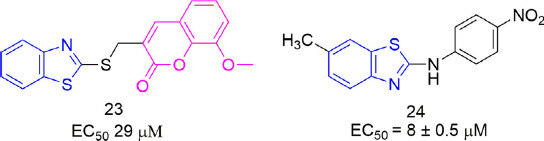
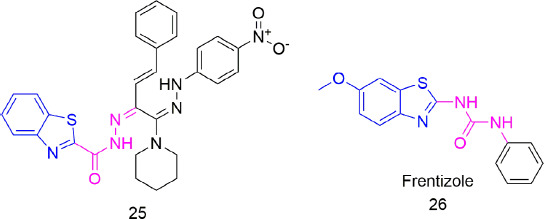
Miscellaneous anti-HCV benzothiazoles.
Figure 10
Figure 10
Benzothiazoles as anti-herpes agents.
Figure 11
Figure 11
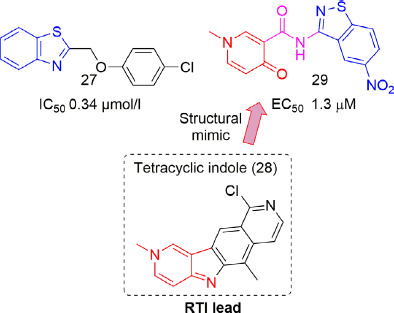
Development of novel benzothiazolyl reverse transcriptase Inhibitors (RTIs).
Figure 12
Figure 12
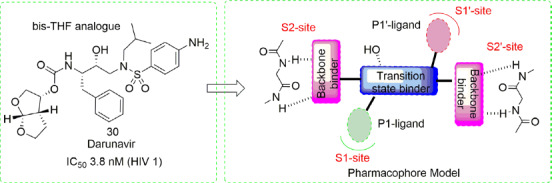
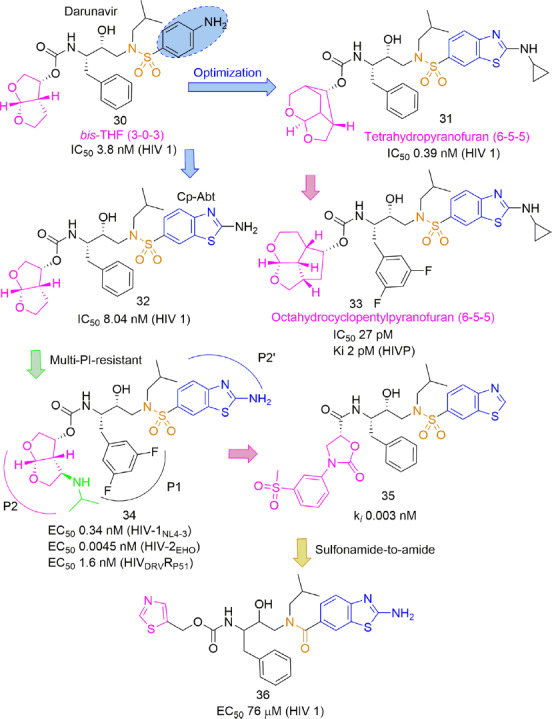
Pharmacophore model of PI to combat drug resistance.
Figure 13
Figure 13
Benzothiazole PIs discovered by Tibotec BVBA.
Figure 14
Figure 14
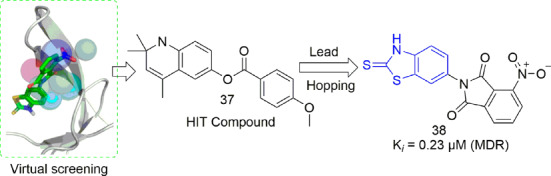
Development of PI through ligand-based lead-hopping.
Figure 15
Figure 15
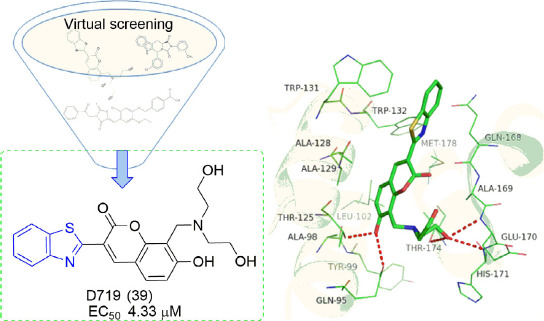
D719 inhibiting the integrase nuclear translocation.[76]
Figure 16
Figure 16
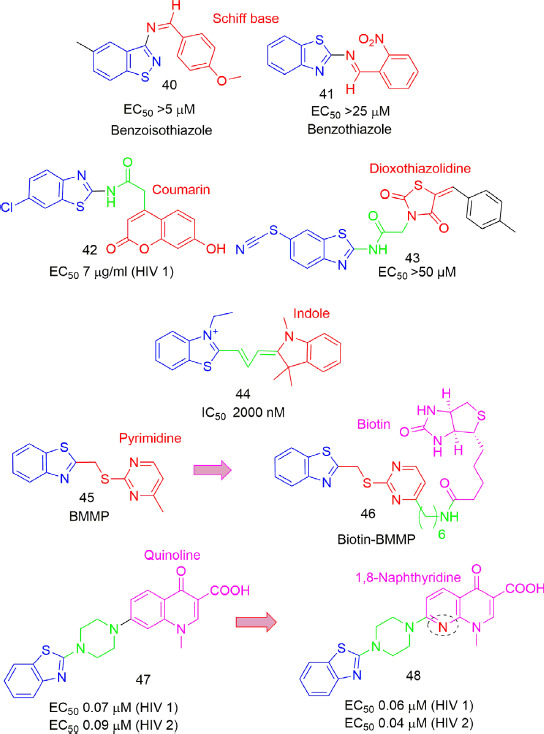
Hybrid benzothiazoles as anti-HIV agents.
Figure 17
Figure 17
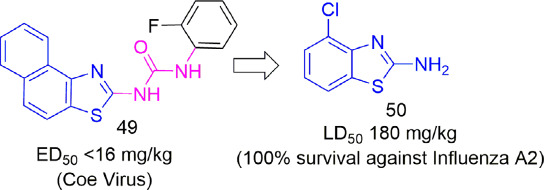
ABTs as potential anti-influenza agents.
Figure 18
Figure 18
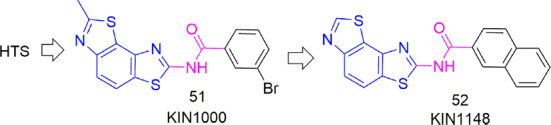
A benzobisthiazole IRF3 agonist as an influenza vaccine adjuvant.
Figure 19
Figure 19
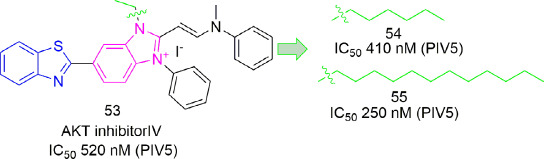
Benzothiazolyl AKT-IV inhibitors.
Figure 20
Figure 20
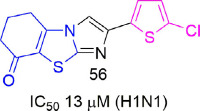
7,8-Dihydro-6H-imidazo[2,1-b][1,3]benzothiazol-5-ones as anti-influenza.
Figure 21
Figure 21
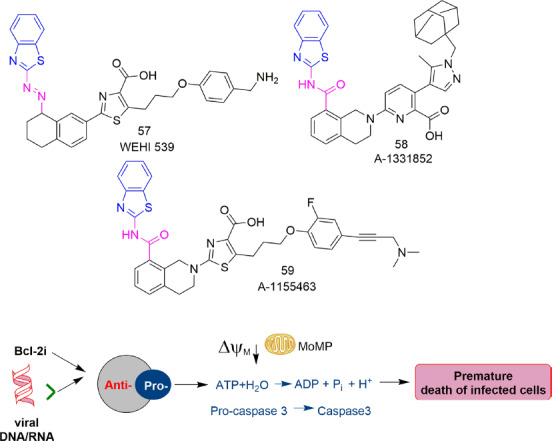
Benzothiazoles inhibiting Bcl-2i.
Figure 22
Figure 22
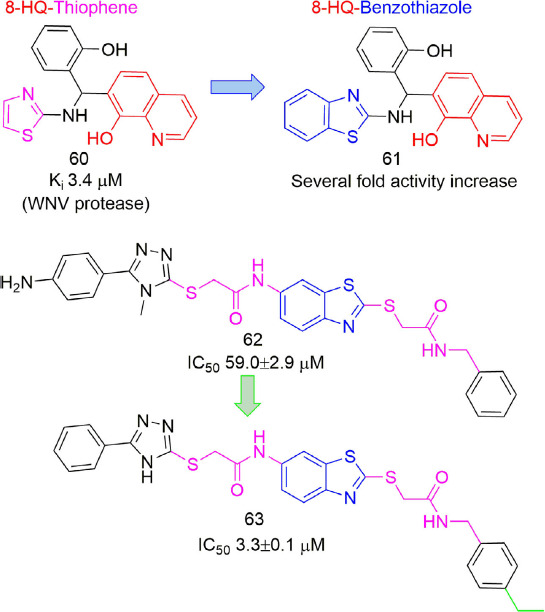
Hit-to-lead optimization of WNV PIs.
Figure 23
Figure 23
Suggested pharmacophore model of ABT analogues for eliciting antiviral activities.

References

    1. Cavicchioli R et al. Scientists’ warning to humanity: microorganisms and climate change. Nat Rev Microbiol 2019; 17: 569–586. - PMC - PubMed
    1. Jonas O, Seifman R. Do we need a Global Virome Project? The Lancet 2019; 7: 1314–1316. - PMC - PubMed
    1. Carroll D et al. Building a global atlas of zoonotic viruses. Bull World Health Organ 2018; 96: 292–294. - PMC - PubMed
    1. Ilori EA et al. Increase in Lassa fever cases in Nigeria, January–March 2018. Emerg Infect Dis 2019; 25: 1026–1027. - PMC - PubMed
    1. Patralekha C. Nipah virus outbreak in India. Lancet 2018; 391: 2200. - PubMed