


Characteristics and roles of severe acute respiratory syndrome coronavirus 2-specific antibodies in patients with different severities of coronavirus 19
- PMID: 32706417
- PMCID: PMC7405228
- DOI: 10.1111/cei.13500
Characteristics and roles of severe acute respiratory syndrome coronavirus 2-specific antibodies in patients with different severities of coronavirus 19
Abstract
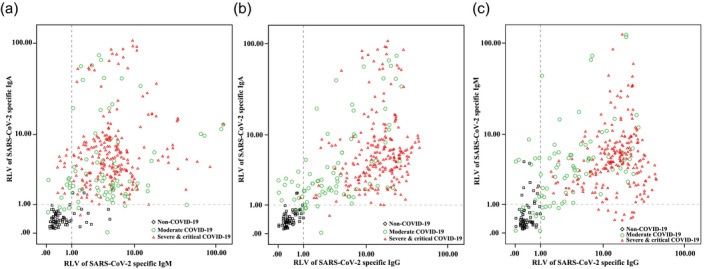
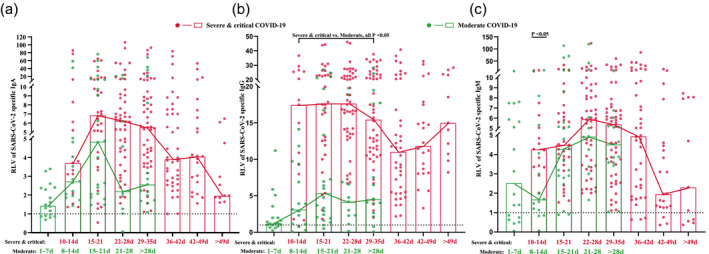
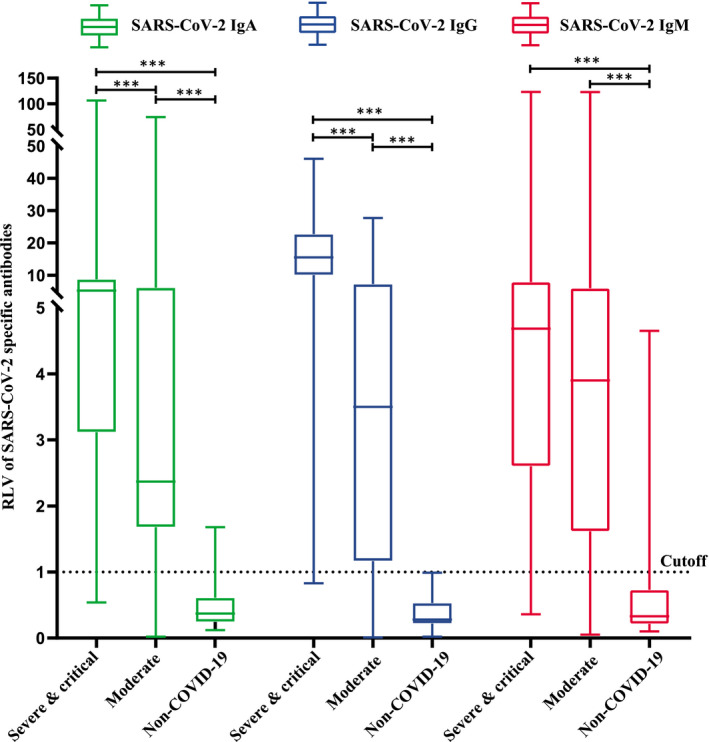
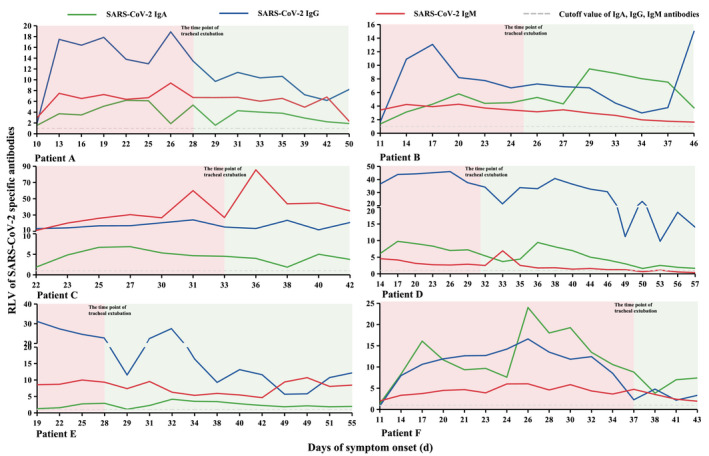
The diagnosis of coronavirus 19 (COVID-19) relies mainly upon viral nucleic acid detection, but false negatives can lead to missed diagnosis and misdiagnosis; severe acute respiratory syndrome coronavirus 2 (SARS-CoV-2)-specific antibody detection is convenient, safe and highly sensitive. Immunoglobulin (Ig)M and IgG are commonly used to serologically diagnose COVID-19; however, the role of IgA is not well known. We aimed to quantify the levels of SARS-CoV-2-specific IgM, IgA and IgG antibodies, identify changes in them based on COVID-19 severity, and establish the significance of combined antibody detection. COVID-19 patients, divided into a severe and critical group and a moderate group, and non-COVID-19 patients with respiratory disease were included in this study. A chemiluminescence method was used to detect the levels of SARS-CoV-2-specific IgM, IgA and IgG in the blood samples from the three groups. Epidemiological characteristics, symptoms, blood test results and other data were recorded for all patients. Compared to the traditional IgM-IgG combined antibodies, IgA-IgG combined antibodies are more effective for diagnosing COVID-19. During the disease process, IgA appeared first and disappeared last. All three antibodies had significantly higher levels in COVID-19 patients than in non-COVID-19 patients. IgA and IgG were also higher for severe and critical disease than for moderate disease. All antibodies were at or near low levels at the time of tracheal extubation in critical patients. Detection of SARS-CoV-2-specific combined IgA-IgG antibodies is advantageous in diagnosing COVID-19. IgA detection is suitable during early and late stages of the disease. IgA and IgG levels correspond to disease severity.
Keywords: COVID-19; SARS-CoV-2; antibody; diagnosis; severity.
© 2020 The Authors. Clinical & Experimental Immunology published by John Wiley and Sons Ltd on behalf of British Society for Immunology.
Conflict of interest statement
None of the authors have any conflicts of interest to declare.
Figures
References
Publication types
MeSH terms
Substances
Grants and funding
LinkOut - more resources
Full Text Sources
Medical
Miscellaneous
