


Sleep health practices and sleep knowledge among healthcare professionals in Dutch paediatric rehabilitation
- PMID: 32706911
- PMCID: PMC7589250
- DOI: 10.1111/cch.12799
Sleep health practices and sleep knowledge among healthcare professionals in Dutch paediatric rehabilitation
Abstract
Background: Sleep disorders are highly prevalent in children with neurodisabilities, yet they seem under-recognized in paediatric rehabilitation settings. The aim of this study was to assess among two groups of healthcare professionals (HCPs) working in paediatric rehabilitation: (1) sleep health practices and (2) knowledge about sleep physiology, sleep disorders and sleep hygiene.
Methods: We performed a cross-sectional sleep survey among medical and non-medical HCPs and the general population. Participants (30 rehabilitation physicians [RPs], 54 allied health professionals [AHPs] and 63 controls) received an anonymous 30-item survey consisting of three domains: (1) general information, (2) application of sleep health practices and (3) sleep knowledge.
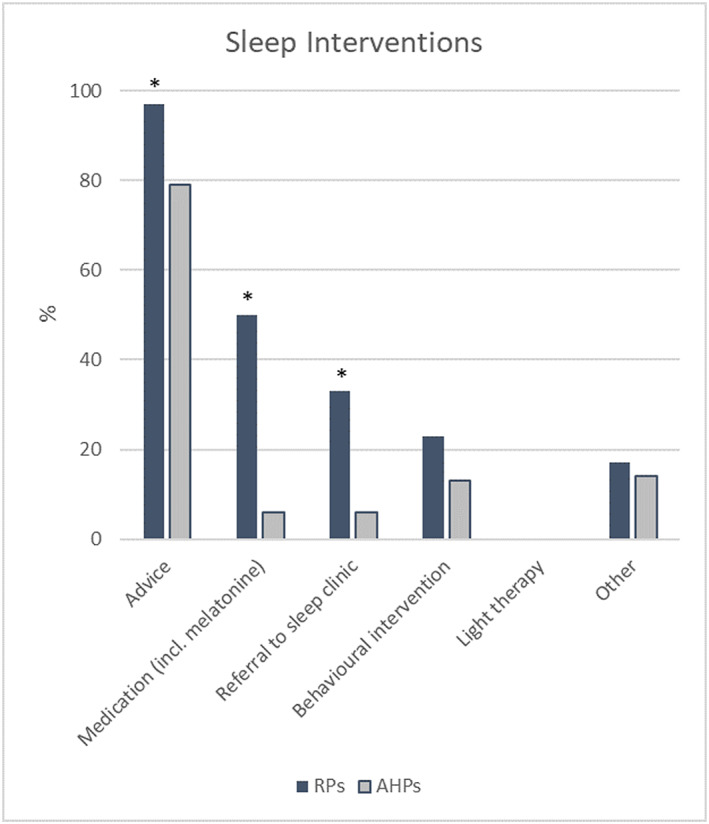
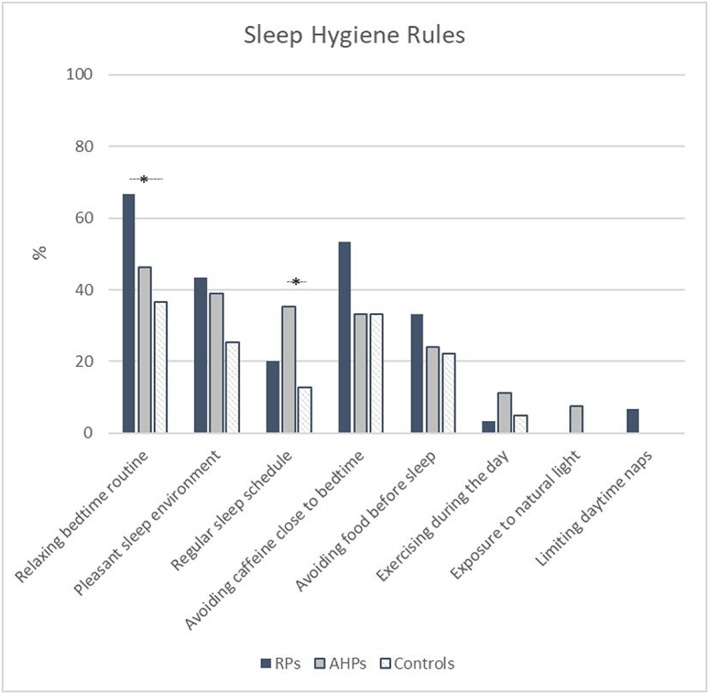
Results: RPs address sleep issues more frequently in clinical practice than AHPs. Sleep interventions mostly consist of giving advice about healthy sleep practices and are given by the majority of HCPs. While RPs demonstrated the highest scores on all knowledge domains, total sleep knowledge scores did not exceed 50% correct across groups, with AHPs and controls showing equal scores. Sleep hygiene rules closest to bedtime and related to the sleep environment were best known, whereas those related to daytime practices were rarely mentioned across all groups. A small minority of HCPs (RPs 20%; AHPs 15%) believed to possess sufficient sleep knowledge to address sleep in clinical practice. No association was found between self-perceived knowledge and sleep knowledge scores among HCPs.
Conclusions: Sleep should become a standard item for review during routine health assessments in paediatric rehabilitation settings. HCPs' limited exposure to sleep education may result in feelings of incompetence and inadequate sleep knowledge levels, affecting their sleep health practices. Appropriate sleep training programs should be implemented to empower HCPs with knowledge, skills and confidence, needed to recognize and treat sleep disorders in children with neurodisabilities, as well as to be able to guide parents.
Keywords: healthcare providers; neurodevelopmental disorders; paediatric rehabilitation; sleep education; sleep health practices; sleep knowledge.
© 2020 The Authors. Child: Care, Health and Development published by John Wiley & Sons Ltd.
Conflict of interest statement
The authors have no conflicts of interest to declare.
Figures
References
-
- Adiga, D. , Gupta, A. , Khanna, M. , Taly, A. B. , & Thennarasu, K. (2014). Sleep disorders in children with cerebral palsy and its correlation with sleep disturbance in primary caregivers and other associated factors. Annals of Indian Academy of Neurology, 17(4), 473–476. 10.4103/0972-2327.144044 - DOI - PMC - PubMed
-
- BaHammam, A. S. (2000). Knowledge and attitude of primary health care physicians towards sleep disorders. Saudi Medical Journal, 21(12), 1164–1167. - PubMed
-
- Briguglio, M. , Vitale, J. A. , Galentino, R. , Banfi, G. , Dina, C. Z. , Bona, A. , … Glick, I. D. (2020). Healthy eating, physical activity, and sleep hygiene (HEPAS) as the winning triad for sustaining physical and mental health in patients at risk for or with neuropsychiatric disorders: Considerations for clinical practice. Neuropsychiatric Disease and Treatment, 16, 55–70. 10.2147/NDT.S229206 - DOI - PMC - PubMed
-
- Bruni, O. , Violani, C. , Luchetti, A. , Miano, S. , Verrillo, E. , Di Brina, C. , & Valente, D. (2004). The sleep knowledge of pediatricians and child neuropsychiatrists. Sleep and Hypnosis, 6(3), 130–138.
