


The Roles of Immune Cells in the Pathogenesis of Fibrosis
- PMID: 32708044
- PMCID: PMC7432671
- DOI: 10.3390/ijms21155203
The Roles of Immune Cells in the Pathogenesis of Fibrosis
Abstract
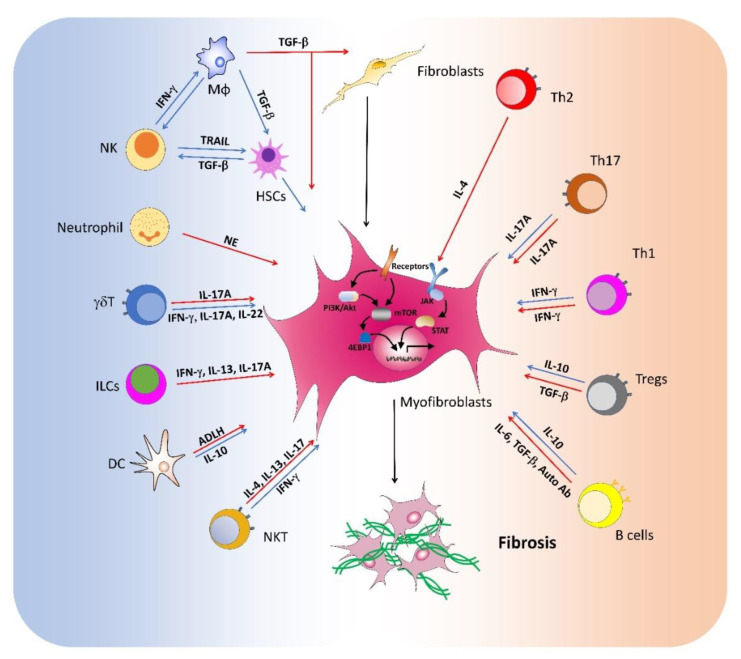
Tissue injury and inflammatory response trigger the development of fibrosis in various diseases. It has been recognized that both innate and adaptive immune cells are important players with multifaceted functions in fibrogenesis. The activated immune cells produce various cytokines, modulate the differentiation and functions of myofibroblasts via diverse molecular mechanisms, and regulate fibrotic development. The immune cells exhibit differential functions during different stages of fibrotic diseases. In this review, we summarized recent advances in understanding the roles of immune cells in regulating fibrotic development and immune-based therapies in different disorders and discuss the underlying molecular mechanisms with a focus on mTOR and JAK-STAT signaling pathways.
Keywords: adaptive immune cells; fibrosis; innate immune cells; molecular mechanism; myofibroblast.
Conflict of interest statement
The authors declare no conflict of interest.
Figures
References
Publication types
MeSH terms
Substances
Grants and funding
LinkOut - more resources
Full Text Sources
Miscellaneous
