


The Leukemic Fly: Promises and Challenges
- PMID: 32708107
- PMCID: PMC7409271
- DOI: 10.3390/cells9071737
The Leukemic Fly: Promises and Challenges
Abstract
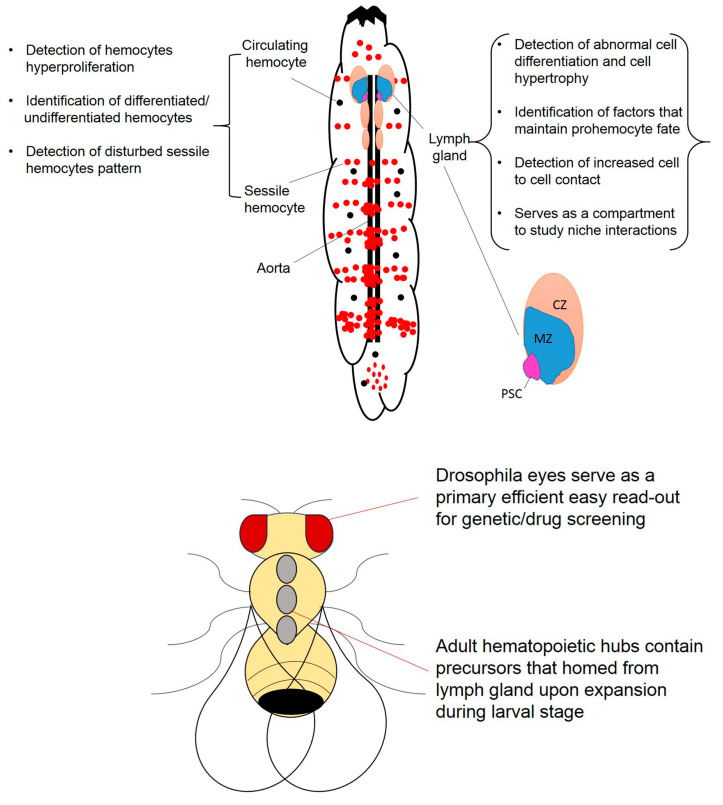
Leukemia involves different types of blood cancers, which lead to significant mortality and morbidity. Murine models of leukemia have been instrumental in understanding the biology of the disease and identifying therapeutics. However, such models are time consuming and expensive in high throughput genetic and drug screening. Drosophilamelanogaster has emerged as an invaluable in vivo model for studying different diseases, including cancer. Fruit flies possess several hematopoietic processes and compartments that are in close resemblance to their mammalian counterparts. A number of studies succeeded in characterizing the fly's response upon the expression of human leukemogenic proteins in hematopoietic and non-hematopoietic tissues. Moreover, some of these studies showed that these models are amenable to genetic screening. However, none were reported to be tested for drug screening. In this review, we describe the Drosophila hematopoietic system, briefly focusing on leukemic diseases in which fruit flies have been used. We discuss myeloid and lymphoid leukemia fruit fly models and we further highlight their roles for future therapeutic screening. In conclusion, fruit fly leukemia models constitute an interesting area which could speed up the process of integrating new therapeutics when complemented with mammalian models.
Keywords: Drosophila melanogaster; blood cancer; drug screening; fruit fly; leukemia.
Conflict of interest statement
The authors report no conflict of interest.
Figures
References
-
- Galloway J.L., Zon L.I. Current Topics in Developmental Biology. Volume 53. Academic Press; Cambridge, MA, USA: 2003. 3 Ontogeny of hematopoiesis: Examining the emergence of hematopoietic cells in the vertebrate embryo; pp. 139–158. - PubMed
Publication types
MeSH terms
LinkOut - more resources
Full Text Sources
Medical
Molecular Biology Databases
