


Hereditary Predisposition to Prostate Cancer: From Genetics to Clinical Implications
- PMID: 32708810
- PMCID: PMC7404100
- DOI: 10.3390/ijms21145036
Hereditary Predisposition to Prostate Cancer: From Genetics to Clinical Implications
Abstract
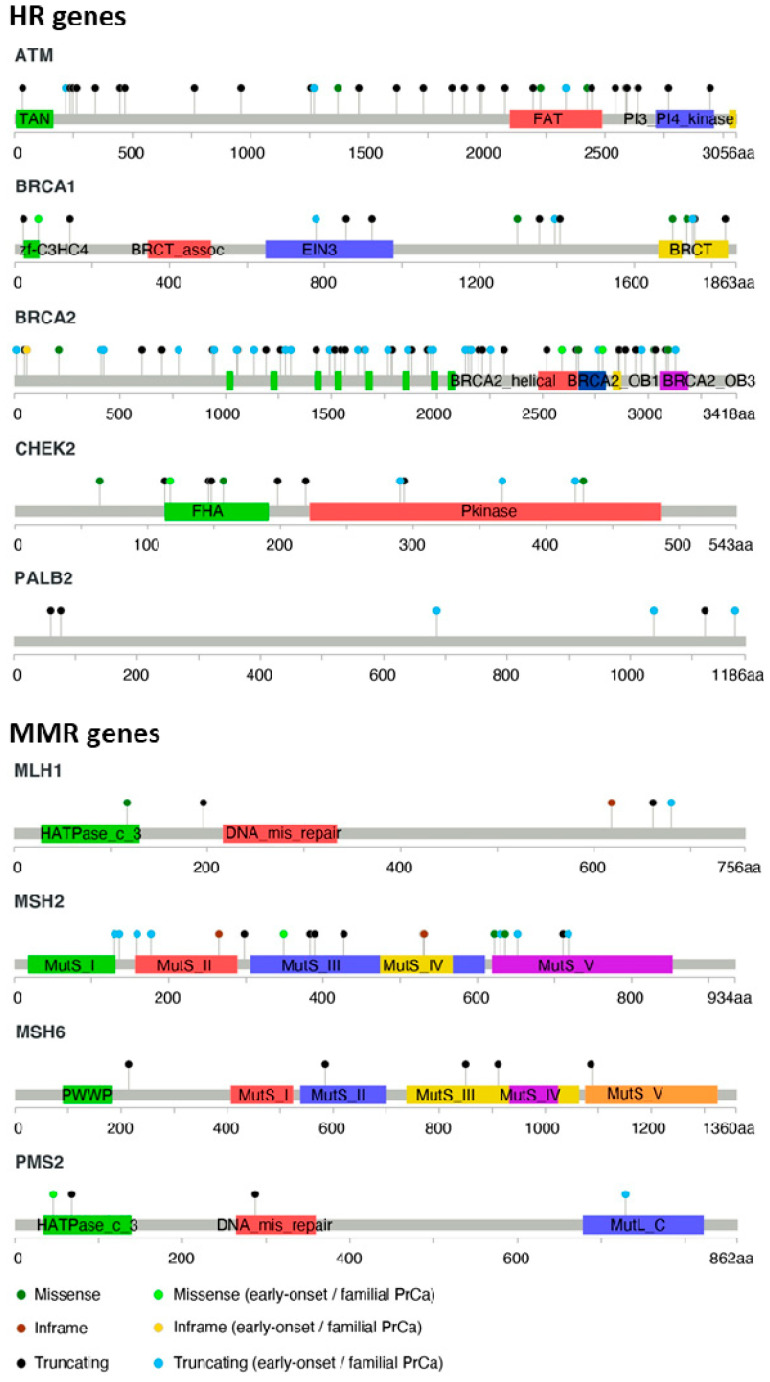
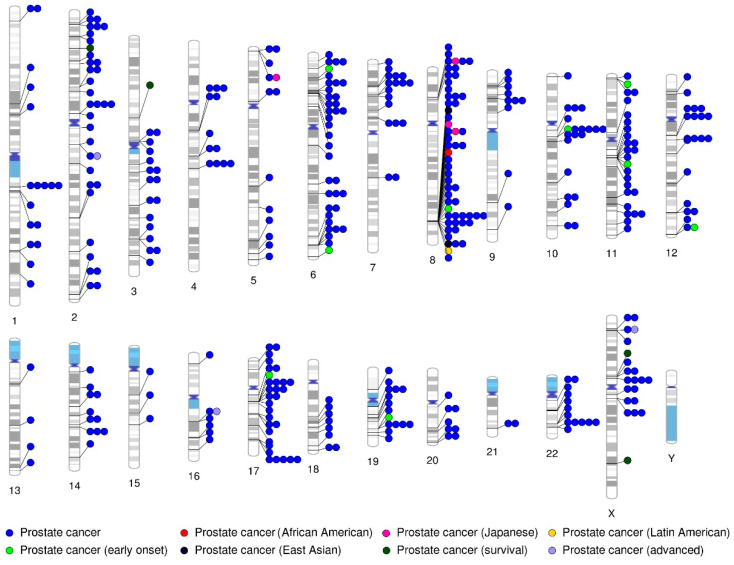
Prostate cancer (PrCa) ranks among the top five cancers for both incidence and mortality worldwide. A significant proportion of PrCa susceptibility has been attributed to inherited predisposition, with 10-20% of cases expected to occur in a hereditary/familial context. Advances in DNA sequencing technologies have uncovered several moderate- to high-penetrance PrCa susceptibility genes, most of which have previously been related to known hereditary cancer syndromes, namely the hereditary breast and ovarian cancer (BRCA1, BRCA2, ATM, CHEK2, and PALB2) and Lynch syndrome (MLH1, MSH2, MSH6, and PMS2) genes. Additional candidate genes have also been suggested, but further evidence is needed to include them in routine genetic testing. Recommendations based on clinical features, family history, and ethnicity have been established for more cost-efficient genetic testing of patients and families who may be at an increased risk of developing PrCa. The identification of alterations in PrCa predisposing genes may help to inform screening strategies, as well as treatment options, in the metastatic setting. This review provides an overview of the genetic basis underlying hereditary predisposition to PrCa, the current genetic screening recommendations, and the implications for clinical management of the disease.
Keywords: genetic testing; germline variants; hereditary cancer syndrome; prostate cancer.
Conflict of interest statement
The authors declare no conflicts of interest. The founding sponsors had no role in the design of the study; in the collection, analyses, or interpretation of data; in the writing of the manuscript; and in the decision to publish the results.
Figures
References
-
- Rebbeck T.R., Devesa S.S., Chang B.-L., Bunker C.H., Cheng I., Cooney K., Eeles R., Fernandez P., Giri V.N., Gueye S.M., et al. Global Patterns of Prostate Cancer Incidence, Aggressiveness, and Mortality in Men of African Descent. Prostate Cancer. 2013;2013:1–12. doi: 10.1155/2013/560857. - DOI - PMC - PubMed
Publication types
MeSH terms
Grants and funding
LinkOut - more resources
Full Text Sources
Medical
Research Materials
Miscellaneous
