


Killer Cell Immunoglobulin-like Receptor Variants Are Associated with Protection from Symptoms Associated with More Severe Course in Parkinson Disease
- PMID: 32709660
- PMCID: PMC7484130
- DOI: 10.4049/jimmunol.2000144
Killer Cell Immunoglobulin-like Receptor Variants Are Associated with Protection from Symptoms Associated with More Severe Course in Parkinson Disease
Abstract
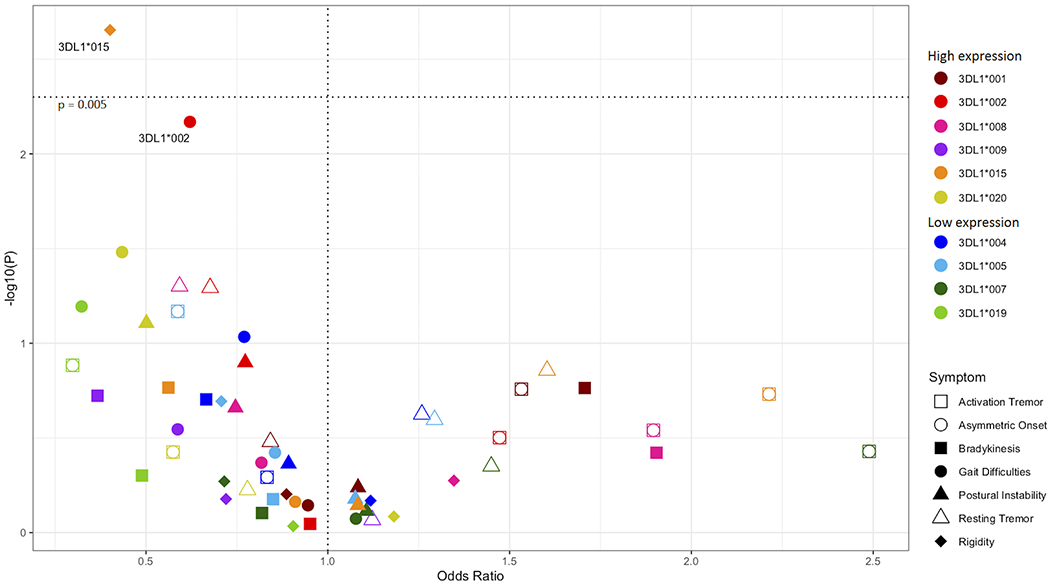
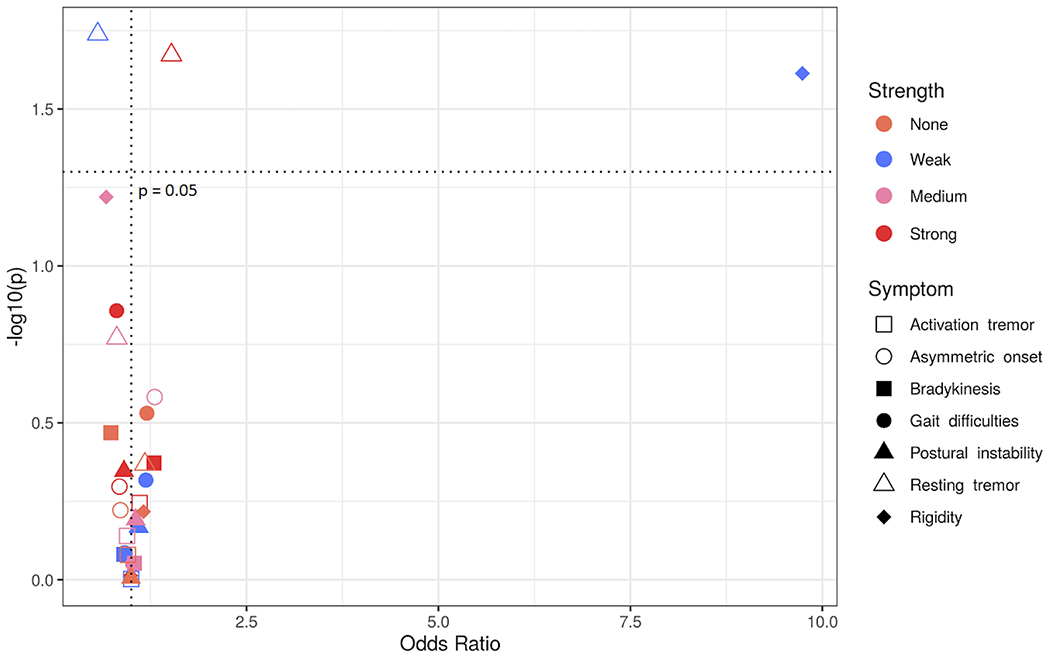
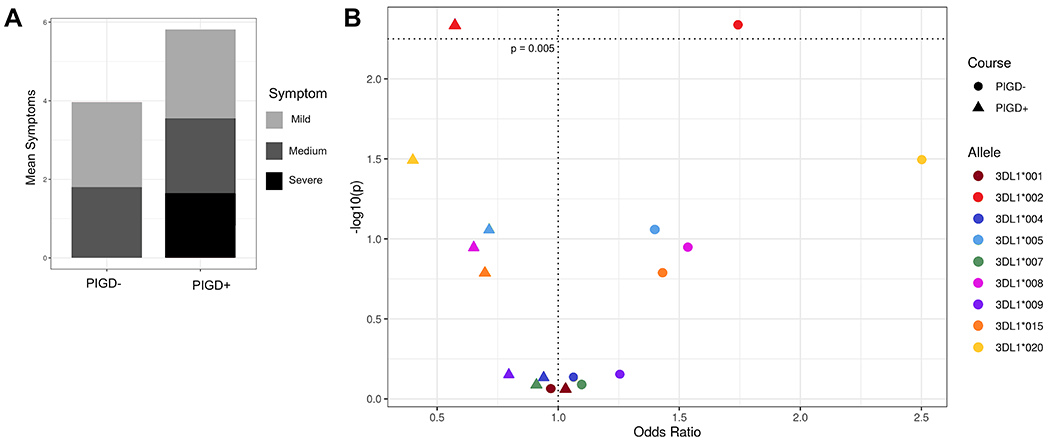
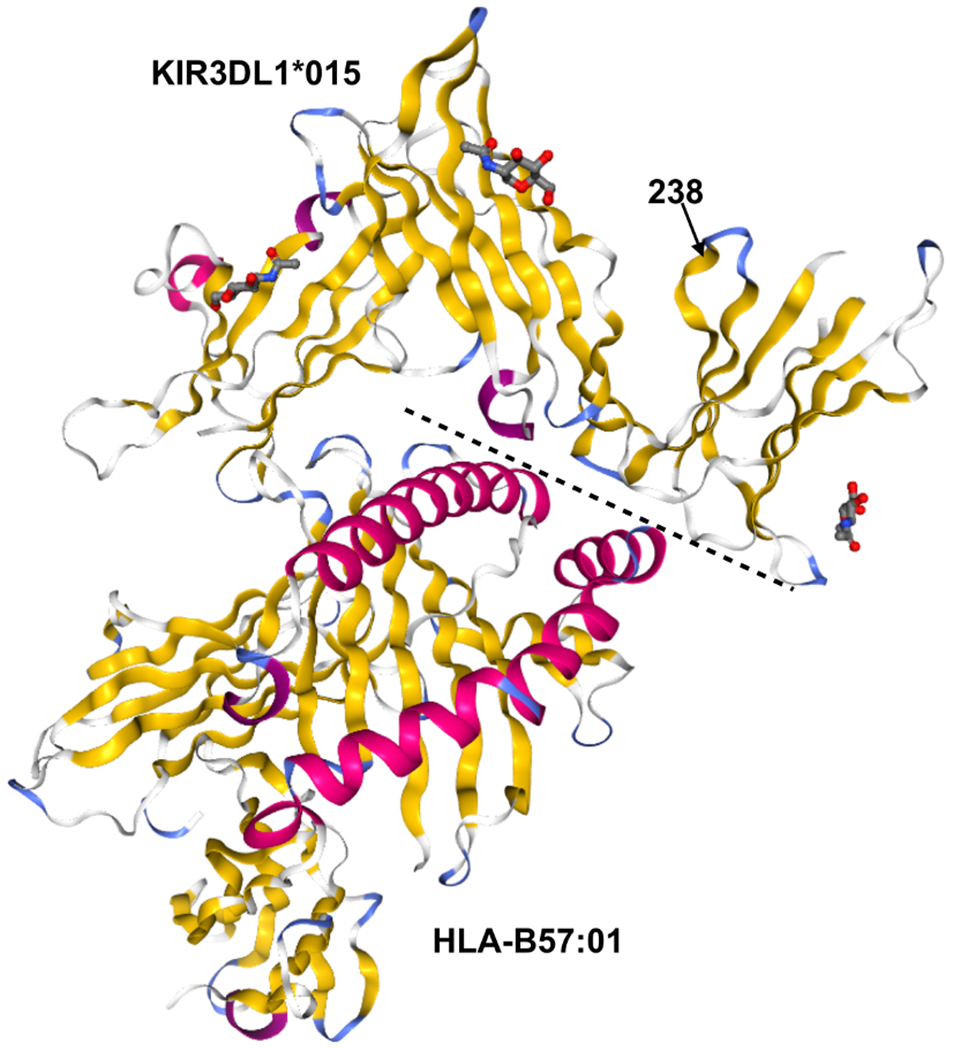
Immune dysfunction plays a role in the development of Parkinson disease (PD). NK cells regulate immune functions and are modulated by killer cell immunoglobulin-like receptors (KIR). KIR are expressed on the surface of NK cells and interact with HLA class I ligands on the surface of all nucleated cells. We investigated KIR-allelic polymorphism to interrogate the role of NK cells in PD. We sequenced KIR genes from 1314 PD patients and 1978 controls using next-generation methods and identified KIR genotypes using custom bioinformatics. We examined associations of KIR with PD susceptibility and disease features, including age at disease onset and clinical symptoms. We identified two KIR3DL1 alleles encoding highly expressed inhibitory receptors associated with protection from PD clinical features in the presence of their cognate ligand: KIR3DL1*015/HLA-Bw4 from rigidity (p c = 0.02, odds ratio [OR] = 0.39, 95% confidence interval [CI] 0.23-0.69) and KIR3DL1*002/HLA-Bw4i from gait difficulties (p c = 0.05, OR = 0.62, 95% CI 0.44-0.88), as well as composite symptoms associated with more severe disease. We also developed a KIR3DL1/HLA interaction strength metric and found that weak KIR3DL1/HLA interactions were associated with rigidity (pc = 0.05, OR = 9.73, 95% CI 2.13-172.5). Highly expressed KIR3DL1 variants protect against more debilitating symptoms of PD, strongly implying a role of NK cells in PD progression and manifestation.
Copyright © 2020 by The American Association of Immunologists, Inc.
Conflict of interest statement
Conflict of Interest Statement: The authors have no conflicts of interest to disclose.
Figures
References
-
- Polymeropoulos MH, Higgins JJ, Golbe LI, Johnson WG, Ide SE, Di Iorio G, Sanges G, Stenroos ES, Pho LT, Schaffer AA, Lazzarini AM, Nussbaum RL, and Duvoisin RC. 1996. Mapping of a gene for Parkinson’s disease to chromosome 4q21-q23. Science 274: 1197–1199. - PubMed
-
- Nussbaum RL, and Polymeropoulos MH. 1997. Genetics of Parkinson’s disease. Hum Mol Genet 6: 1687–1691. - PubMed
-
- Gorell JM, Johnson CC, Rybicki BA, Peterson EL, and Richardson RJ. 1998. The risk of Parkinson’s disease with exposure to pesticides, farming, well water, and rural living. Neurology 50: 1346–1350. - PubMed
-
- Hernan MA, Takkouche B, Caamano-Isorna F, and Gestal-Otero JJ. 2002. A meta-analysis of coffee drinking, cigarette smoking, and the risk of Parkinson’s disease. Ann Neurol 52: 276–284. - PubMed
-
- Hollenbach JA, Norman PJ, Creary LE, Damotte V, Montero-Martin G, Caillier S, Anderson KM, Misra MK, Nemat-Gorgani N, Osoegawa K, Santaniello A, Renschen A, Marin WM, Dandekar R, Parham P, Tanner CM, Hauser SL, Fernandez-Vina M, and Oksenberg JR. 2019. A specific amino acid motif of HLA-DRB1 mediates risk and interacts with smoking history in Parkinson’s disease. Proc Natl Acad Sci U S A 116: 7419–7424. - PMC - PubMed
Publication types
MeSH terms
Substances
Grants and funding
LinkOut - more resources
Full Text Sources
Medical
Research Materials
