


Prospective evaluation of functional brain activity and oxidative damage in breast cancer: changes in task-induced deactivation during a working memory task
- PMID: 32710338
- PMCID: PMC7855199
- DOI: 10.1007/s11682-020-00335-1
Prospective evaluation of functional brain activity and oxidative damage in breast cancer: changes in task-induced deactivation during a working memory task
Abstract
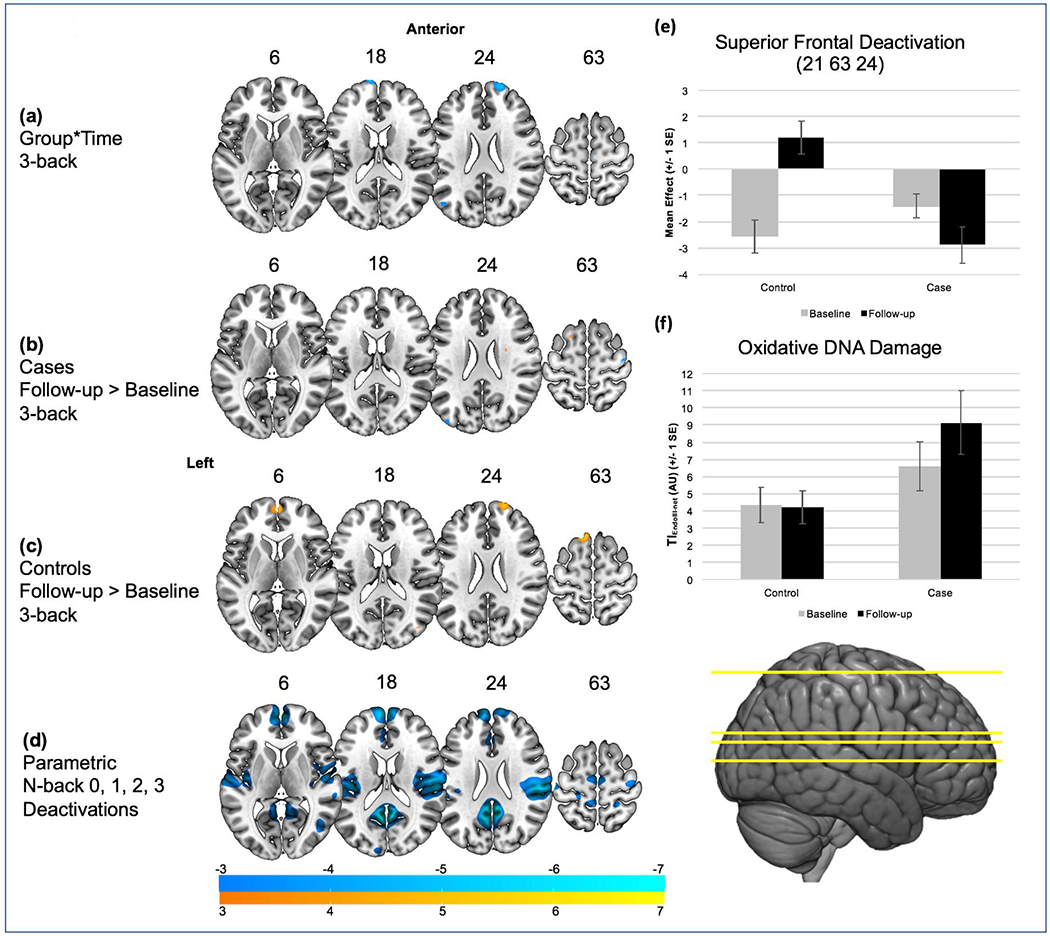
Cancer-related cognitive dysfunction is an important issue for breast cancer survivors. Previous research has identified both cross-sectional and longitudinal alterations in brain function related to cancer status and treatment. In this study, we prospectively collected functional magnetic resonance imaging data in breast cancer cases treated with adjuvant chemotherapy and in controls with no cancer history during a working memory task. Data and blood specimens were collected immediately prior to the start of treatment (baseline) and following completion of treatment (follow-up), and at yoked intervals for controls. In secondary analysis we assessed the levels of oxidative DNA damage in peripheral blood lymphocytes of cases and controls using the Comet assay. A significant group*time interaction revealed reduced deactivation in the superior frontal gyrus in the controls at follow-up, in contrast to cases, who exhibited similar magnitude of deactivation at baseline and follow-up. Working memory performance indicated a significant improvement in the controls at follow-up, and no change in performance in cases. In secondary analyses, oxidative DNA damage levels were elevated in the cases at follow-up compared to controls, but no associations were found between the Comet assay variables and functional imaging at either time-point or group. In light of previous reports on task induced deactivations, our findings reflect continuing effortful processing at follow-up in the breast cancer group, with relatively less effortful processing in the control group given the reduced novelty and practice effects from the baseline to follow-up.
Keywords: Cancer; Working memory; fMRI.
© 2020. Springer Science+Business Media, LLC, part of Springer Nature.
Conflict of interest statement
Figures
References
-
- Callicott JH, Mattay VS, Bertolino A, Finn K, Coppola R, Frank JA, … Weinberger DR (1999). Physiological characteristics of capacity constraints in working memory as revealed by functional MRI. Cereb Cortex, 9(1), 20–26. - PubMed
-
- Conroy SK, McDonald BC, Smith DJ, Moser LR, West JD, Kamendulis LM, … Saykin AJ (2013). Alterations in brain structure and function in breast cancer survivors: effect of post-chemotherapy interval and relation to oxidative DNA damage. Breast Cancer Res Treat, 137(2), 493–502. doi: 10.1007/s10549-012-2385-x - DOI - PMC - PubMed
MeSH terms
Grants and funding
LinkOut - more resources
Full Text Sources
Medical
