


Use of distinct anti-hypertensive drugs and risk for COVID-19 among hypertensive people: A population-based cohort study in Southern Catalonia, Spain
- PMID: 32710674
- PMCID: PMC8029672
- DOI: 10.1111/jch.13948
Use of distinct anti-hypertensive drugs and risk for COVID-19 among hypertensive people: A population-based cohort study in Southern Catalonia, Spain
Abstract
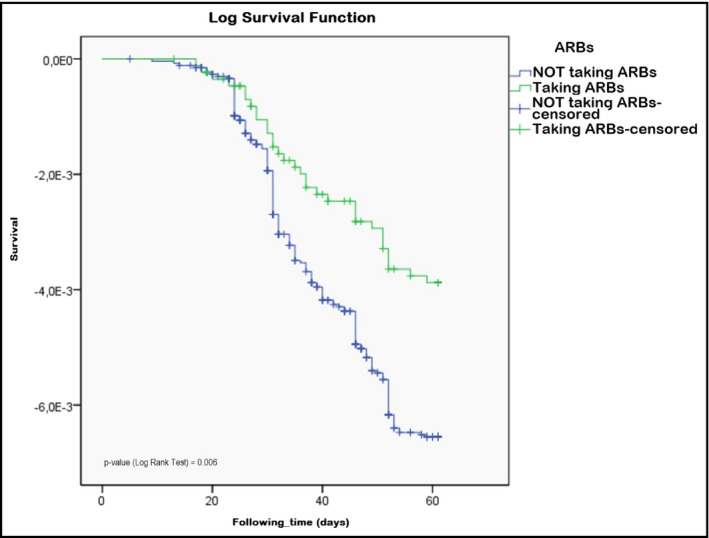
The use of some anti-hypertensive drugs in the current COVID-19 pandemic has become controversial. This study investigated possible relationships between anti-hypertensive medications use and COVID-19 infection risk in the ambulatory hypertensive population. This is a population-based retrospective cohort study involving 34 936 hypertensive adults >50 years in Tarragona (Southern Catalonia, Spain) who were retrospectively followed through pandemic period (from 01/03/2020 to 30/04/2020). Two data sets including demographic/clinical characteristics (comorbidities and cardiovascular medications use) and laboratory PCR codes for COVID-19 were linked to construct an anonymized research database. Cox regression was used to calculate multivariable hazard ratios (HRs) and estimate the risk of suffering COVID-19 infection. Across study period, 205 PCR-confirmed COVID-19 cases were observed, which means an overall incidence of 586.8 cases per 100 000 persons-period. In multivariable analyses, only age (HR: 1.03; 95% CI: 1.02-1.05; P < .001) and nursing home residence (HR: 19.60; 95% CI: 13.80-27.84; P < .001) appeared significantly associated with increased risk of COVID-19. Considering anti-hypertensive drugs, receiving diuretics (HR: 1.22; 95% CI: 0.90-1.67; P = .205), calcium channel blockers (HR: 1.29; 95%CI: 0.91-1.82; P = .148), beta-blockers (HR: 0.97; 95% CI: 0.68-1.37; P = .844), and angiotensin-converting enzyme inhibitors (HR: 0.83; 95% CI: 0.61-1.13; P = .238) did not significantly alter the risk of PCR-confirmed COVID-19, whereas receiving angiotensin II receptor blockers was associated with an almost statistically significant reduction risk (HR: 0.67; 95% CI: 0.44-1.01; P = .054). In conclusion, our data support that receiving renin-angiotensin-aldosterone system inhibitors does not predispose for suffering COVID-19 infection in ambulatory hypertensive people. Conversely, receiving angiotensin II receptor blockers could be related with a reduced risk.
Keywords: COVID-19; SARS-COV-2; angiotensin II receptor blockers; angiotensin-converting enzyme inhibitors; anti-hypertensive medication; hypertension.
©2020 Wiley Periodicals, LLC.
Conflict of interest statement
All authors declared that they have no conflicts of interest.
Figures
References
-
- World Health Organization . Coronavirus disease 2019 (COVID‐19): situation report‐87, https://www.who.int/docs/default‐source/coronaviruse/situation‐reports/2... (2020 [accessed 10 May 2020].
-
- Lopes RD, Macedo AVS, de Barros E, et al. Continuing versus suspending angiotensin‐converting enzyme inhibitors and angiotensin receptor blockers: impact on adverse outcomes in hospitalized patients with severe acute respiratory syndrome coronavirus 2 (SARS‐CoV‐2) [published online ahead of print, 2020 May 13]. Am Heart J. 2020.49‐59 10.1016/j.ahj.2020.05.002 - DOI - PMC - PubMed
-
- Esler M, Esler D. Can angiotensin receptor‐blockingdrugsperhaps be harmful in the COVID‐19 pandemic? J Hypertens. 2020;38(5):781‐782. - PubMed
Publication types
MeSH terms
Substances
Grants and funding
LinkOut - more resources
Full Text Sources
Medical
Miscellaneous
