


The Etiology of Pneumonia From Analysis of Lung Aspirate and Pleural Fluid Samples: Findings From the Pneumonia Etiology Research for Child Health (PERCH) Study
- PMID: 32710751
- PMCID: PMC8662778
- DOI: 10.1093/cid/ciaa1032
The Etiology of Pneumonia From Analysis of Lung Aspirate and Pleural Fluid Samples: Findings From the Pneumonia Etiology Research for Child Health (PERCH) Study
Abstract
Background: An improved understanding of childhood pneumonia etiology is required to inform prevention and treatment strategies. Lung aspiration is the gold standard specimen for pneumonia diagnostics. We report findings from analyses of lung and pleural aspirates collected in the Pneumonia Etiology Research for Child Health (PERCH) study.
Methods: The PERCH study enrolled children aged 1-59 months hospitalized with World Health Organization-defined severe or very severe pneumonia in 7 countries in Africa and Asia. Percutaneous transthoracic lung aspiration (LA) and pleural fluid (PF) aspiration was performed on a sample of pneumonia cases with radiological consolidation and/or PF in 4 countries. Venous blood and nasopharyngeal/oropharyngeal swabs were collected from all cases. Multiplex quantitative polymerase chain reaction (PCR) and routine microbiologic culture were applied to clinical specimens.
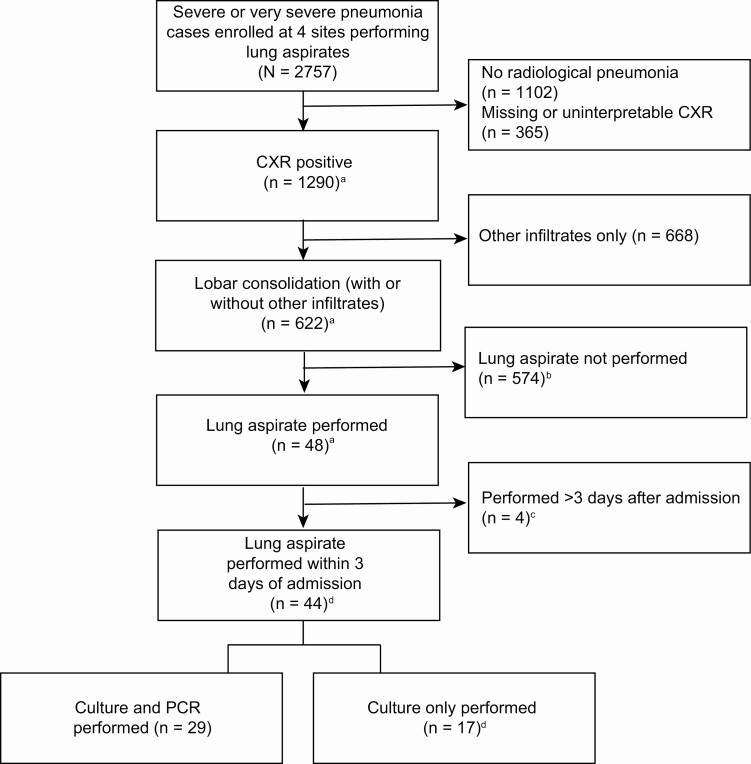
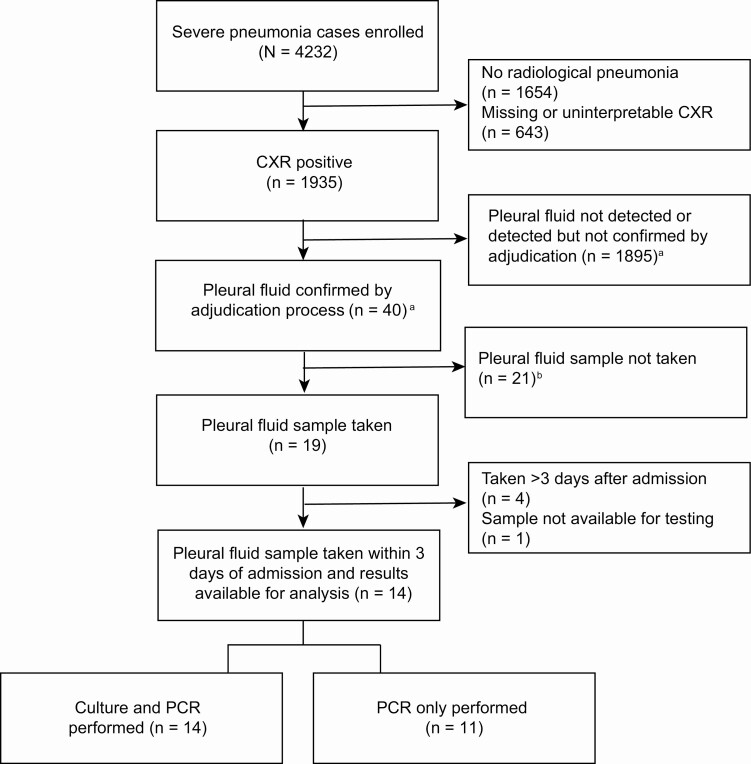
Results: Of 44 LAs performed within 3 days of admission on 622 eligible cases, 13 (30%) had a pathogen identified by either culture (5/44) or by PCR (11/29). A pathogen was identified in 12/14 (86%) PF specimens tested by either culture (9/14) or PCR (9/11). Bacterial pathogens were identified more frequently than viruses. All but 1 of the cases with a virus identified were coinfected with bacterial pathogens. Streptococcus pneumoniae (9/44 [20%]) and Staphylococcus aureus (7/14 [50%]) were the predominant pathogens identified in LA and PF, respectively.
Conclusions: Bacterial pathogens predominated in this selected subgroup of PERCH participants drawn from those with radiological consolidation or PF, with S. pneumoniae and S. aureus the leading pathogens identified.
Keywords: lung aspirate; PERCH; etiology childhood; pleural fluid aspirate; pneumonia.
© The Author(s) 2020. Published by Oxford University Press for the Infectious Diseases Society of America.
Figures
References
-
- Selwyn BJ. The epidemiology of acute respiratory tract infection in young children: comparison of findings from several developing countries. Coordinated data group of BOSTID researchers. Rev Infect Dis 1990; 12:S870–88. - PubMed
Publication types
MeSH terms
Grants and funding
LinkOut - more resources
Full Text Sources
Medical
