


Sex differences in driving under the influence of cannabis: The role of medical and recreational cannabis use
- PMID: 32711286
- PMCID: PMC7443537
- DOI: 10.1016/j.addbeh.2020.106525
Sex differences in driving under the influence of cannabis: The role of medical and recreational cannabis use
Abstract
Background: Existing evidence suggest that cannabis may impair driving and is the most prevalent drug identified in drivers. Males exhibit an excess risk for driving under the influence of drugs or alcohol compared to females. We assessed sex differences in the association between the reason for cannabis use (medical, recreational, or both) and driving under the influence of cannabis (DUIC).
Methods: A sample of 17,405 past 12-month cannabis users (18 + years old) were analyzed from the 2016-17 National Survey on Drug Use and Health. Multivariable logistic regression was used to assess the interaction of sex and reason for cannabis use on DUIC using predicted probabilities.
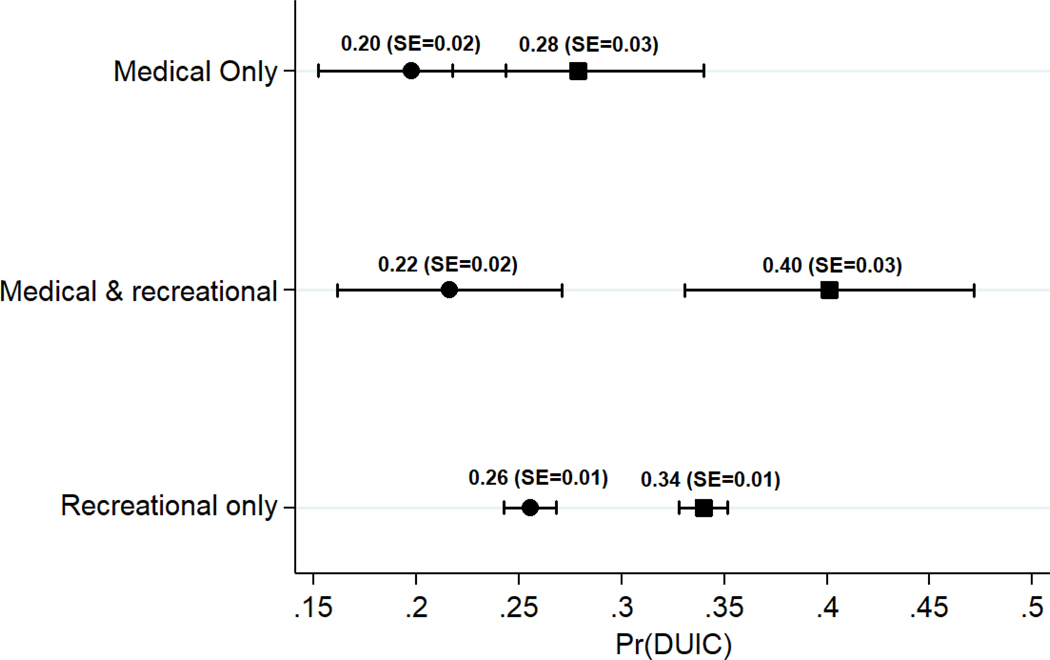
Results: Among cannabis users in the sample, 88.1% used for recreational reasons, 7.8% used for medical reasons, and 4.1% used for medical and recreational reasons. The probability of DUIC was as low as 20% among female medical only users, and as high as 40% among male combined medical and recreational users. Females showed more similar probabilities of DUIC across reasons of use (range 20% to 25%s) than males (range 28% to 40%). The difference in the probability of DUIC between combined medical and recreational users and recreational only users was significantly greater among males than among females (Δ 0.1, p < 0.05).
Conclusions: The observed effects of sex and reasons for cannabis use on DUIC suggests a need for targeted educational interventions, particularly among males reporting combined medical and recreational marijuana use.
Keywords: Cannabis; Driving under the influence; Marijuana; Medical Cannabis; Recreational Cannabis; Sex.
Copyright © 2020 Elsevier Ltd. All rights reserved.
Conflict of interest statement
Declaration of Competing Interest The authors declare that they have no known competing financial interests or personal relationships that could have appeared to influence the work reported in this paper.
Figures
References
-
- Agresti A (2013). Categorical Data Analysis. Hoboken, NJ: Wiley.
-
- Aitken C, Kerger M, & Crofts N. (2000). Drivers Who Use Illicit Drugs: behaviour and perceived risks. Drugs: Education, Prevention and Policy, 7(1), 39–50. 10.1080/dep.7.1.39.50 - DOI
Publication types
MeSH terms
Substances
Grants and funding
LinkOut - more resources
Full Text Sources
Medical
Miscellaneous
