


Silibinin Triggers the Mitochondrial Pathway of Apoptosis in Human Oral Squamous Carcinoma Cells
- PMID: 32711410
- PMCID: PMC7573425
- DOI: 10.31557/APJCP.2020.21.7.1877
Silibinin Triggers the Mitochondrial Pathway of Apoptosis in Human Oral Squamous Carcinoma Cells
Abstract
Background: Silibinin, a natural polyphenolic flavonoid present in seed extracts of milk thistle (Silybum marianum). It has been shown to interact with various cancer-related cell signalling pathways in preclinical models, demonstrating promising anticancer effects in vitro and in vivo.
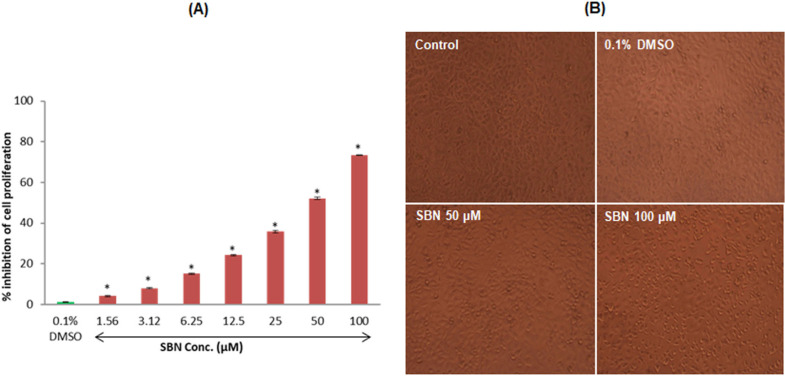
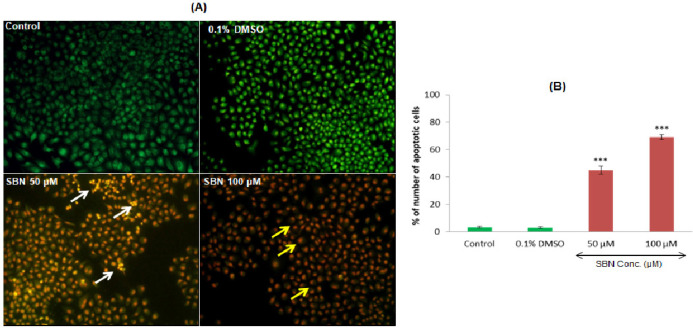
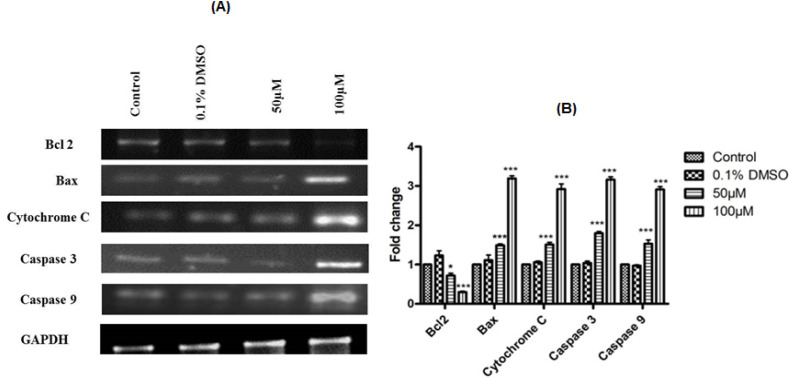
Materials and methods: The cytotoxic effect of silibinin was evaluated in human oral squamous carcinoma (SCC-25) cells by MTT assay. The apoptosis-related morphological changes were investigated by AO/EB dual staining. The cytochrome c, caspases-3, and -9, B-cell lymphoma-2 (Bcl-2), and B-cell associated X protein (Bax) gene expressions were analysed by PCR.
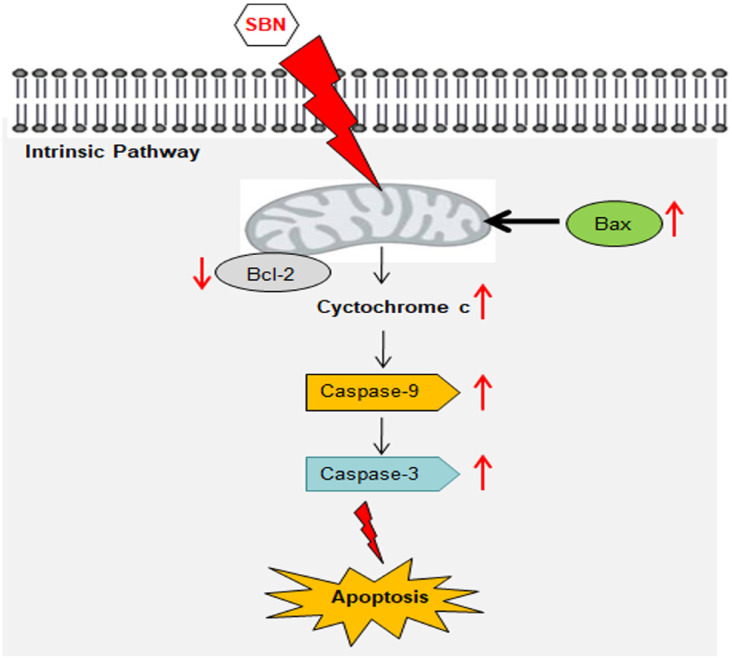
Results: We have shown that silibinin treatment for 24 h in SCC-25 cells induced cytotoxicity in a concentration-dependent manner. The cytotoxic potential was due to the induction of apoptosis via the release of mitochondrial cytochrome c into the cytosol and subsequent activation of caspases-3 and -9. Dual staining assay was further confirmed the induction of early apoptosis upon silibinin treatment.
Conclusion: The results from this study show that silibinin can be considered as a promising drug candidate for the treatment of oral squamous cell carcinoma.
Keywords: Apoptosis; Caspases; Cytotoxicity; Silybum marianum; cytochrome C.
Figures
References
-
- Ali SO, Darwish HA, Ismail NA. Curcumin, silybin phytosome(®) and α-R-Lipoic Acid mitigate chronic hepatitis in Rat by inhibiting oxidative stress and inflammatory cytokines production. Basic Clin Pharmacol Toxicol. 2016;118:369–80. - PubMed
-
- Baskić D, Popović S, Ristić P, Arsenijević NN. Analysis of cycloheximide-induced apoptosis in human leukocytes: fluorescence microscopy using annexin V/propidium iodide versus acridin orange/ethidium bromide. Cell Biol Int. 2006;30:924–32. - PubMed
-
- Bosch-Barrera J, Menendez JA. Silibinin and STAT3: A natural way of targeting transcription factors for cancer therapy. Cancer Treat Rev. 2015;41:540–6. - PubMed
MeSH terms
Substances
LinkOut - more resources
Full Text Sources
Medical
Research Materials
