


Understanding COVID-19 via comparative analysis of dark proteomes of SARS-CoV-2, human SARS and bat SARS-like coronaviruses
- PMID: 32712910
- PMCID: PMC7382329
- DOI: 10.1007/s00018-020-03603-x
Understanding COVID-19 via comparative analysis of dark proteomes of SARS-CoV-2, human SARS and bat SARS-like coronaviruses
Abstract
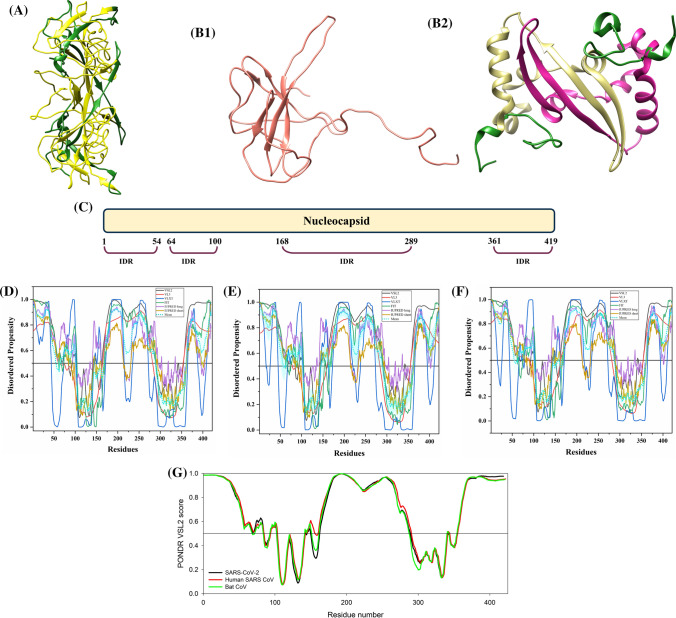
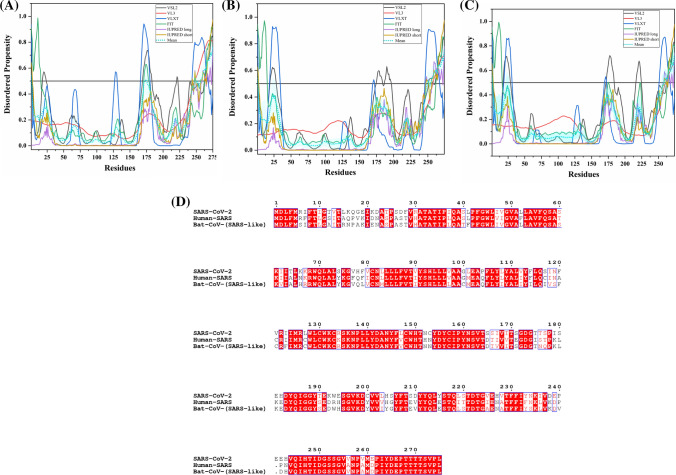
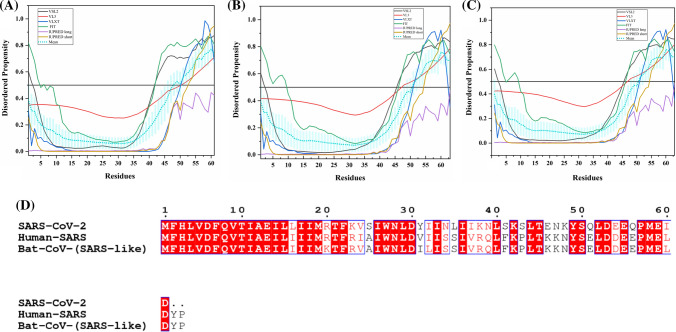
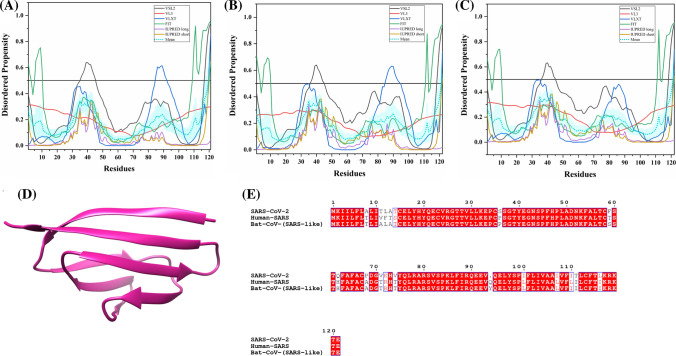
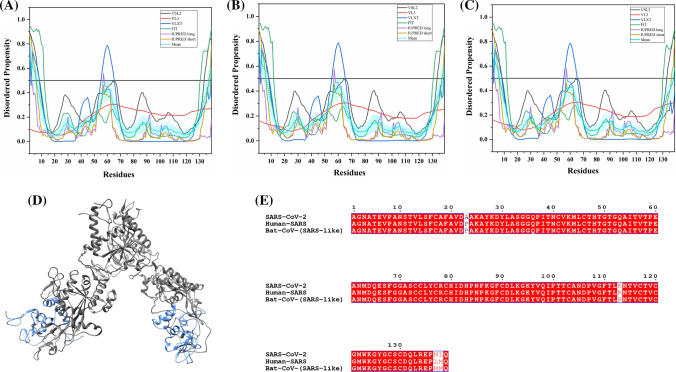
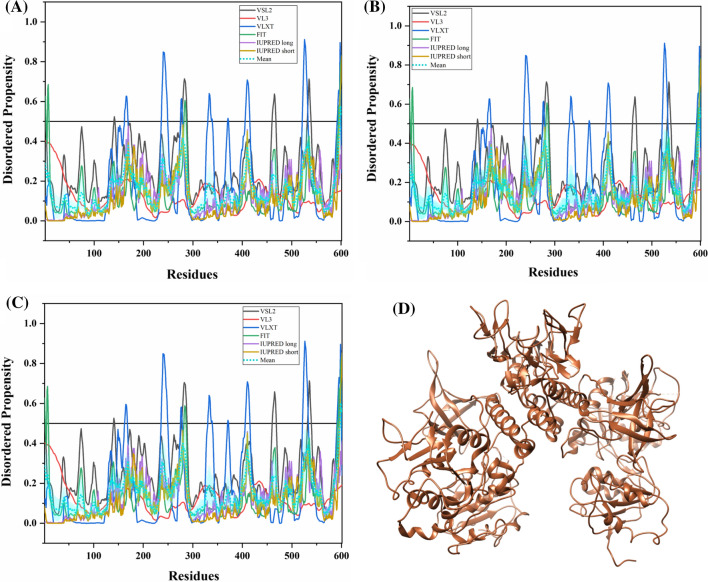
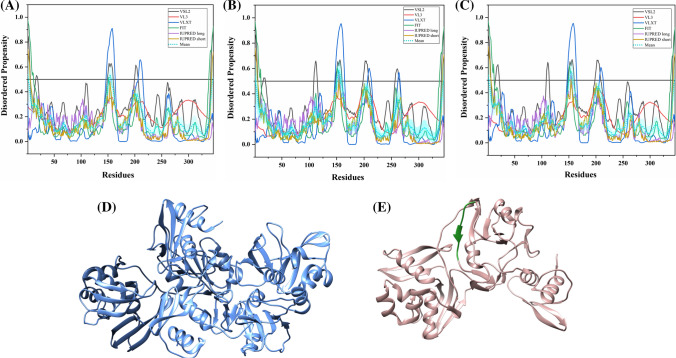
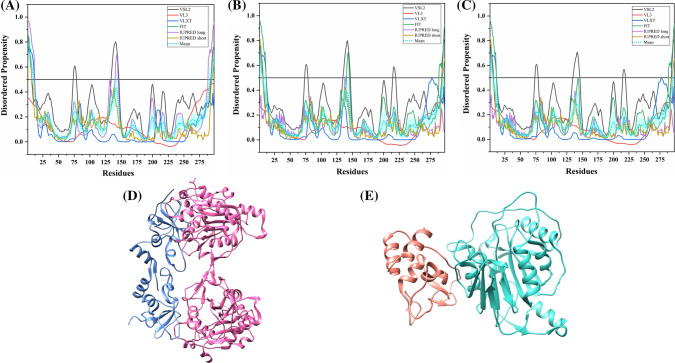
The recently emerged coronavirus designated as SARS-CoV-2 (also known as 2019 novel coronavirus (2019-nCoV) or Wuhan coronavirus) is a causative agent of coronavirus disease 2019 (COVID-19), which is rapidly spreading throughout the world now. More than 1.21 million cases of SARS-CoV-2 infection and more than 67,000 COVID-19-associated mortalities have been reported worldwide till the writing of this article, and these numbers are increasing every passing hour. The World Health Organization (WHO) has declared the SARS-CoV-2 spread as a global public health emergency and admitted COVID-19 as a pandemic now. Multiple sequence alignment data correlated with the already published reports on SARS-CoV-2 evolution indicated that this virus is closely related to the bat severe acute respiratory syndrome-like coronavirus (bat SARS-like CoV) and the well-studied human SARS coronavirus (SARS-CoV). The disordered regions in viral proteins are associated with the viral infectivity and pathogenicity. Therefore, in this study, we have exploited a set of complementary computational approaches to examine the dark proteomes of SARS-CoV-2, bat SARS-like, and human SARS CoVs by analysing the prevalence of intrinsic disorder in their proteins. According to our findings, SARS-CoV-2 proteome contains very significant levels of structural order. In fact, except for nucleocapsid, Nsp8, and ORF6, the vast majority of SARS-CoV-2 proteins are mostly ordered proteins containing less intrinsically disordered protein regions (IDPRs). However, IDPRs found in SARS-CoV-2 proteins are functionally important. For example, cleavage sites in its replicase 1ab polyprotein are found to be highly disordered, and almost all SARS-CoV-2 proteins contains molecular recognition features (MoRFs), which are intrinsic disorder-based protein-protein interaction sites that are commonly utilized by proteins for interaction with specific partners. The results of our extensive investigation of the dark side of SARS-CoV-2 proteome will have important implications in understanding the structural and non-structural biology of SARS or SARS-like coronaviruses.
Keywords: Coronavirus disease 2019; Intrinsically disordered proteins; Molecular recognition features; Nucleotide-binding regions; SARS coronavirus.
Conflict of interest statement
All authors declare that there is no financial conflict of interest.
Figures



References
-
- Coronavirus disease 2019. https://www.who.int/emergencies/diseases/novel-coronavirus-2019. Accessed 29 Feb 2020
-
- Woo PCY, Lau SKP, Lam CSF, et al. Discovery of seven novel mammalian and avian coronaviruses in the genus deltacoronavirus supports bat coronaviruses as the gene source of alphacoronavirus and betacoronavirus and avian coronaviruses as the gene source of gammacoronavirus and deltacoronavirus. J Virol. 2012;86:3995–4008. doi: 10.1128/jvi.06540-11. - DOI - PMC - PubMed
MeSH terms
Substances
Grants and funding
LinkOut - more resources
Full Text Sources
Miscellaneous
