[Preprint]. 2020 May 27:3606354.
doi: 10.2139/ssrn.3606354.

Neutralizing antibody and soluble ACE2 inhibition of a replication-competent VSV-SARS-CoV-2 and a clinical isolate of SARS-CoV-2

Affiliations

Neutralizing antibody and soluble ACE2 inhibition of a replication-competent VSV-SARS-CoV-2 and a clinical isolate of SARS-CoV-2

James Brett Case et al. SSRN. .

Update in

Abstract

Antibody-based interventions against SARS-CoV-2 could limit morbidity, mortality, and possibly disrupt epidemic transmission. An anticipated correlate of such countermeasures is the level of neutralizing antibodies against the SARS-CoV-2 spike protein, yet there is no consensus as to which assay should be used for such measurements. Using an infectious molecular clone of vesicular stomatitis virus (VSV) that expresses eGFP as a marker of infection, we replaced the glycoprotein gene (G) with the spike protein of SARS-CoV-2 (VSV-eGFP-SARS-CoV-2) and developed a high-throughput imaging-based neutralization assay at biosafety level 2. We also developed a focus reduction neutralization test with a clinical isolate of SARS-CoV-2 at biosafety level 3. We compared the neutralizing activities of monoclonal and polyclonal antibody preparations, as well as ACE2-Fc soluble decoy protein in both assays and find an exceptionally high degree of concordance. The two assays will help define correlates of protection for antibody-based countermeasures including therapeutic antibodies, immune γ-globulin or plasma preparations, and vaccines against SARS-CoV-2. Replication-competent VSV-eGFP-SARSCoV-2 provides a rapid assay for testing inhibitors of SARS-CoV-2 mediated entry that can be performed in 7.5 hours under reduced biosafety containment.


Conflict of interest statement

COMPETING FINANCIAL INTERESTS M.S.D. is a consultant for Inbios, Vir Biotechnology, NGM Biopharmaceuticals, and on the Scientific Advisory Board of Moderna. D.C. and H.W.V. are employees of Vir Biotechnology Inc. and may hold shares in Vir Biotechnology Inc. S.P.J.W. and P.W.R. have filed a disclosure with Washington University for the recombinant VSV.

Figures
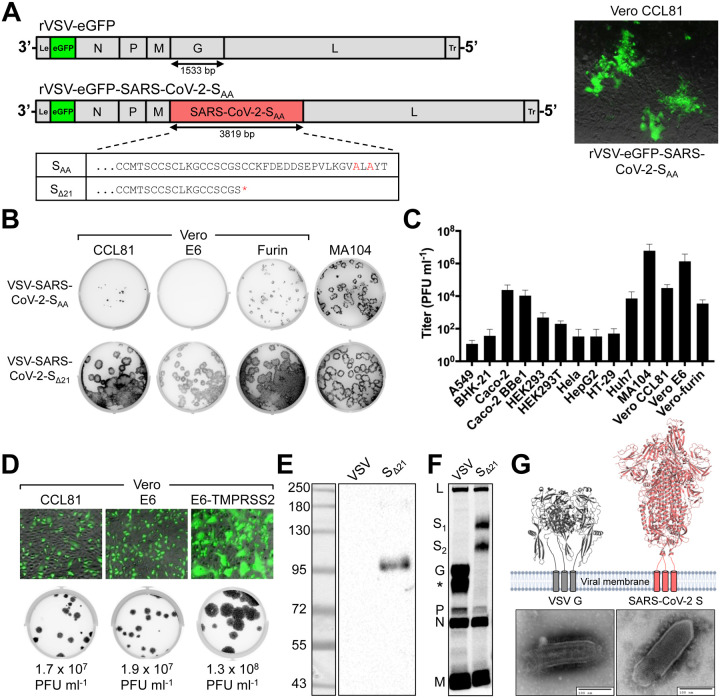
Figure 1.
Figure 1.. Generation and characterization of an infectious VSV-SARS-CoV-2 chimera.
(A) A schematic diagram depicting the genomic organization of the VSV recombinants, shown 3’ to 5’ are the leader region (Le), eGFP, nucleocapsid (N), phosphoprotein (P), matrix (M), glycoprotein (G) or SARS-CoV-2 S, large polymerase (L), and trailer region (Tr). (Right panel) Infection of Vero CCL81 cells with supernatant from cells transfected with the eGFP reporter VSV SARS-CoV-2-SAA. Images were acquired 44 hours post-infection (hpi) using a fluorescence microscope, and GFP and transmitted light images were merged using ImageJ. (Bottom panel) Alignment of the cytoplasmic tail of the VSV-SARS-CoV-2-SAA and the sequence resulting from forward genetic selection of a mutant, which truncated the cytoplasmic tail by 21 amino acids. Mutations deviating from the wild-type spike are indicated in red, and an asterisk signifies a mutation to a stop codon. (B) Plaque assays were performed to compare the spread of VSV-SARS-CoV-2-SAA rescue supernatant and VSV-SARS-CoV-2-SΔ21 on Vero CCL81, Vero E6, Vero-furin, and MA104 cells. Plates were scanned on a biomolecular imager and expression of eGFP is shown 92 hpi (representative images are shown; n>3 except for SAA on Vero E6, Vero-furin, and MA104 cells). (C) The indicated cell types were infected with VSV-SARS-CoV-2-SΔ21 at an MOI of 0.5. Cells and supernatants were harvested at 24 hpi and titrated on MA104 cells (data are pooled from three or more independent experiments). (D) (Top panel) The indicated cells were infected with VSV-SARS-CoV-2-SΔ21 at an MOI of 2. Images were acquired 7.5 hpi using a fluorescence microscope and GFP, and transmitted light images were processed and merged using ImageJ (data are representative of two independent experiments). (Bottom panel) Plaque assays were performed on the indicated cell types using VSV-SARS-CoV-2-SΔ21. Images showing GFP expression were acquired 48 hpi using a biomolecular imager (data are representative of at least 3 independent experiments). (E) Western blotting was performed on concentrated VSV-SARS-CoV-2-SΔ21 and wild-type VSV particles on an 8% non-reducing SDS-PAGE gel. S1 was detected using a cross-reactive anti-SARS-CoV mAb (CR3022) (data are representative of two independent experiments). (F) BSRT7/5 cells were inoculated at an MOI of 10 with VSV-eGFP, G-complemented VSV-SARS-CoV-2-SΔ21, or mock infected (not shown), and metabolically labeled with [35S] methionine and cysteine for 20 h starting at 5 hpi in the presence of actinomycin D. Viral supernatants were analyzed by SDS-PAGE. A representative phosphor-image is shown from two independent experiments. An asterisk indicates a band that also was detected in the mock lane (not shown). (G) Purified VSV-WT and VSV-SARS-CoV-2-SΔ21 particles were subjected to negative stain electron microscopy. Prefusion structures of each respective glycoprotein are modeled above each EM image (PDB: 5I2S and 6VSB).
Figure 2.
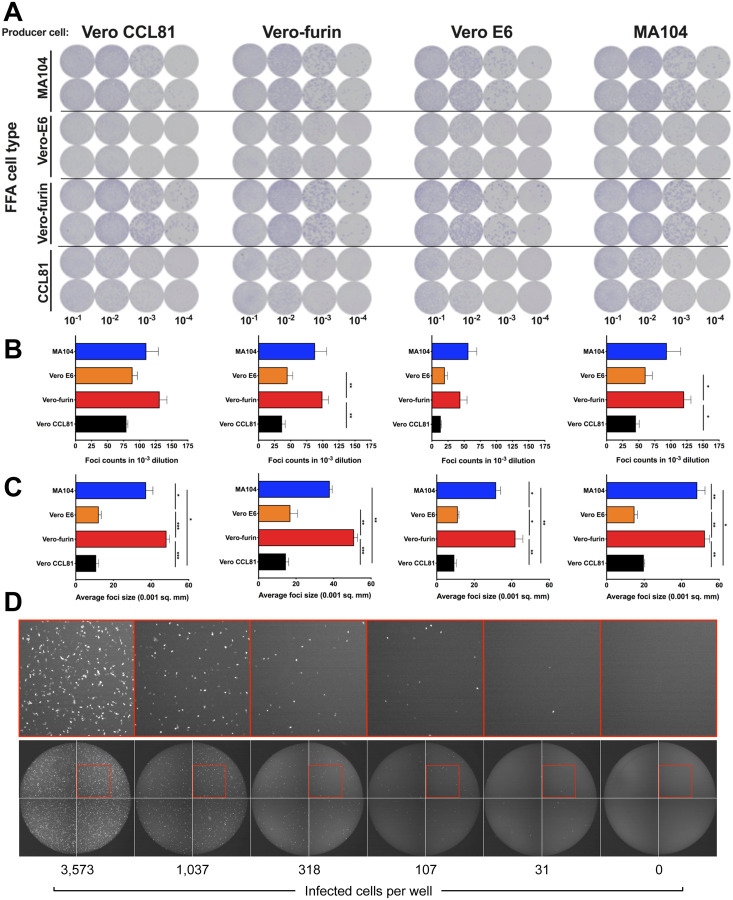
Figure 2.. Development of a SARS-CoV-2 focus-forming assay and a VSV-SARS-CoV-2-SΔ21 eGFP-reduction assay.
(A) Representative focus forming assay images of viral stocks generated from each producer cell type (top) were developed on the indicated cell substrates (indicated on the left side). Data are representative of two independent experiments. Foci obtained in (A) were counted (B) and the size was determined (C) using an ImmunoSpot plate reader (* P < 0.05, ** P < 0.01, *** P < 0.001 1 by One-way ANOVA with Tukey’s multiple comparisons test). (D) Representative serial dilution series of VSV-SARS-CoV-2-SΔ21 on Vero E6 cells. The total number of infected cells per well was quantified using an automated microscope. Insets of enhanced magnification are shown in red. Data are representative of two independent experiments.
Figure 3.
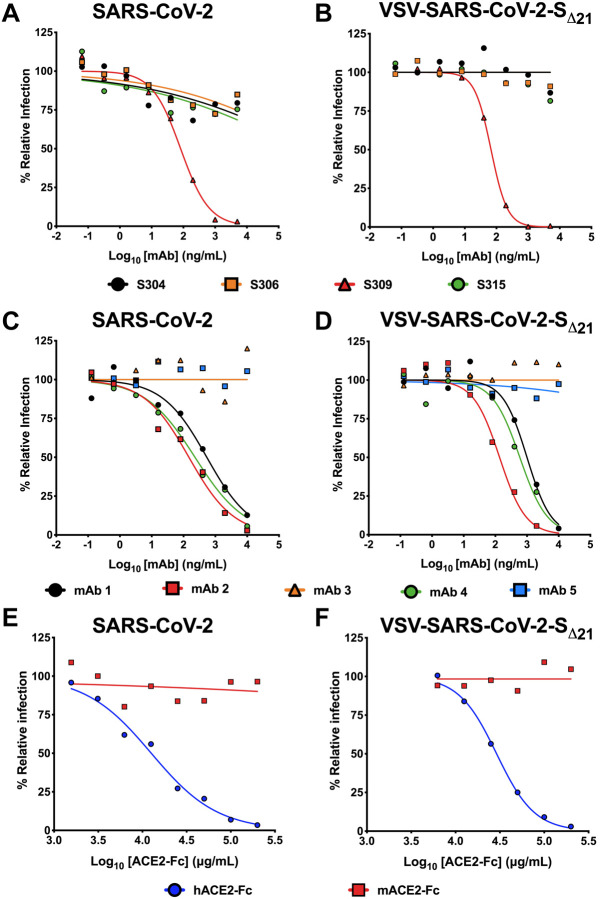
Figure 3.. Neutralization of VSV-SARS-CoV-2-SΔ21 and SARS-CoV-2 by human monoclonal antibodies and hACE2 decoy receptors.
A-B. Cross-reactive mAbs isolated from a SARS-CoV survivor were tested for neutralizing activity against SARS-CoV-2 (A) or VSV-SARS-CoV-2-SΔ21 (B) (n=2 and 3, respectively). C-D. SARS-CoV-2 RBD-specific antibodies obtained from a phage library were tested for their capacity to neutralize SARS-CoV-2 (C) or VSV-SARS-CoV-2-SΔ21 (D) (n=2 and 2, respectively). E-F. hACE2-Fc or mACE2-Fc were tested for their neutralization activity against SARS-CoV-2 (E) or VSV-SARS-CoV-2-SΔ21 (F) (n=2 and 3, respectively).
Figure 4.
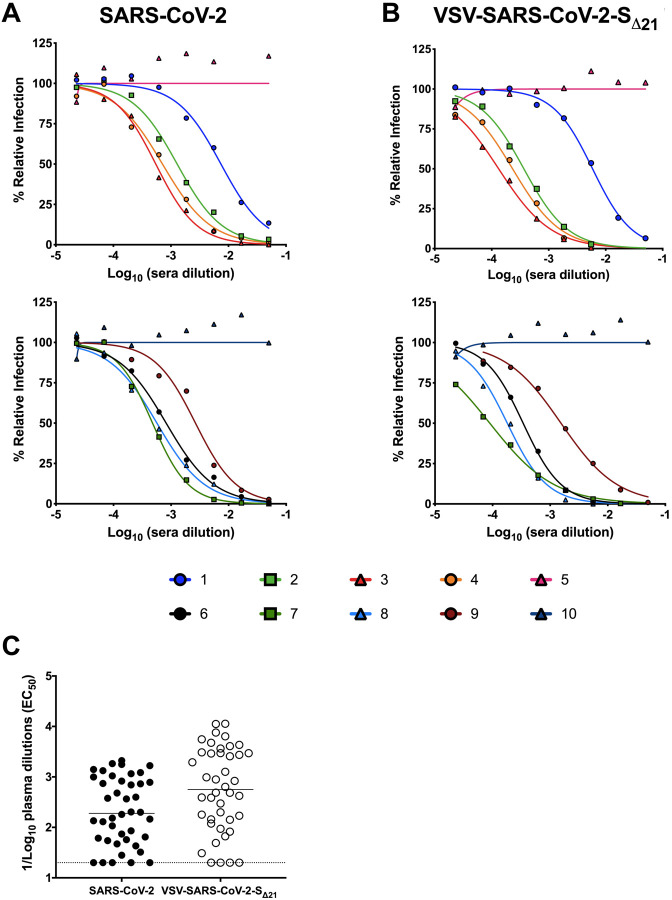
Figure 4.. Human immune serum neutralization of SARS-CoV-2 and VSV-SARS-CoV2-SΔ21.
Representative neutralization curves of serum from SARS-CoV-2-infected donors with low, medium, and high inhibitory activity against SARS-CoV-2 (A) or VSV-SARS-CoV-2-SΔ21 (B) (n=2 and 2, respectively). (C) EC50 values of all human serum tested for neutralization of SARS-CoV-2 and VSV-SARS-CoV-2-SΔ21. Differences in the geometric mean or median titers were less than 3-fold between FRNT and GRNT assays.
Figure 5.
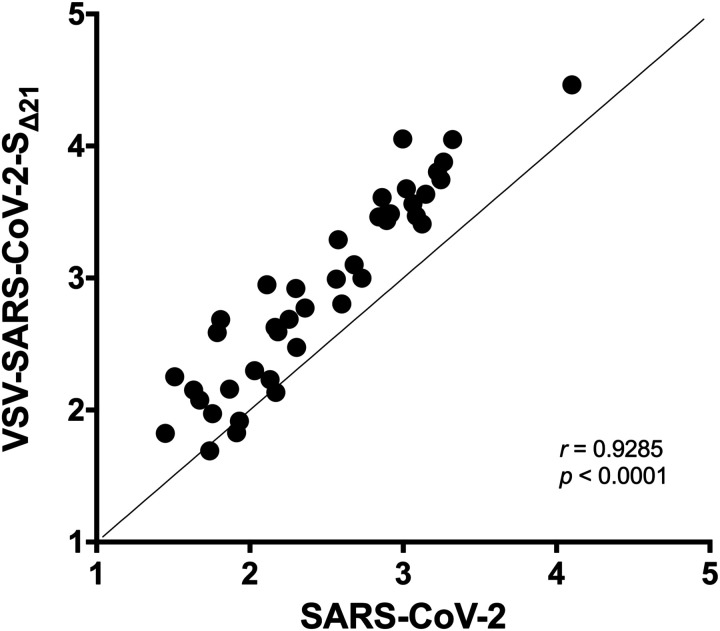
Figure 5.. Correlation analysis of neutralization of SARS-CoV-2 and VSV-SARS-CoV 2-SΔ21.
EC50 values determined in Fig 3A–D, and 4A–B were used to determine correlation between neutralization assays. Spearman’s correlation r and p values are indicated.

References

    1. Bai Y., Yao L., Wei T., Tian F., Jin D.Y., Chen L., and Wang M. (2020). Presumed Asymptomatic Carrier Transmission of COVID-19. JAMA. - PMC - PubMed
    1. Bloch E.M., Shoham S., Casadevall A., Sachais B.S., Shaz B., Winters J.L., van Buskirk C., Grossman B.J., Joyner M., Henderson J.P., et al. (2020). Deployment of convalescent plasma for the prevention and treatment of COVID-19. J Clin Invest. - PMC - PubMed
    1. Carette J.E., Raaben M., Wong A.C., Herbert A.S., Obernosterer G., Mulherkar N., Kuehne A.I., Kranzusch P.J., Griffin A.M., Ruthel G., et al. (2011). Ebola virus entry requires the cholesterol transporter Niemann-Pick C1. Nature 477, 340–343. - PMC - PubMed
    1. Chen J., Kovacs J.M., Peng H., Rits-Volloch S., Lu J., Park D., Zablowsky E., Seaman M.S., and Chen B. (2015). HIV-1 ENVELOPE. Effect of the cytoplasmic domain on antigenic characteristics of HIV-1 envelope glycoprotein. Science 349, 191–195. - PMC - PubMed
    1. Chen L., Xiong J., Bao L., and Shi Y. (2020). Convalescent plasma as a potential therapy for COVID-19. Lancet Infect Dis 20, 398–400. - PMC - PubMed

Publication types

LinkOut - more resources