


On the Assessment of Functional Connectivity in an Immersive Brain-Computer Interface During Motor Imagery
- PMID: 32714232
- PMCID: PMC7343938
- DOI: 10.3389/fpsyg.2020.01301
On the Assessment of Functional Connectivity in an Immersive Brain-Computer Interface During Motor Imagery
Abstract
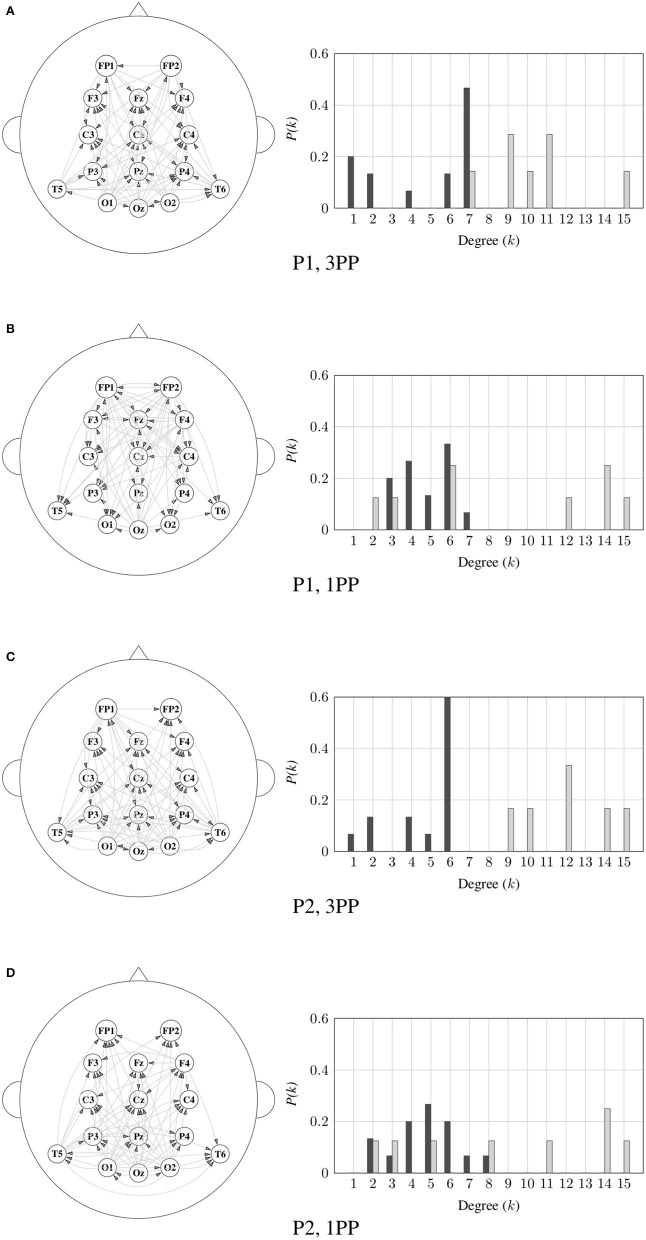
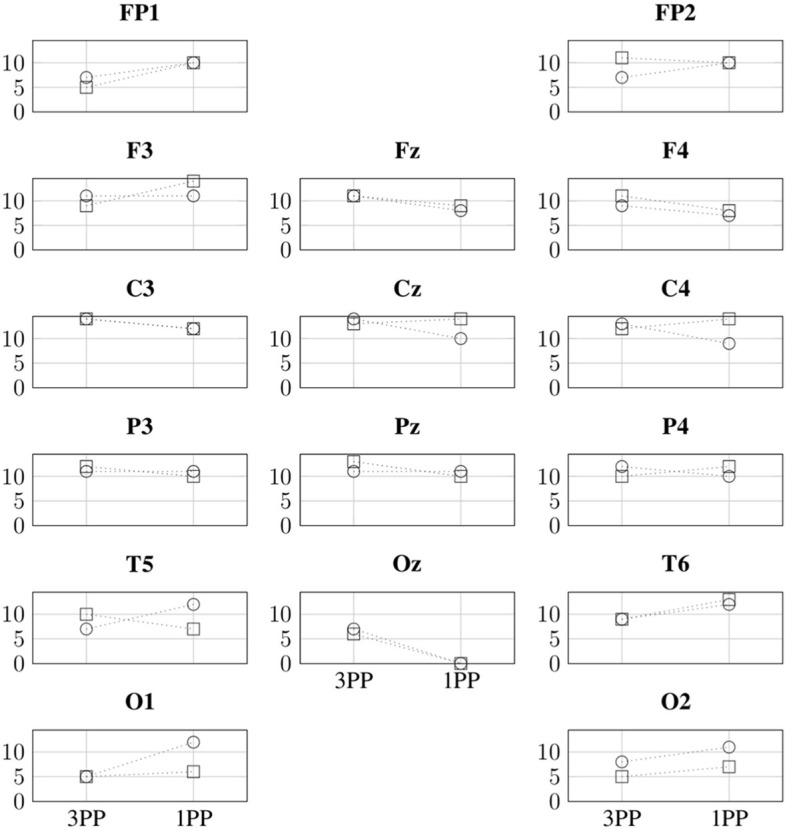
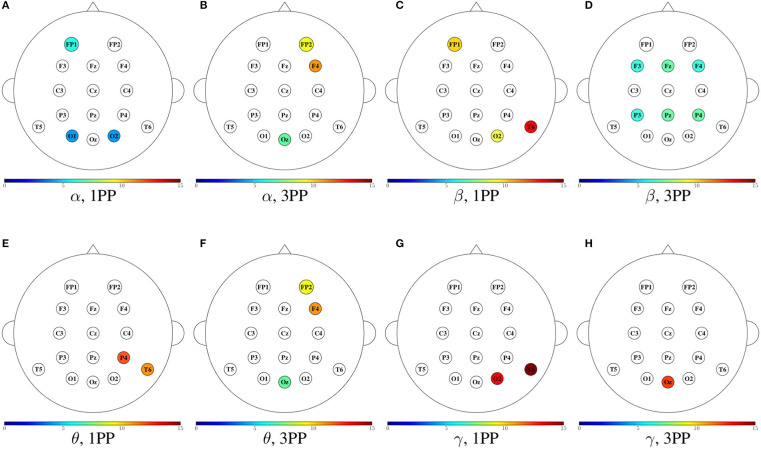
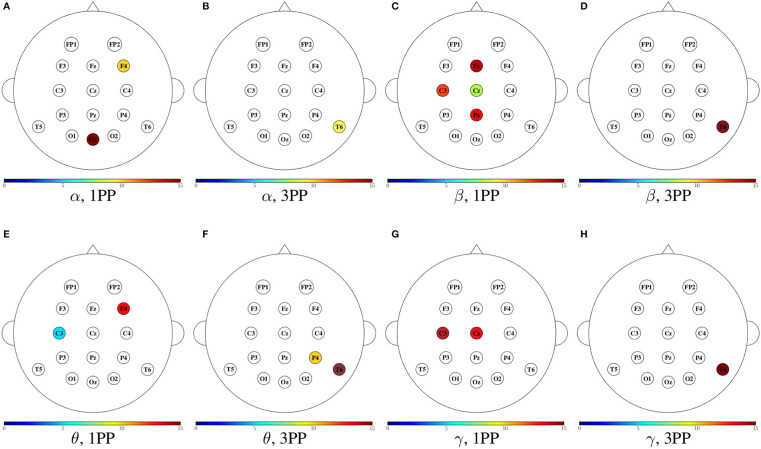
New trends on brain-computer interface (BCI) design are aiming to combine this technology with immersive virtual reality in order to provide a sense of realism to its users. In this study, we propose an experimental BCI to control an immersive telepresence system using motor imagery (MI). The system is immersive in the sense that the users can control the movement of a NAO humanoid robot in a first person perspective (1PP), i.e., as if the movement of the robot was his/her own. We analyze functional brain connectivity between 1PP and 3PP during the control of our BCI using graph theory properties such as degree, betweenness centrality, and efficiency. Changes in these metrics are obtained for the case of the 1PP, as well as for the traditional third person perspective (3PP) in which the user can see the movement of the robot as feedback. As proof-of-concept, electroencephalography (EEG) signals were recorded from two subjects while they performed MI to control the movement of the robot. The graph theoretical analysis was applied to the binary directed networks obtained through the partial directed coherence (PDC). In our preliminary assessment we found that the efficiency in the α brain rhythm is greater in 1PP condition in comparison to the 3PP at the prefrontal cortex. Also, a stronger influence of signals measured at EEG channel C3 (primary motor cortex) to other regions was found in 1PP condition. Furthermore, our preliminary results seem to indicate that α and β brain rhythms have a high indegree at prefrontal cortex in 1PP condition, and this could be possibly related to the experience of sense of agency. Therefore, using the PDC combined with graph theory while controlling a telepresence robot in an immersive system may contribute to understand the organization and behavior of brain networks in these environments.
Keywords: brain-computer interface; functional brain connectivity; graph theory; partial directed coherence; sense of immersion.
Copyright © 2020 Alanis-Espinosa and Gutiérrez.
Figures
References
-
- Alanís-Espinosa M., Gutiérrez D. (2018). “Using the partial directed coherence to understand brain functional connectivity during movement imagery tasks,” in Proceedings of the 11th International Conference on Brain Informatics (Arlington, TX: ), 119–128.
-
- Athanasiou A., Lithari C., Kalogianni K., Klados M. A., Bamidis P. D. (2012). Source detection and functional connectivity of the sensorimotor cortex during actual and imaginary limb movement: a preliminary study on the implementation of econnectome in motor imagery protocols. Adv. Hum. Comput. Interact. 2012, 1–10. 10.1155/2012/127627 - DOI
-
- Baka E., Stavroulia K. E., Magnenat-Thalmann N., Lanitis A. (2015). “An EEG-based evaluation for comparing the sense of presence between virtual and physical environments,” in CGI 2018, ICPS, eds N. Magnenat-Thalmann, J. Kim, H. E. Rushmeier, B. Levy, R. Zhang, and D. Thalmann (New York, NY: Association for Computing Machinery; ), 107–116.
LinkOut - more resources
Full Text Sources
Research Materials
Miscellaneous
