


Alveolar echinococcosis in a dog in the eastern United States
- PMID: 32715926
- PMCID: PMC7488973
- DOI: 10.1177/1040638720943842
Alveolar echinococcosis in a dog in the eastern United States
Abstract
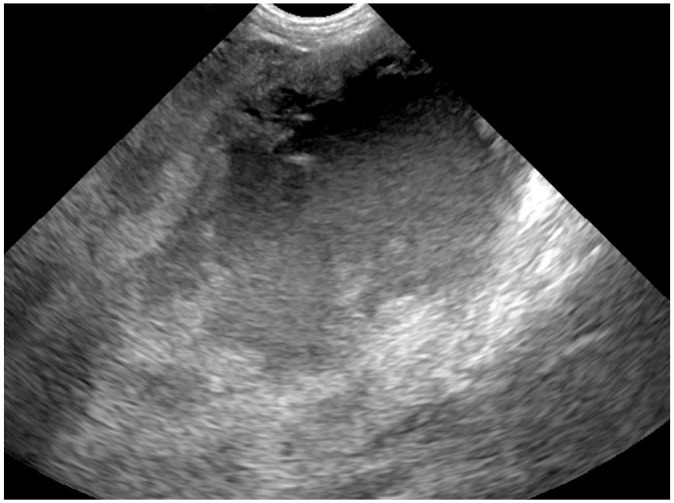
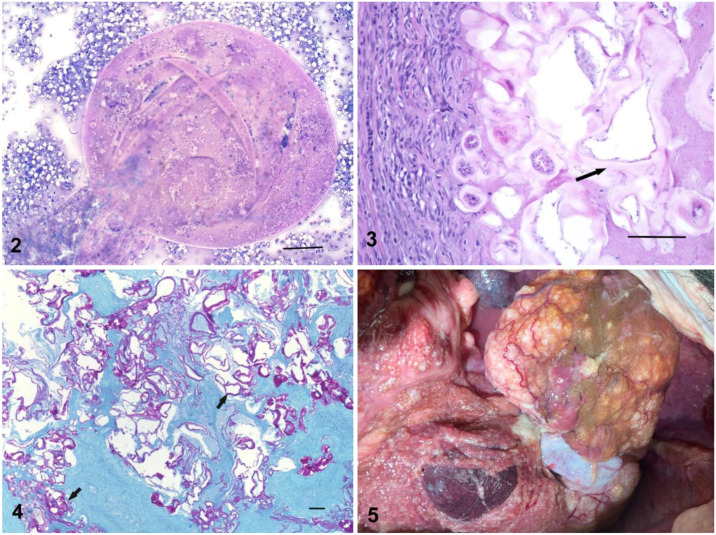
An 8-y-old Labrador Retriever was presented to a small animal practice in northern Virginia with a history of recent lethargy. Physical examination findings were unremarkable. Ultrasound revealed several large hepatic masses and multiple smaller masses involving the pancreas. Cytologic findings on fine-needle aspirates of the hepatic masses included inflammation and necrosis with eosinophilic, membranous oval structures consistent with cestode infection. Histopathologic findings for biopsies of these masses included extensive necrosis, inflammation, and PAS-positive hyaline-like membranous material interpreted as metacestode cyst wall. A PCR product was generated from aspirate material using primers specific for Echinococcus multilocularis. Subsequent sequence data were 100% homologous to E. multilocularis NADH dehydrogenase subunit I gene sequences. The dog received daily oral albendazole (10 mg/kg) treatment, but its condition deteriorated, and the dog was euthanized. The dog, born in Mississippi, was brought as a puppy to Virginia with no other travel history. To our knowledge, alveolar echinococcosis has not been reported previously in a dog in the United States; E. multilocularis infection was apparently acquired in the mid-Atlantic region of the United States.
Keywords: Echinococcus multilocularis; United States; alveolar echinococcosis; dogs; polymerase chain reaction.
Conflict of interest statement
Figures
References
-
- Alic A, et al. Fatal pulmonary cysticercosis caused by Cysticercus longicollis in a captive ring-tailed lemur (Lemur catta). Vet Parasitol 2017;241:1–4. - PubMed
-
- Conraths F, Deplazes P. Echinococcus multilocularis: epidemiology, surveillance and state-of-the-art diagnostics from a veterinary public health perspective. Vet Parasitol 2015;213: 149–161. - PubMed
-
- Corsini M, et al. Clinical presentation, diagnosis, therapy and outcome of alveolar echinococcosis in dogs. Vet Rec 2015; 177:569. - PubMed
-
- Davidson R, et al. Echinococcus across the north: current knowledge, future challenges. Food Waterborne Parasitol 2016;4:39–53.
-
- Deplazes P, et al. Global distribution of alveolar and cystic echinococcosis. Adv Parasitol 2017;95:317–493. - PubMed
Publication types
MeSH terms
Substances
LinkOut - more resources
Full Text Sources
