


Tepotinib Efficacy in a Patient with Non-Small Cell Lung Cancer with Brain Metastasis Harboring an HLA-DRB1-MET Gene Fusion
- PMID: 32716573
- PMCID: PMC7648335
- DOI: 10.1634/theoncologist.2020-0502
Tepotinib Efficacy in a Patient with Non-Small Cell Lung Cancer with Brain Metastasis Harboring an HLA-DRB1-MET Gene Fusion
Abstract
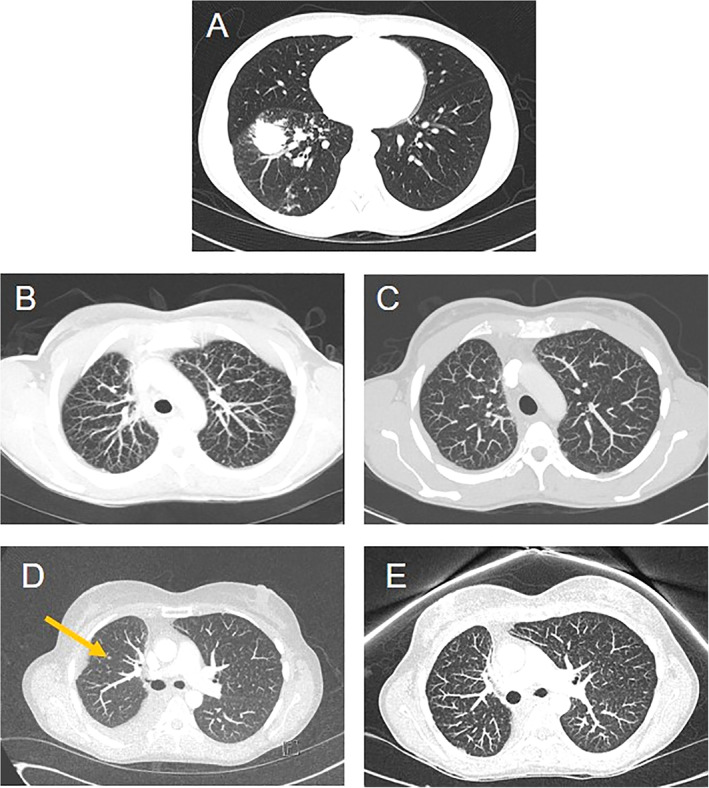
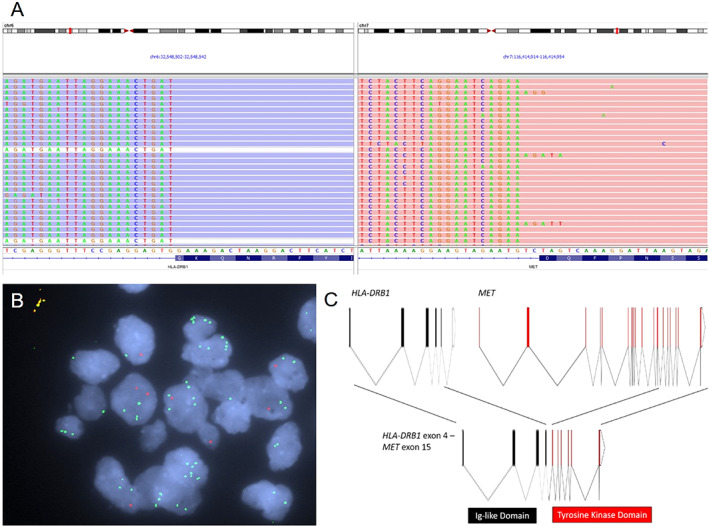
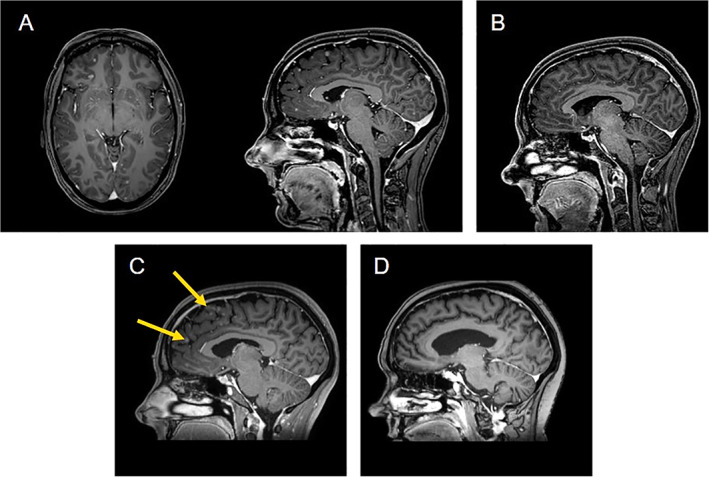
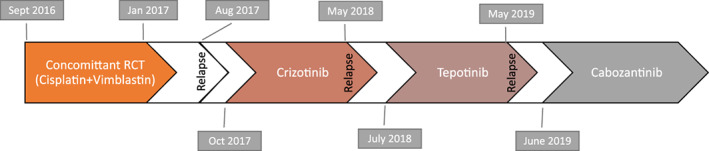
Alterations in c-MET, a tyrosine kinase receptor encoded by the MET gene, have been reported in approximately 3% of non-small cell lung cancer (NSCLC) cases and carry important treatment implications. The best studied genetic alterations are exon 14 skipping and gene amplification; however, gene rearrangement has also been described, and multiple fusion partners have been reported. Recently, in METex14-mutated NSCLC, multitarget tyrosine kinase inhibitors (TKIs), such as crizotinib and cabozantinib, as well as MET-selective TKIs, such as tepotinib and capmatinib, have demonstrated durable responses. In this study, we present the case of a 41-year-old woman with advanced NSCLC harboring an HLA-DRB1-MET gene fusion. The patient was offered successively two different MET multikinase inhibitors, crizotinib and cabozantinib, and the selective inhibitor tepotinib. Each time, including under tepotinib, the patient experienced rapid and complete responses associated with a tremendous improvement in her physical function. KEY POINTS: To our knowledge, this is the first report of a patient with non-small cell lung cancer harboring an HLA-DRB1-MET gene fusion demonstrating a clinical response to multiple MET inhibitors, including tepotinib. This finding illustrates the efficacy and rationale to targeting MET regardless of fusion partner and gives insight to pooling of patients with different MET fusion products in trials assessing safety and efficacy of novel molecules.
© AlphaMed Press 2020.
Conflict of interest statement
Figures
References
-
- Zheng Z, Liebers M, Zhelyazkova B et al. Anchored multiplex PCR for targeted next‐generation sequencing. Nat Med 2014;20:1479–1484. - PubMed
-
- Duplaquet L, Kherrouche Z, Baldacci S et al. The multiple paths towards MET receptor addiction in cancer. Oncogene 2018;37:3200–3215. - PubMed
-
- Tong JH, Yeung SF, Chan AWH et al. MET amplification and exon 14 splice site mutation define unique molecular subgroups of non‐small cell lung carcinoma with poor prognosis. Clin Cancer Res 2016;22:3048–3056. - PubMed
Publication types
MeSH terms
Substances
LinkOut - more resources
Full Text Sources
Medical
Research Materials
Miscellaneous
