


Particle sizes of infectious aerosols: implications for infection control
- PMID: 32717211
- PMCID: PMC7380927
- DOI: 10.1016/S2213-2600(20)30323-4
Particle sizes of infectious aerosols: implications for infection control
Abstract
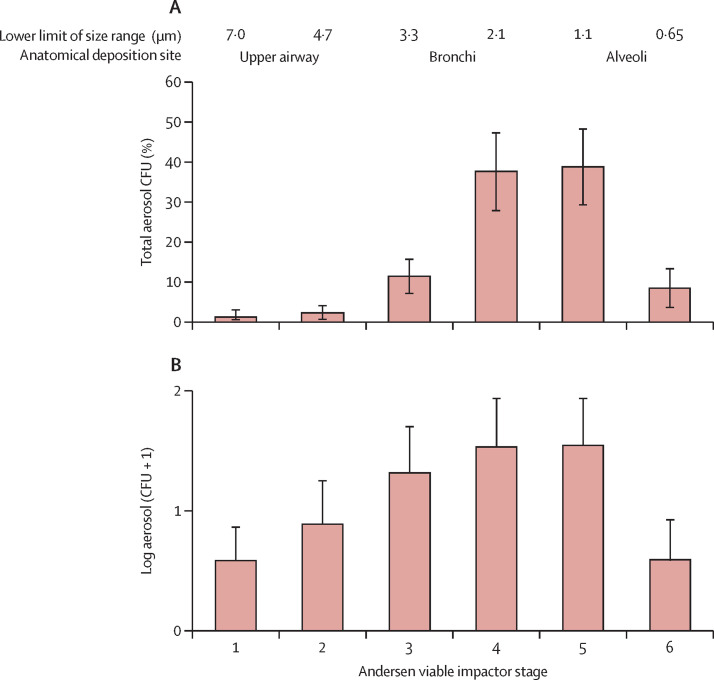
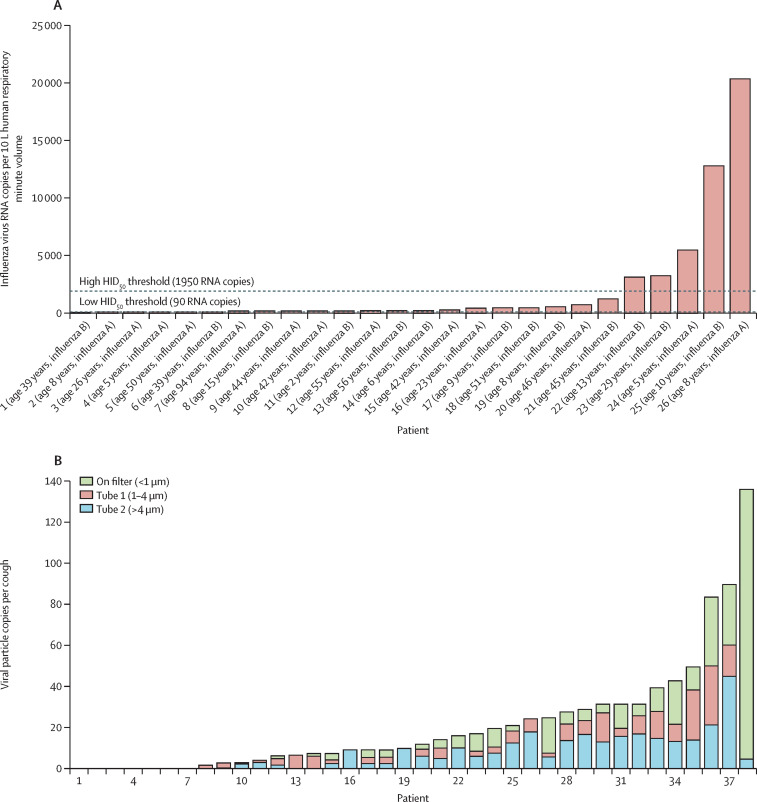
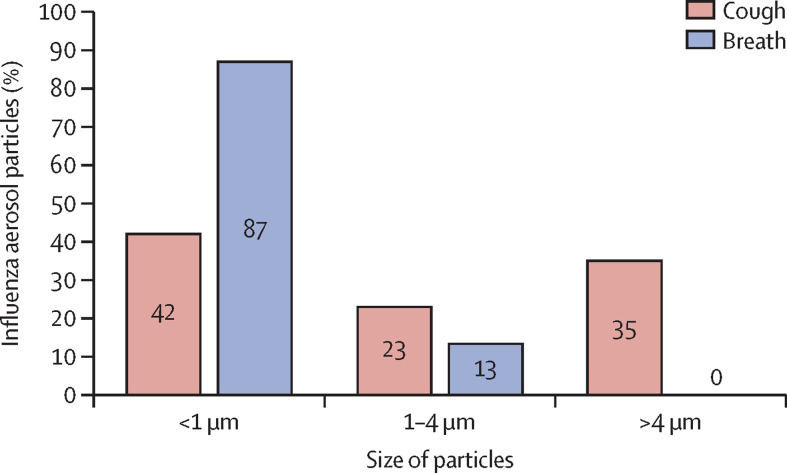
The global pandemic of COVID-19 has been associated with infections and deaths among health-care workers. This Viewpoint of infectious aerosols is intended to inform appropriate infection control measures to protect health-care workers. Studies of cough aerosols and of exhaled breath from patients with various respiratory infections have shown striking similarities in aerosol size distributions, with a predominance of pathogens in small particles (<5 μm). These are immediately respirable, suggesting the need for personal respiratory protection (respirators) for individuals in close proximity to patients with potentially virulent pathogens. There is no evidence that some pathogens are carried only in large droplets. Surgical masks might offer some respiratory protection from inhalation of infectious aerosols, but not as much as respirators. However, surgical masks worn by patients reduce exposures to infectious aerosols to health-care workers and other individuals. The variability of infectious aerosol production, with some so-called super-emitters producing much higher amounts of infectious aerosol than most, might help to explain the epidemiology of super-spreading. Airborne infection control measures are indicated for potentially lethal respiratory pathogens such as severe acute respiratory syndrome coronavirus 2.
Copyright © 2020 Elsevier Ltd. All rights reserved.
Figures
References
-
- WHO . World Health Organization; Geneva: March 29, 2020. Modes of transmission of virus causing COVID-19: implications for IPC precaution recommendations.https://www.who.int/publications-detail/modes-of-transmission-of-virus-c...
-
- Public Health England Guidance on infection prevention and control for COVID-19. Jan 10, 2020; update May 3, 2020. https://www.gov.uk/government/publications/wuhan-novel-coronavirus-infec...
-
- US Centers for Disease Control and Prevention Interim infection prevention and control recommendations for patients with suspected or confirmed coronavirus disease 2019 (COVID-19) in healthcare settings. 2020. https://www.cdc.gov/coronavirus/2019-ncov/hcp/infection-control-recommen...
-
- Fennelly KP. Personal respiratory protection against Mycobacterium tuberculosis. Clin Chest Med. 1997;18:1–17. - PubMed
Publication types
MeSH terms
Substances
LinkOut - more resources
Full Text Sources
Other Literature Sources
Medical
