


Best Helicobacter pylori Eradication Strategy in the Era of Antibiotic Resistance
- PMID: 32717826
- PMCID: PMC7459868
- DOI: 10.3390/antibiotics9080436
Best Helicobacter pylori Eradication Strategy in the Era of Antibiotic Resistance
Abstract
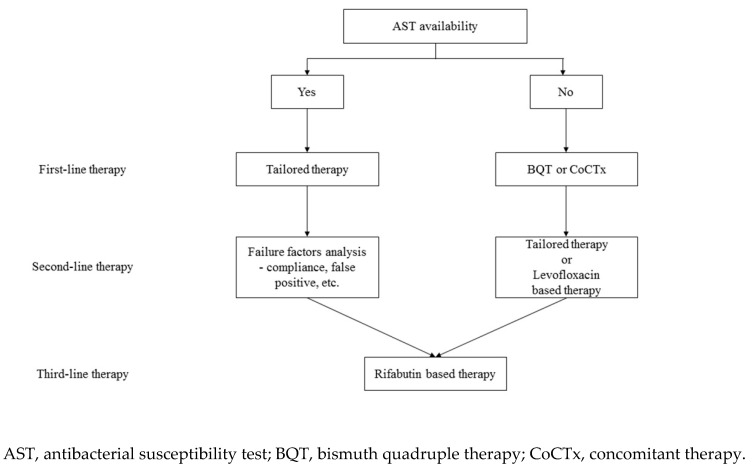
Antibiotic resistance is the major reason for Helicobacter pylori treatment failure, and the increasing frequency of antibiotic resistance is a challenge for clinicians. Resistance to clarithromycin and metronidazole is a particular problem. The standard triple therapy (proton pump inhibitor, amoxicillin, and clarithromycin) is no longer appropriate as the first-line treatment in most areas. Recent guidelines for the treatment of H. pylori infection recommend a quadruple regimen (bismuth or non-bismuth) as the first-line therapy. This treatment strategy is effective for areas with high resistance to clarithromycin or metronidazole, but the resistance rate inevitably increases as a result of prolonged therapy with multiple antibiotics. Novel potassium-competitive acid blocker-based therapy may be effective, but the data are limited. Tailored therapy based on antimicrobial susceptibility test results is ideal. This review discussed the current important regimens for H. pylori treatment and the optimum H. pylori eradication strategy.
Keywords: Helicobacter pylori; antibiotic resistance; eradication.
Conflict of interest statement
The authors declare no conflict of interest.
Figures
References
Publication types
LinkOut - more resources
Full Text Sources
