Meta-Analysis
. 2020 Jul 23;12(8):2188.
doi: 10.3390/nu12082188.

Alcohol Consumption and the Risk of Prostate Cancer: A Dose-Response Meta-Analysis

Affiliations
Meta-Analysis

Alcohol Consumption and the Risk of Prostate Cancer: A Dose-Response Meta-Analysis

SungEun Hong et al. Nutrients. .

Abstract

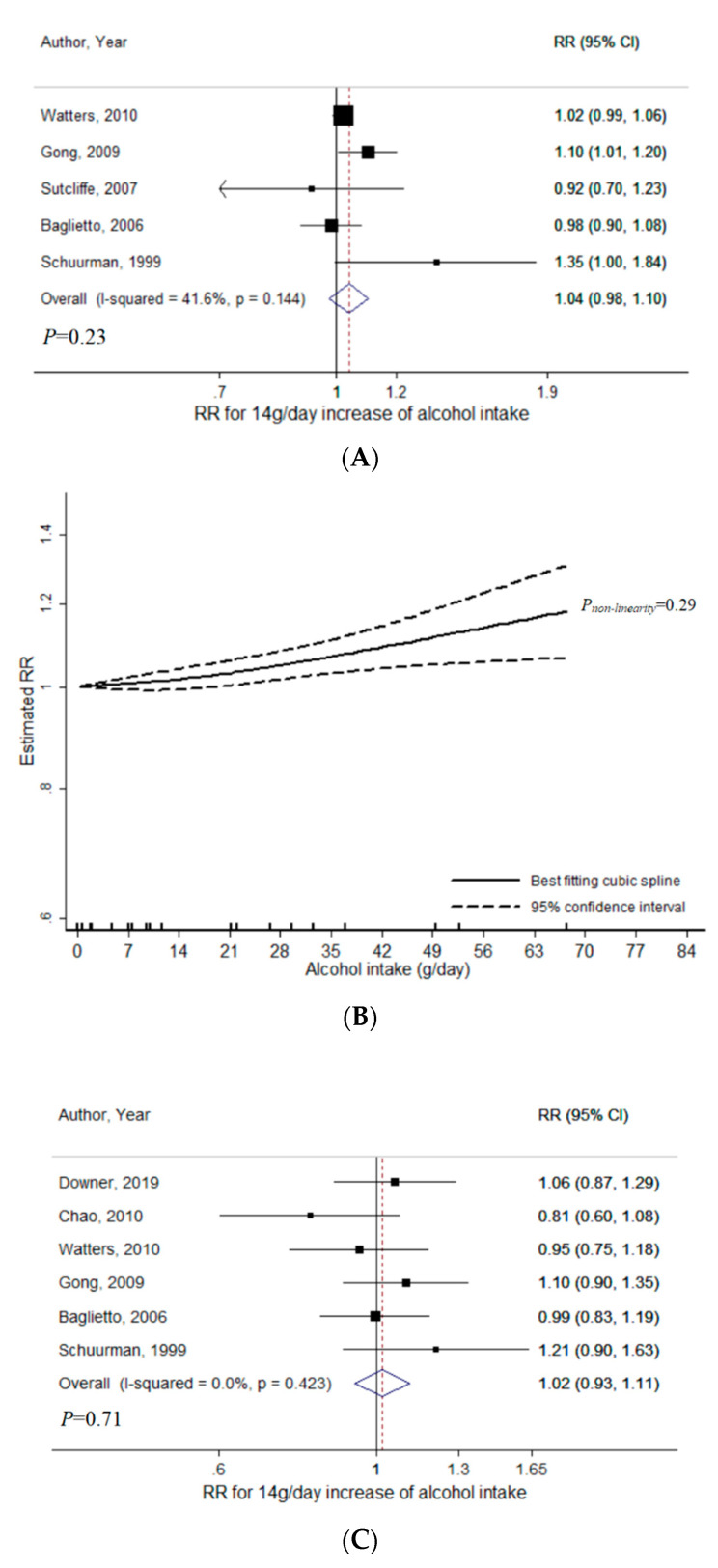
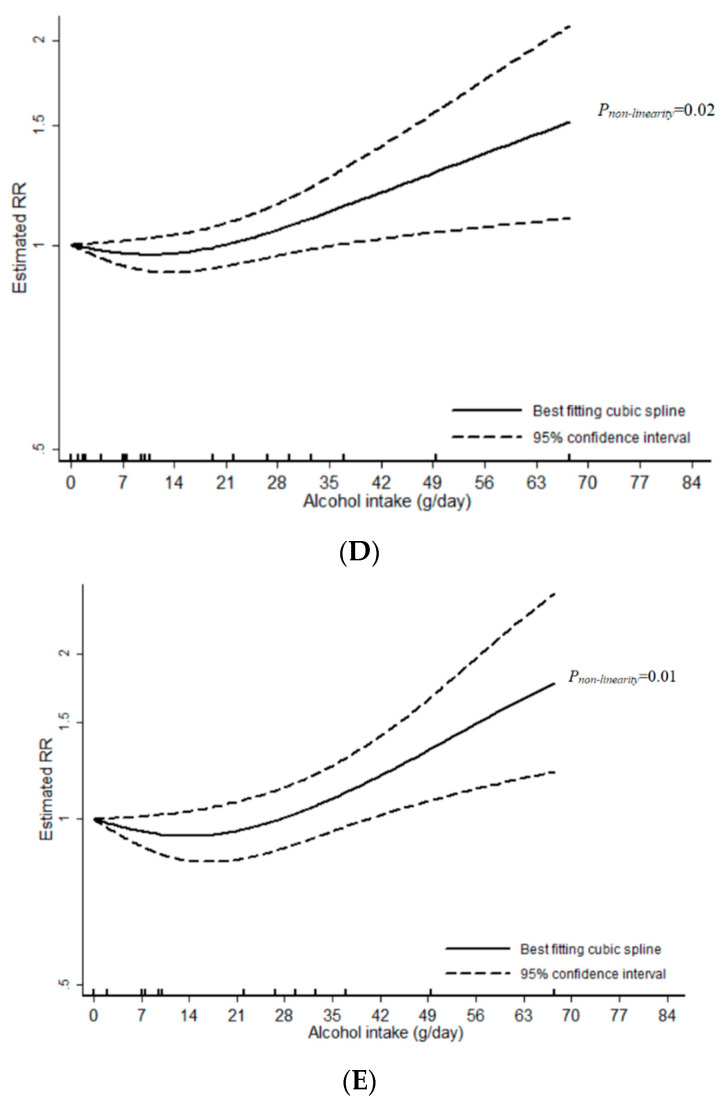
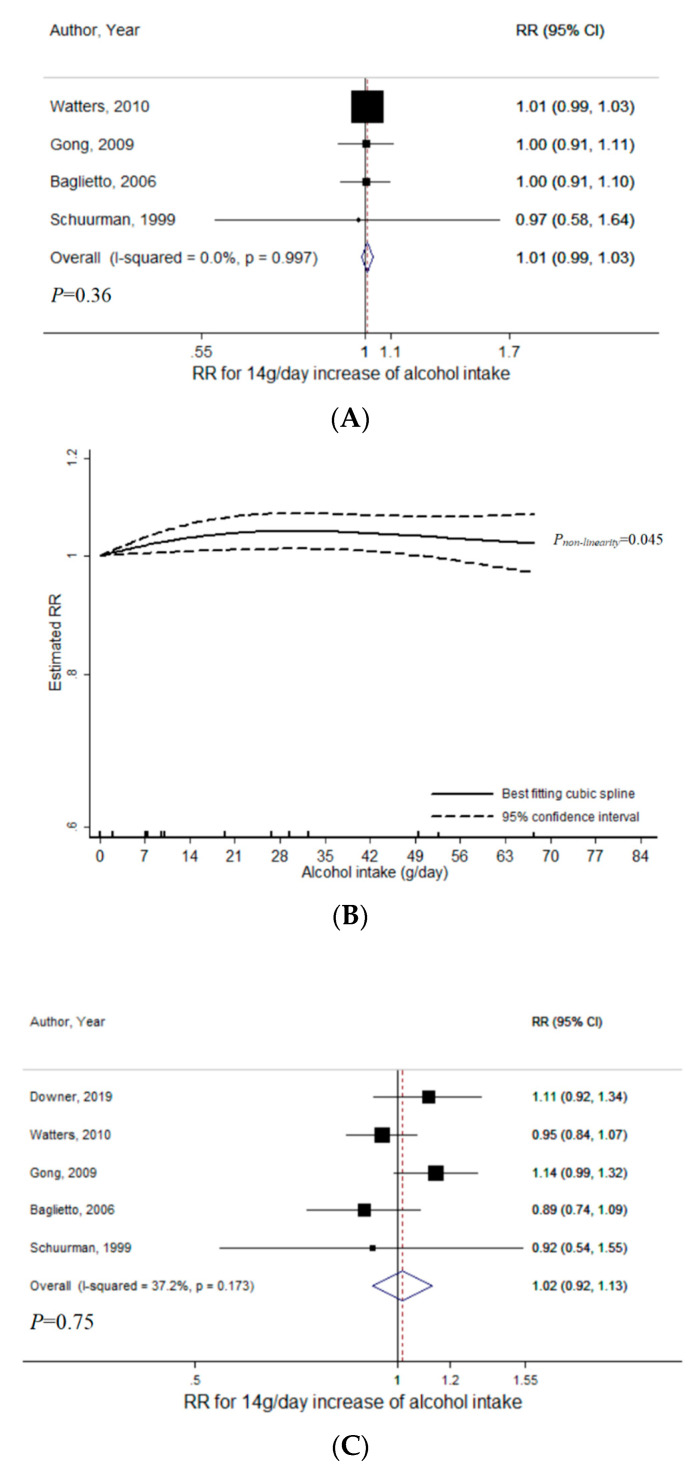
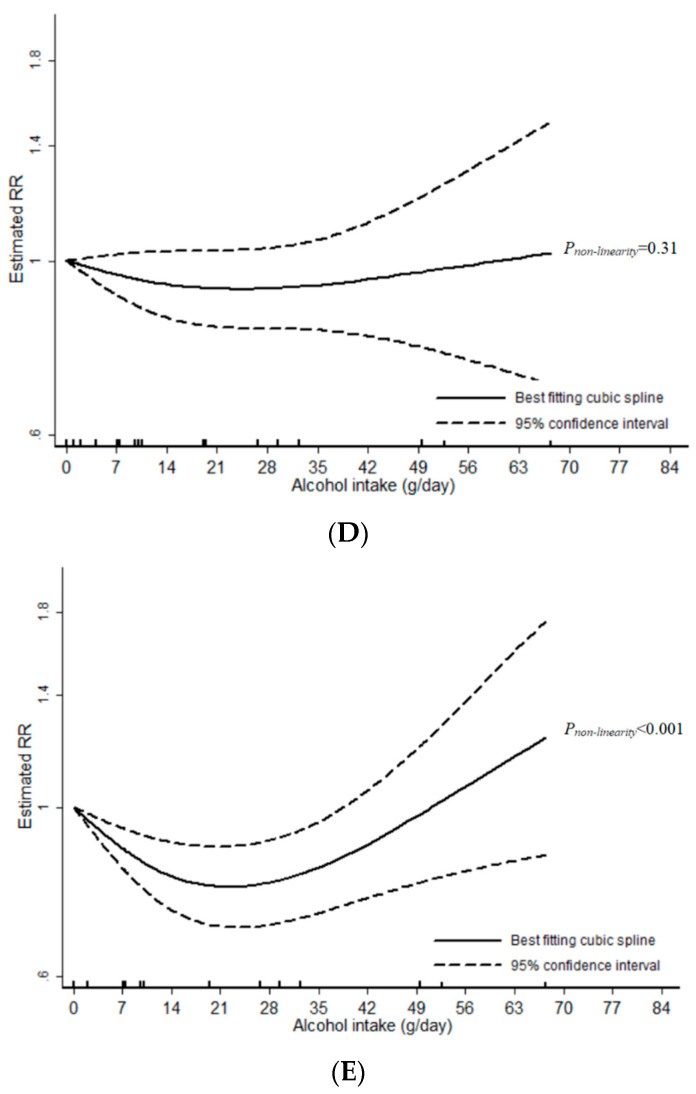
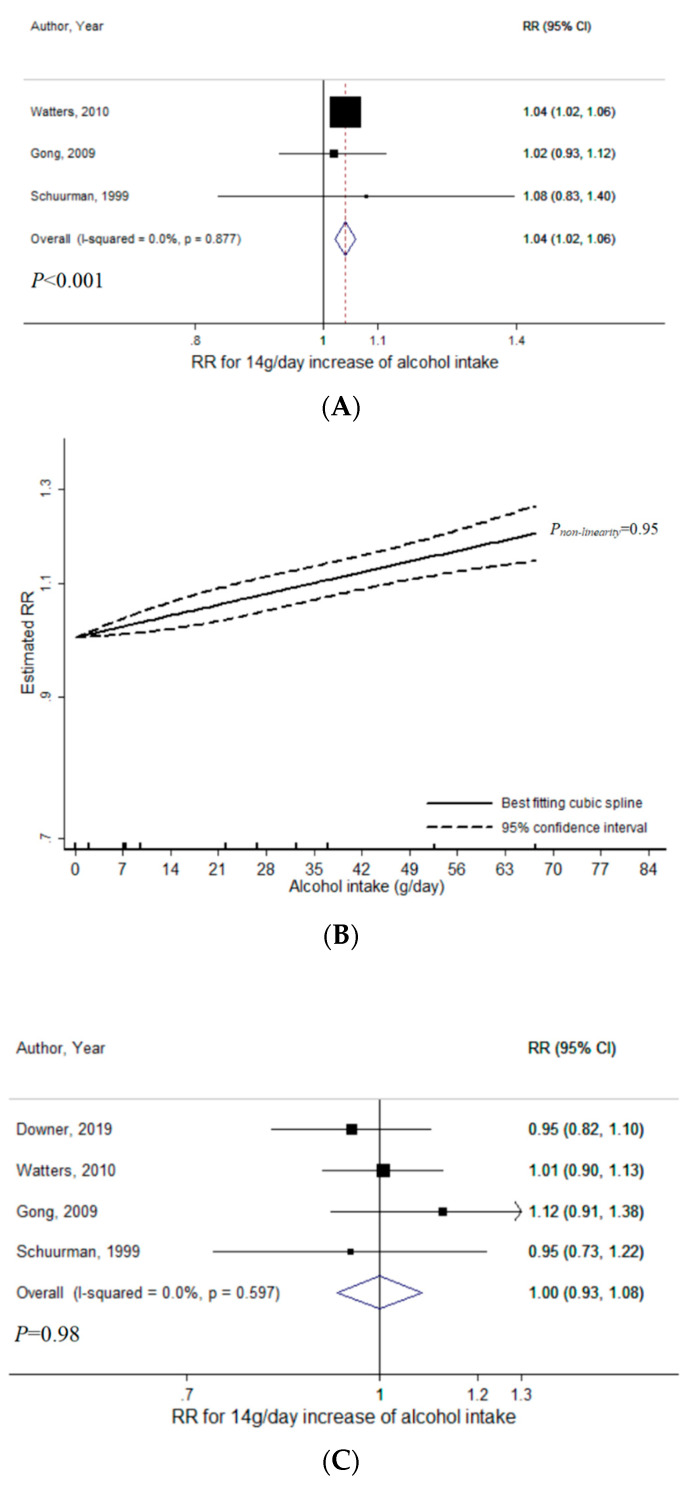
Alcohol is widely consumed and is known as a major risk factor for several types of cancers. Yet, it is unclear whether alcohol consumption is associated with the risk of prostate cancer (PCa) or not. We conducted linear and non-linear dose-response meta-analyses of cohort studies on alcohol consumption and PCa risk by types of alcohol (total, wine, beer, and liquor) and PCa (non-aggressive and aggressive). Pubmed and Embase were searched through April 2020 to identify relevant studies. Summary relative risk (RR) and 95% confidence interval (CI) were estimated using a random-effects model. For non-aggressive PCa, by alcohol type, the risk increased linearly with liquor (RR per 14 g/day intake (alcohol content in standard drink) being 1.04 (95% CI = 1.02-1.06, I2 = 0%, three studies) and non-linearly with beer (Pnon-linearity = 0.045, four studies), with increased risk observed in the lower range (RR = 1.03, 95% CI = 1.01-1.05; 14 g/day), with 1.05 (95% CI = 1.01-1.08) at 28 g/day. Wine was not significantly associated with the risk of non-aggressive PCa. For aggressive PCa, a non-linear relationship of diverse shapes was indicated for all types of alcohol in the sensitivity analysis. Compared to non-drinking, a significant positive association was more apparent at lower dose for liquor (RR = 1.12, 95% CI = 1.04-1.20 at 14 g/day; RR = 1.16, 95% CI = 1.03-1.31 at 28 g/day; Pnon-linearity = 0.005, three studies) but at higher doses for wine (RR = 1.02, 95% CI = 0.90-1.16 at 28 g/day, RR = 1.35, 95% CI = 1.08-1.67 at 56 g/day; Pnon-linearity = 0.01, four studies). In contrast, decreased risks were indicated at lower doses of beer (RR = 0.85, 95% CI = 0.79-0.92 at 14 g/day; RR = 0.79, 95% CI = 0.70-0.90 at 28 g/day, Pnon-linearity < 0.001, four studies). Total alcohol consumption was not associated with both types of PCa. In this study, we found heterogeneous associations between alcohol intake and PCa by types of alcohol and PCa.

Keywords: alcohol consumption; alcohol intake; cohort study; dose-response; meta-analysis; prostate cancer.


Conflict of interest statement

The authors have declared no conflict of interest.

Figures

Figure 1
Figure 1
Flow chart of study selection.
Figure 2
Figure 2
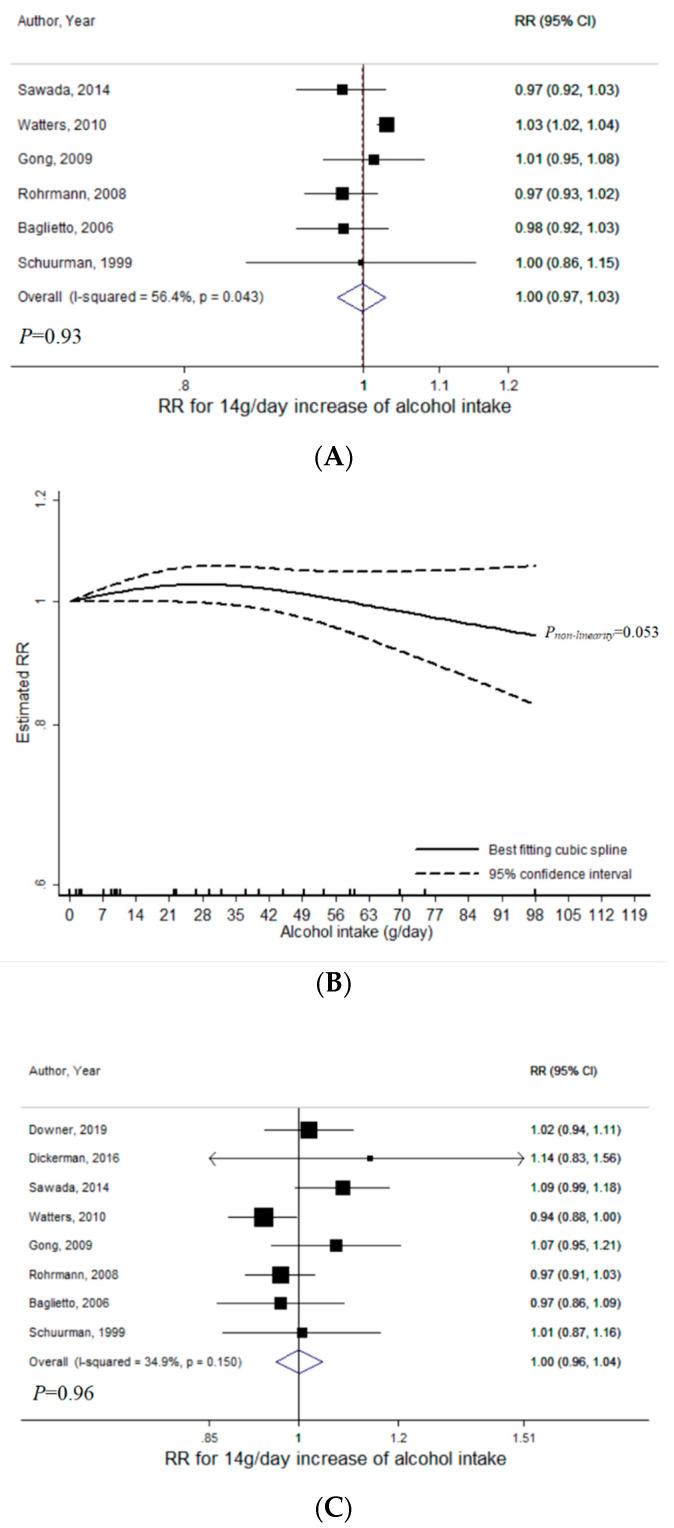
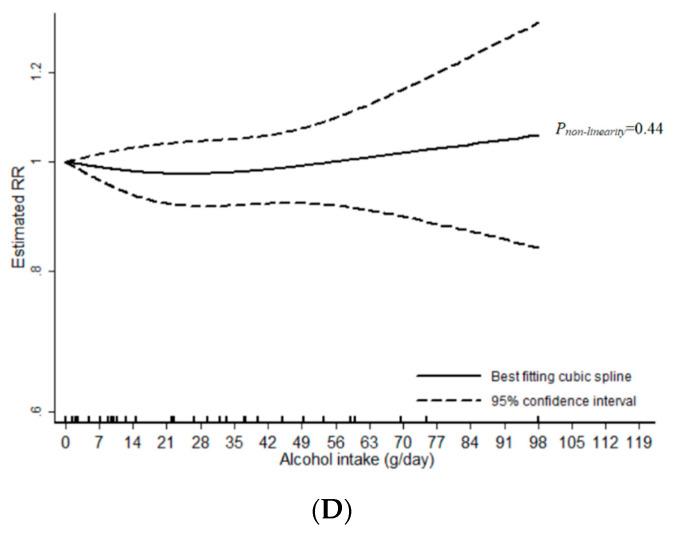
Meta-analyses of total alcohol intake and prostate cancer (PCa) risk: (A) linear analysis with non-aggressive PCa; (B) non-linear analysis with non-aggressive PCa; (C) linear analysis with aggressive PCa; (D) non-linear analysis with aggressive PCa. Abbreviations: PCa, prostate cancer; RR, relative risk; CI, confidence interval.
Figure 2
Figure 2
Meta-analyses of total alcohol intake and prostate cancer (PCa) risk: (A) linear analysis with non-aggressive PCa; (B) non-linear analysis with non-aggressive PCa; (C) linear analysis with aggressive PCa; (D) non-linear analysis with aggressive PCa. Abbreviations: PCa, prostate cancer; RR, relative risk; CI, confidence interval.
Figure 3
Figure 3
Meta-analyses of wine intake and prostate cancer risk: (A) linear analysis with non-aggressive PCa; (B) non-linear analysis with non-aggressive PCa; (C) linear analysis with aggressive PCa; (D) non-linear analysis with aggressive PCa; (E) non-linear analysis with aggressive PCa (Sensitivity). Abbreviations: PCa, prostate cancer; RR, relative risk; CI, confidence interval.
Figure 3
Figure 3
Meta-analyses of wine intake and prostate cancer risk: (A) linear analysis with non-aggressive PCa; (B) non-linear analysis with non-aggressive PCa; (C) linear analysis with aggressive PCa; (D) non-linear analysis with aggressive PCa; (E) non-linear analysis with aggressive PCa (Sensitivity). Abbreviations: PCa, prostate cancer; RR, relative risk; CI, confidence interval.
Figure 4
Figure 4
Meta-analyses of beer intake and prostate cancer risk: (A) linear analysis with non-aggressive PCa; (B) non-linear analysis with non-aggressive PCa; (C) linear analysis with aggressive PCa; (D) non-linear analysis with aggressive PCa; (E) non-linear analysis with aggressive PCa (Sensitivity). Abbreviations: PCa, prostate cancer; RR, relative risk; CI, confidence interval.
Figure 4
Figure 4
Meta-analyses of beer intake and prostate cancer risk: (A) linear analysis with non-aggressive PCa; (B) non-linear analysis with non-aggressive PCa; (C) linear analysis with aggressive PCa; (D) non-linear analysis with aggressive PCa; (E) non-linear analysis with aggressive PCa (Sensitivity). Abbreviations: PCa, prostate cancer; RR, relative risk; CI, confidence interval.
Figure 5
Figure 5
Meta-analyses of liquor intake and prostate cancer risk: (A) linear analysis with non-aggressive PCa; (B) non-linear analysis with non-aggressive PCa; (C) linear analysis with aggressive PCa; (D) non-linear analysis with aggressive PCa; (E) non-linear analysis with aggressive PCa (Sensitivity). Abbreviations: PCa, prostate cancer; RR, relative risk; CI, confidence interval.
Figure 5
Figure 5
Meta-analyses of liquor intake and prostate cancer risk: (A) linear analysis with non-aggressive PCa; (B) non-linear analysis with non-aggressive PCa; (C) linear analysis with aggressive PCa; (D) non-linear analysis with aggressive PCa; (E) non-linear analysis with aggressive PCa (Sensitivity). Abbreviations: PCa, prostate cancer; RR, relative risk; CI, confidence interval.

References

    1. Globocan 2018, W.H.O. [(accessed on 16 July 2020)]; Available online: https://gco.iarc.fr/
    1. International Agency for Research on Cancer. Globocan 2018: Cancer Fact Sheets—Prostate Cancer. IARC. [(accessed on 16 July 2020)]; Available online: https://gco.iarc.fr/today/data/factsheets/cancers/27-Prostate-fact-sheet....
    1. Prostate Cancer, A.I.C.R. 2014. [(accessed on 15 July 2020)]; Available online: https://www.wcrf.org/sites/default/files/Prostate-Cancer-2014-Report.pdf.
    1. Connor J. Alcohol consumption as a cause of cancer. Addiction. 2017;112:222–228. doi: 10.1111/add.13477. - DOI - PubMed
    1. Dickerman B.A., Markt S.C., Koskenvuo M., Pukkala E., Mucci L.A., Kaprio J. Alcohol intake, drinking patterns, and prostate cancer risk and mortality: A 30-year prospective cohort study of Finnish twins. Cancer Causes Control. 2016;27:1049–1058. doi: 10.1007/s10552-016-0778-6. - DOI - PMC - PubMed

Publication types