


Impact of Heat Stress on Poultry Health and Performances, and Potential Mitigation Strategies
- PMID: 32722335
- PMCID: PMC7460371
- DOI: 10.3390/ani10081266
Impact of Heat Stress on Poultry Health and Performances, and Potential Mitigation Strategies
Abstract
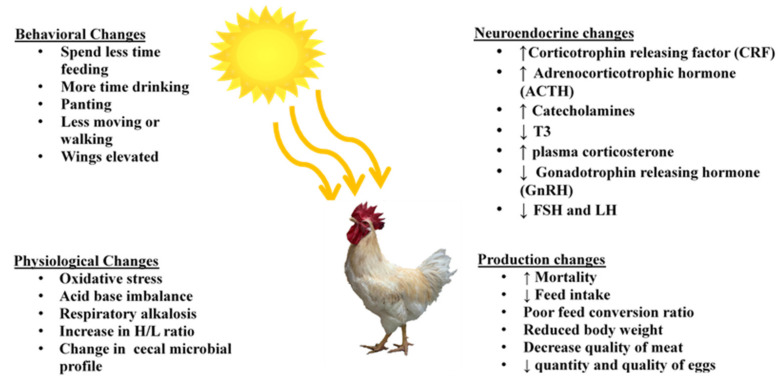
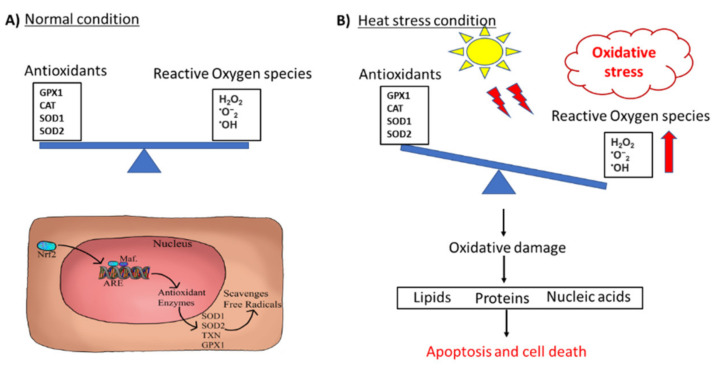
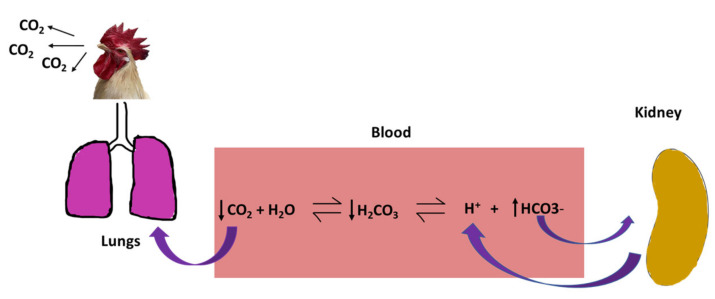
Heat stress is one of the major environmental stressors in the poultry industry resulting in substantial economic loss. Heat stress causes several physiological changes, such as oxidative stress, acid-base imbalance, and suppressed immunocompetence, which leads to increased mortality and reduced feed efficiency, body weight, feed intake, and egg production, and also affects meat and egg quality. Several strategies, with a variable degree of effectiveness, have been implemented to attenuate heat stress in poultry. Nutritional strategies, such as restricting the feed, wet or dual feeding, adding fat in diets, supplementing vitamins, minerals, osmolytes, and phytochemicals, have been widely studied and found to reduce the deleterious effects of heat stress. Furthermore, the use of naked neck (Na) and frizzle (F) genes in certain breed lines have also gained massive attention in recent times. However, only a few of these strategies have been widely used in the poultry industry. Therefore, developing heat-tolerant breed lines along with proper management and nutritional approach needs to be considered for solving this problem. Thus, this review highlights the scientific evidence regarding the effects of heat stress on poultry health and performances, and potential mitigation strategies against heat stress in broiler chickens and laying hens.
Keywords: heat stress; mitigation; oxidative stress; physiological changes; poultry.
Conflict of interest statement
The authors declare that there is no conflict of interest.
Figures
References
-
- American Egg Board Egg Protein Comparision and Costs. [(accessed on 7 June 2020)]; Available online: https://www.aeb.org/farmers-and-marketers/protein-comparison.
-
- Zaheer K. An updated review on chicken eggs: Production, consumption, management aspects and nutritional benefits to human health. Food Nutr. Sci. 2015;6:1280. doi: 10.4236/fns.2015.613127. - DOI
-
- Alexandratos N., Bruinsma J. World Agriculture towards 2030/2050: The 2012 Revision. FAO; Rome, Italy: 2012. ESA Working Papar No. 12-03.
Publication types
LinkOut - more resources
Full Text Sources
