


Colonic perforation due to inadvertent intraperitoneal LVAD driveline placement
- PMID: 32723396
- PMCID: PMC7389889
- DOI: 10.1186/s13019-020-01240-w
Colonic perforation due to inadvertent intraperitoneal LVAD driveline placement
Abstract
Background: Left ventricular assist devices (LVAD) are placed for patients with advanced heart failure or cardiogenic shock as destination therapy or as a bridge to cardiac transplantation. Significant complications associated with LVAD placement include bleeding, infection, pump thrombosis, right heart failure, device malfunction and stroke. The case below illustrates inadvertent intraperitoneal driveline placement causing colonic perforation and the subsequent management.
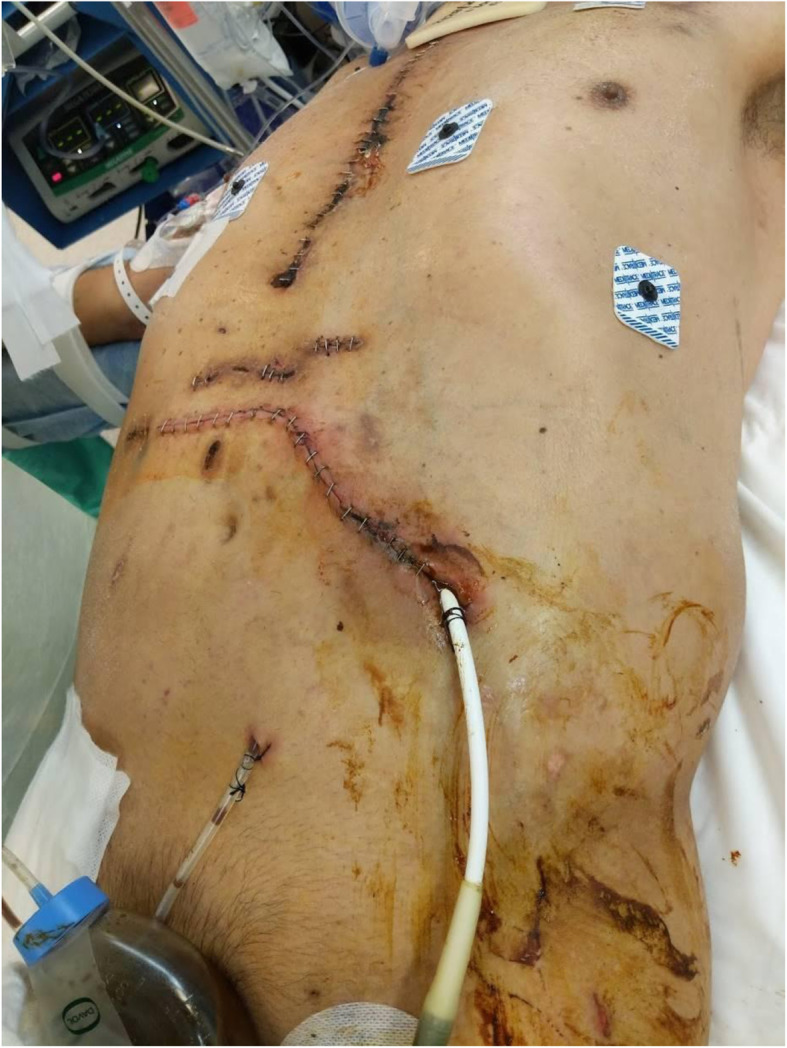
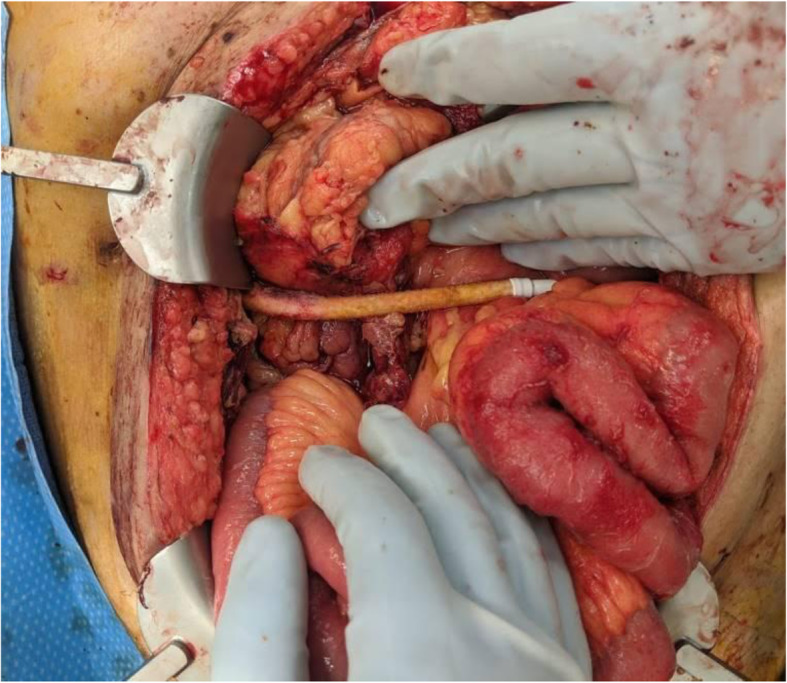
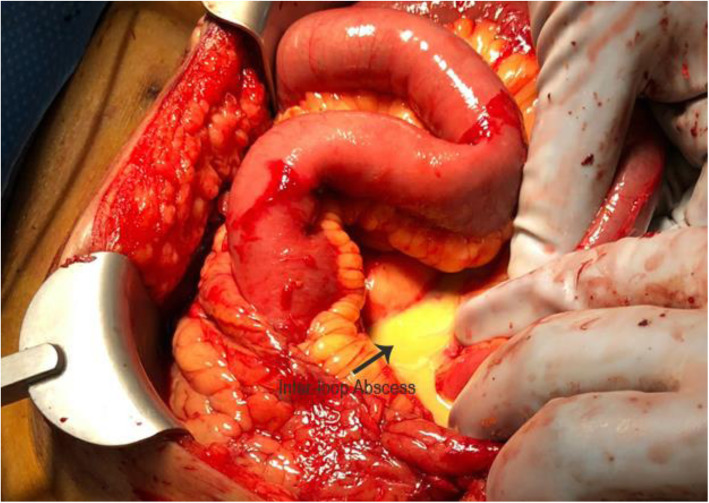
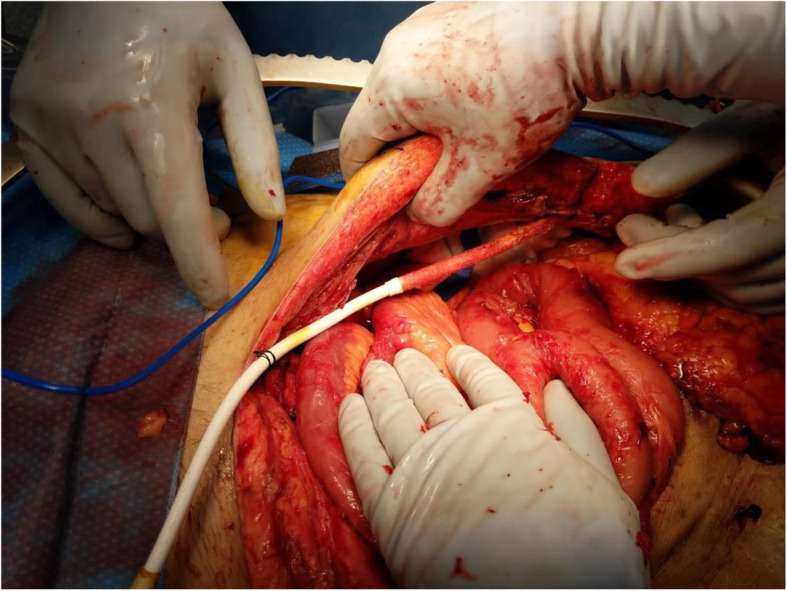
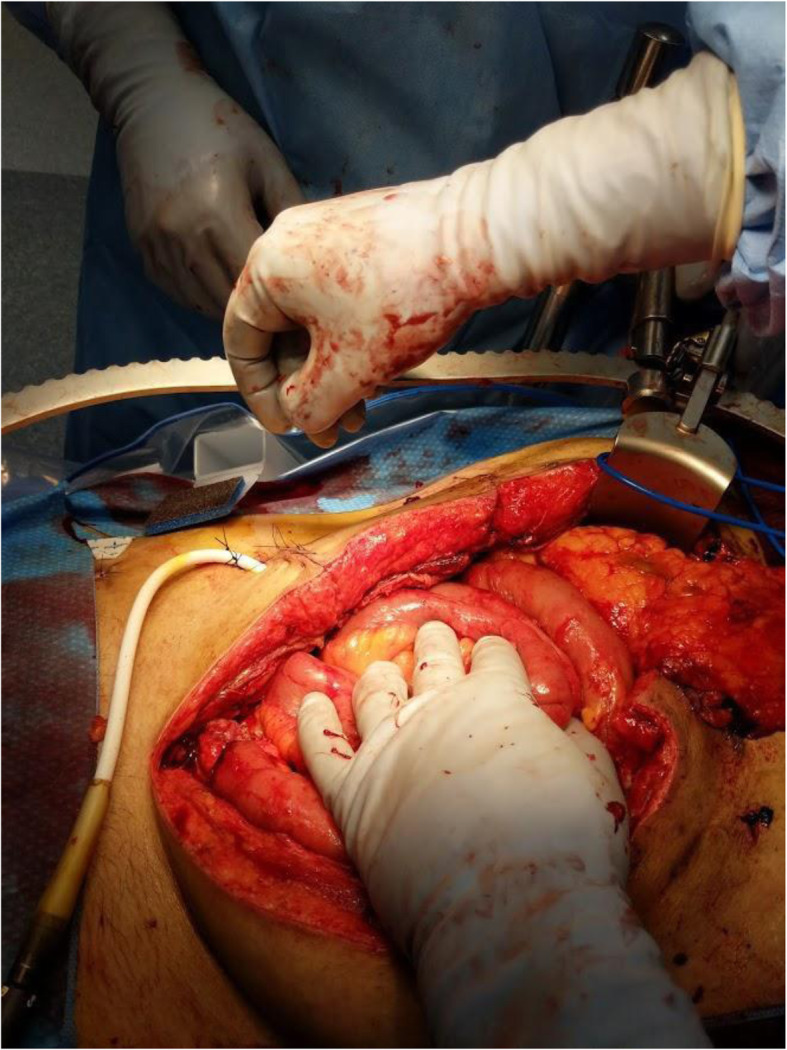
Case presentation: A 54 year old male with a history of Wolff-Parkinson-White syndrome resulting in multiple readmissions for heart failure, ultimately required placement of a left ventricular assist device (LVAD). Several weeks later, he was found to have stool draining from the driveline site. The patient was taken to the operating room for limited exploration by the Cardiothoracic Surgery team and a bowel injury was identified and repaired. Three days after this repair, stool was once again leaking from the driveline site, requiring re-exploration by the Acute Care Surgery team. Intraoperatively, the prior repair was found to be leaking and multiple intra-abdominal abscesses were discovered. The transverse colon was resected and left in discontinuity. On a planned second look operation, the LVAD driveline was relocated to be extra-peritoneal and a colostomy was formed.
Discussion and conclusion: This case demonstrates the importance of early recognition and involvement of an Acute Care Surgeon in the management of this complex problem. Appropriate treatment involves a complete exploration, source control, driveline relocation and possible fecal diversion. Although the incidence of this complication is low, it must be considered in the differential in a septic LVAD patient.
Keywords: Acute care surgery; Colonic injury; Driveline relocation; LVAD; Sepsis.
Conflict of interest statement
The authors have no financial or non-financial competing interests.
Figures


References
Publication types
MeSH terms
LinkOut - more resources
Full Text Sources
Medical
