


The performance of anthropometric tools to determine obesity: a systematic review and meta-analysis
- PMID: 32728050
- PMCID: PMC7391719
- DOI: 10.1038/s41598-020-69498-7
The performance of anthropometric tools to determine obesity: a systematic review and meta-analysis
Abstract
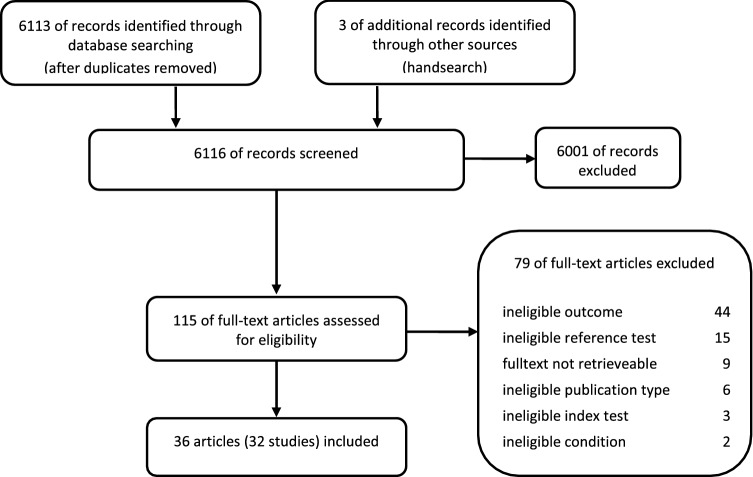
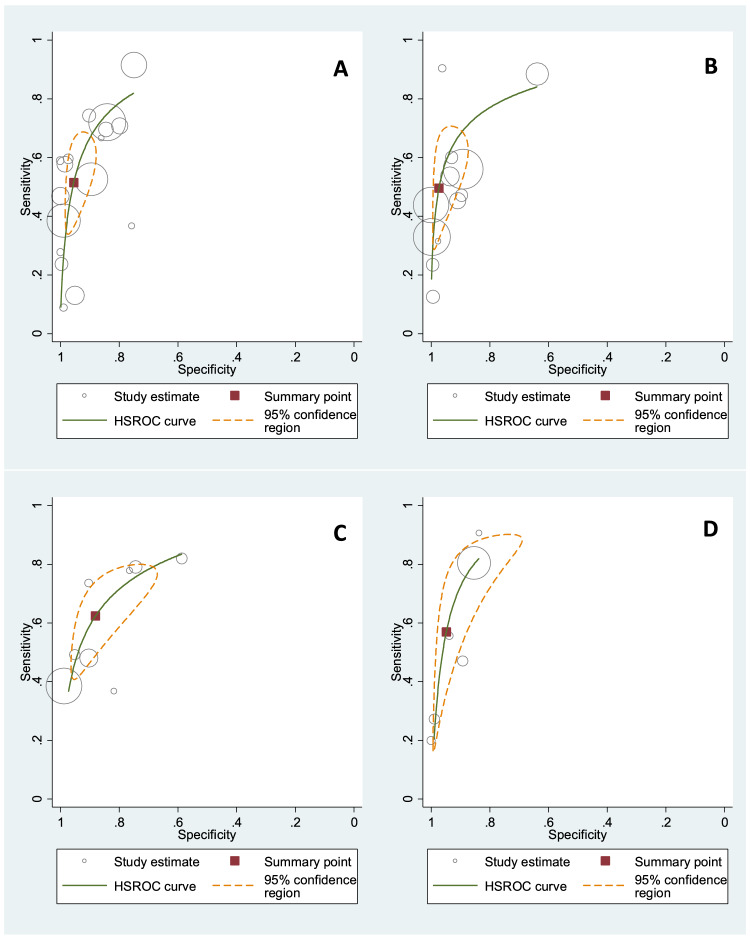
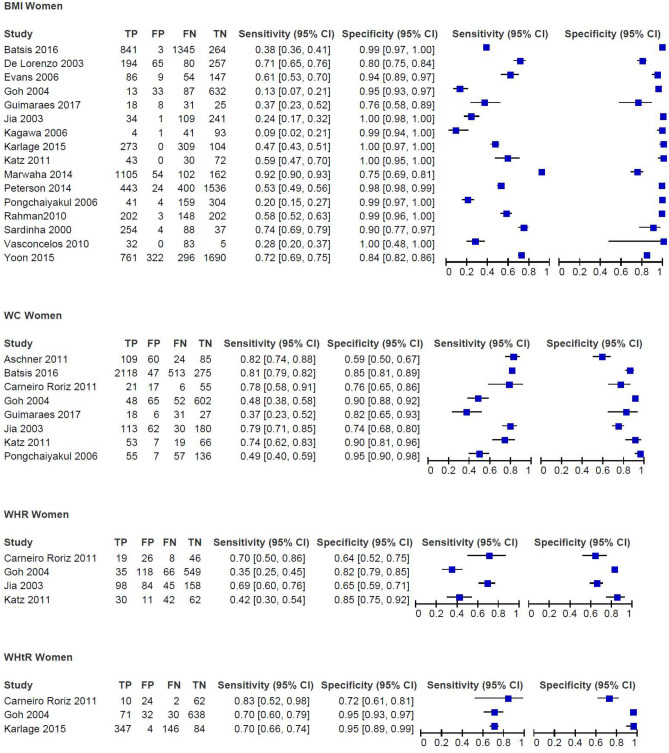
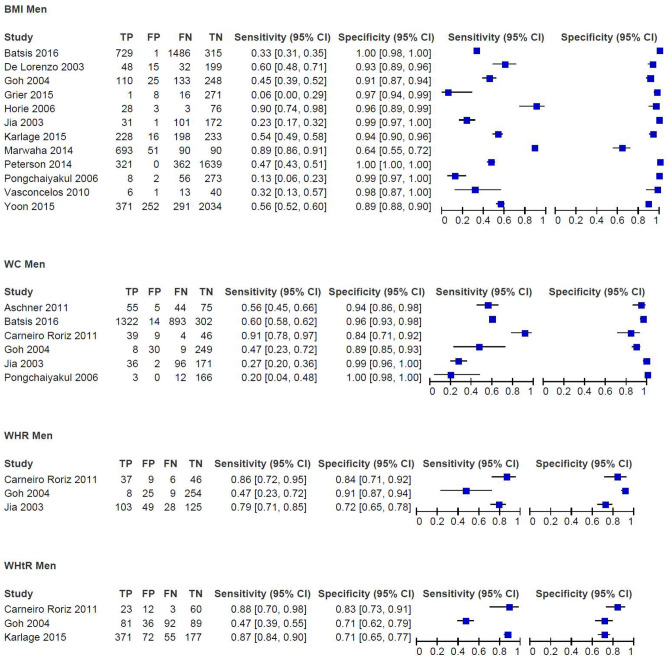
The aim of this systematic review was to assess the performance of anthropometric tools to determine obesity in the general population (CRD42018086888). Our review included 32 studies. To detect obesity with body mass index (BMI), the meta-analyses rendered a sensitivity of 51.4% (95% CI 38.5-64.2%) and a specificity of 95.4% (95% CI 90.7-97.8%) in women, and 49.6% (95% CI 34.8-64.5%) and 97.3% (95% CI 92.1-99.1%), respectively, in men. For waist circumference (WC), the summary estimates for the sensitivity were 62.4% (95% CI 49.2-73.9%) and 88.1% for the specificity (95% CI 77.0-94.2%) in men, and 57.0% (95% CI 32.2-79.0%) and 94.8% (95% CI 85.8-98.2%), respectively, in women. The data were insufficient to pool the results for waist-to-hip ratio (WHR) and waist-to-height ratio (WHtR) but were similar to BMI and WC. In conclusion, BMI and WC have serious limitations for use as obesity screening tools in clinical practice despite their widespread use. No evidence supports that WHR and WHtR are more suitable than BMI or WC to assess body fat. However, due to the lack of more accurate and feasible alternatives, BMI and WC might still have a role as initial tools for assessing individuals for excess adiposity until new evidence emerges.
Conflict of interest statement
The authors declare that they have no financial or non-financial competing interests.
Figures
References
-
- World Health Organization. Obesity and Overweight—Fact Sheet, https://www.who.int/mediacentre/factsheets/fs311/en/ (2017).
-
- World Health Organization. Global Health Observatory Data Repository, https://apps.who.int/gho/data/node.main.A896?lang=en (2017).
Publication types
MeSH terms
LinkOut - more resources
Full Text Sources
Medical
