


Zika virus infection in pregnancy and adverse fetal outcomes in São Paulo State, Brazil: a prospective cohort study
- PMID: 32728054
- PMCID: PMC7391725
- DOI: 10.1038/s41598-020-69235-0
Zika virus infection in pregnancy and adverse fetal outcomes in São Paulo State, Brazil: a prospective cohort study
Abstract
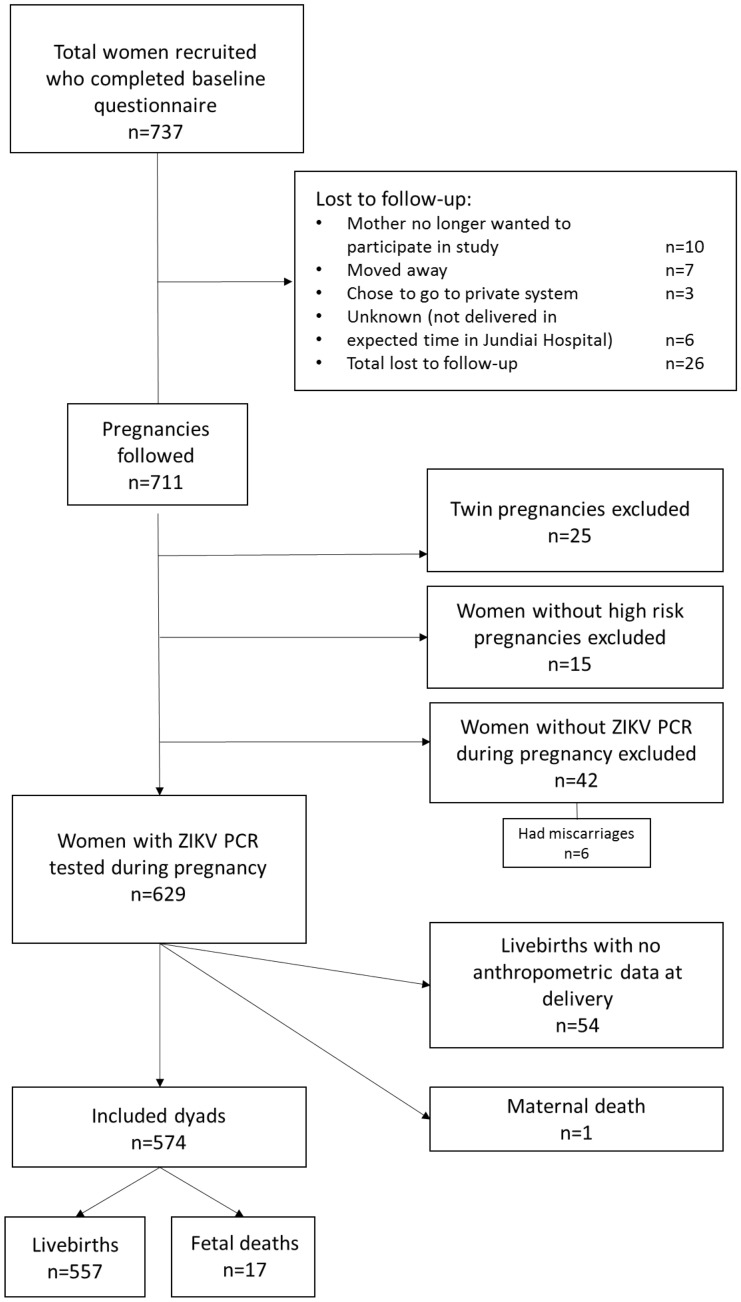
Robust epidemiological and biological evidence supports a causal link between prenatal Zika Virus (ZIKV) infection and congenital brain abnormalities including microcephaly. However, it remains uncertain if ZIKV infection in pregnancy also increases the risk for other adverse fetal and birth outcomes. In a prospective cohort study we investigated the influence of ZIKV on the prevalence of prematurity, low birth weight, small-for-gestational-age, and fetal death as well as microcephaly (i.e., overall and disproportionate) in the offspring of women attending a high-risk pregnancy clinic during the recent ZIKV outbreak in Brazil. During the recruitment period (01 March 2016-23 August 2017), urine samples were tested for ZIKV by RT-PCR from all women attending the high-risk pregnancy clinic at Jundiaí University Hospital and from the neonates after delivery. Of the 574 women evaluated, 44 (7.7%) were ZIKV RT-PCR positive during pregnancy. Of the 409 neonates tested, 19 (4.6%) were ZIKV RT-PCR positive in the first 10 days of life. In this cohort, maternal ZIKV exposure was not associated with increased risks of prematurity, low birth weight, small-for-gestational-age, or fetal death. However, relative to ZIKV-negative neonates, ZIKV-positive infants had a five-fold increased risk of microcephaly overall (RR 5.1, 95% CI 1.2-22.5) and a ten-fold increased risk of disproportionate microcephaly (RR 10.3, 95% CI 2.0-52.6). Our findings provide new evidence that, in a high-risk pregnancy cohort, ZIKV RT-PCR positivity in the neonate at birth is strongly associated with microcephaly. However, ZIKV infection during pregnancy does not appear to influence the risks of prematurity, low birth weight, small-for-gestational-age or fetal death in women who already have gestational comorbidities. The results suggest disproportion between neonatal head circumference and weight may be a useful screening indicator for the detection of congenital microcephaly associated with ZIKV infection.
Conflict of interest statement
The authors declare no competing interests.
Figures
References
-
- ECDC. Rapid Risk Assessment. Zika virus epidemic in the Americas: Potential association with microcephaly and Guillain–Barre syndrome. (Stockholm, 2015).
Publication types
MeSH terms
Substances
Grants and funding
LinkOut - more resources
Full Text Sources
Medical
