


The Burden of Pain Associated with Osteoarthritis in the Hip or Knee from the Patient's Perspective: A Multinational Cross-Sectional Study
- PMID: 32729010
- PMCID: PMC7444392
- DOI: 10.1007/s12325-020-01445-4
The Burden of Pain Associated with Osteoarthritis in the Hip or Knee from the Patient's Perspective: A Multinational Cross-Sectional Study
Abstract
Introduction: To evaluate, from the patient's perspective, the burden of pain associated with hip/knee osteoarthritis (OA) in the USA and selected European Union (EU) countries.
Methods: Data were drawn from the 2017 global Adelphi OA Disease Specific Programme™ (DSP). Patients with hip/knee OA were stratified based on pain intensity and the presence/absence of current opioid use. Outcomes included Western Ontario and McMaster Universities Osteoarthritis Index scores, functional limitations, unmet treatment needs, Charlson Comorbidity Index, relevant comorbid conditions, the 5-dimension 5-level EuroQol, and the Work Productivity and Activity Impairment Questionnaire: Specific Health Problem. Bivariate testing compared outcomes using patients with no/mild pain without opioid use as the reference group.
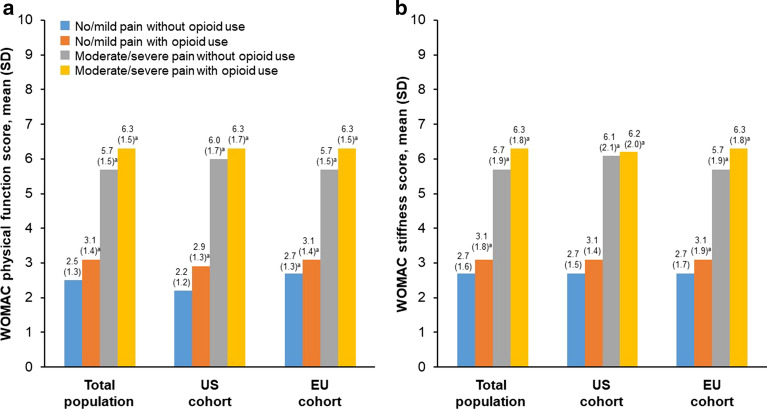
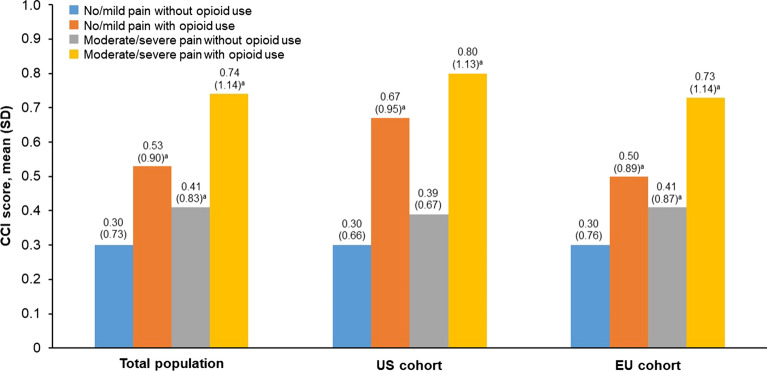
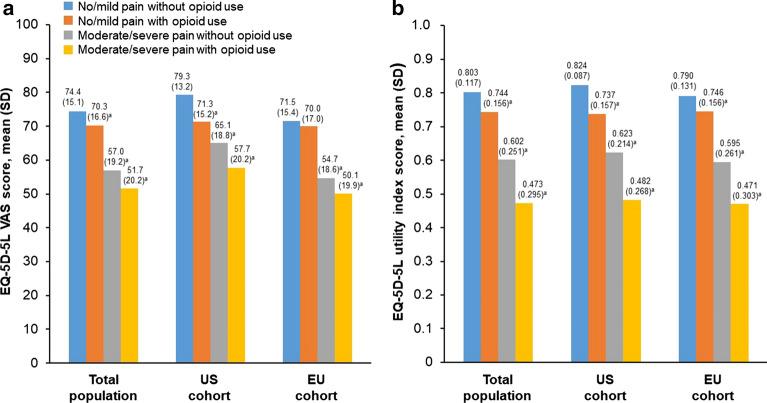
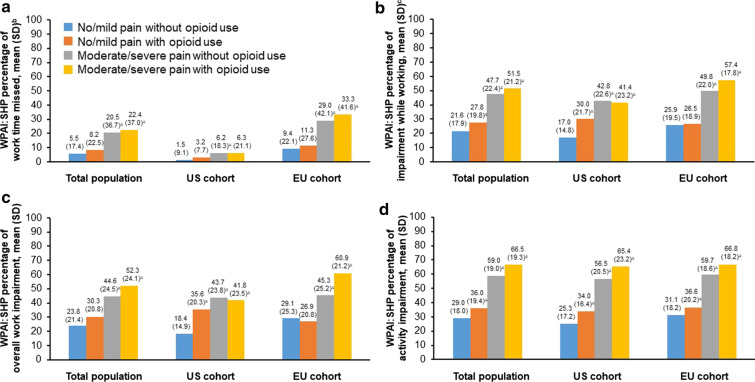
Results: The study population comprised 2170 patients (US: n = 623 [28.7%]; EU: n = 1547 [71.3%]) with knee (54.9%), hip (24.6%), or knee/hip (20.5%) OA. Mean (SD) age was 66.4 (11.2) years. Patients had no/mild pain without opioid use (39.6%), no/mild pain with opioid use (10.2%), moderate/severe pain without opioid use (30.6%), and moderate/severe pain with opioid use (19.7%). Compared with the reference group, patients with moderate/severe pain reported significantly (p < 0.05) higher functional limitations, greater use of ≥ 3 treatments and treatment dissatisfaction, reduced quality of life, and impaired work productivity and activity. The burden was highest with moderate/severe pain with opioid use. Results were generally similar in the US and EU cohorts.
Conclusions: The results from this multinational cross-sectional study indicate that the impact of OA pain is multidimensional, worsened by increasing pain intensity, and may not be adequately addressed by current treatment strategies.
Keywords: Comorbidity; Daily activity; Health-related quality of life; Opioid; Osteoarthritis; Pain; Physical functioning; Work productivity.
Figures
References
-
- Osteoarthritis Foundation International (OAFI). Osteoarthritis. 2019. https://oafifoundation.com/en/what-is-osteoarthritis/. Accessed 6 Dec 2019.
-
- Centers for Disease Control and Prevention. Osteoarthritis (OA). 10 Jan 2019. https://www.cdc.gov/arthritis/basics/osteoarthritis.htm. Accessed 6 Dec 2019.
Publication types
MeSH terms
Substances
LinkOut - more resources
Full Text Sources
Medical
Miscellaneous
