


Clinically practiced and commercially viable nanobio engineered analytical methods for COVID-19 diagnosis
- PMID: 32729494
- PMCID: PMC7834411
- DOI: 10.1016/j.bios.2020.112361
Clinically practiced and commercially viable nanobio engineered analytical methods for COVID-19 diagnosis
Abstract
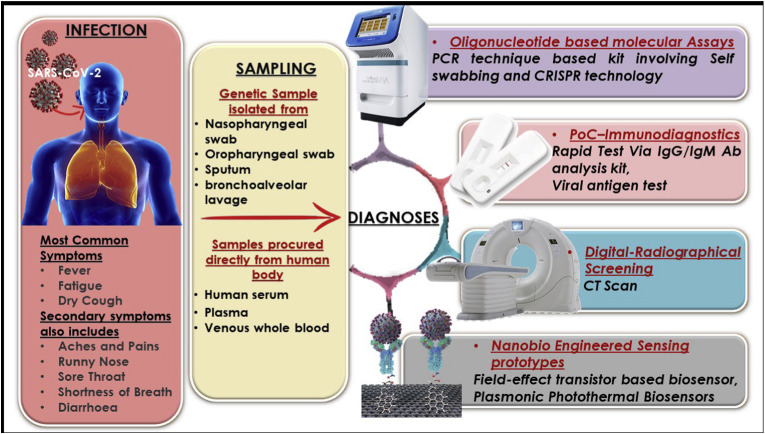
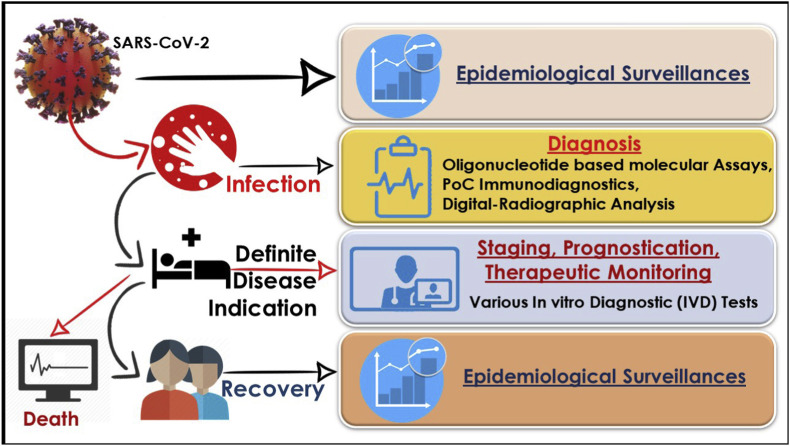
The recent outbreak of the coronavirus disease (COVID-19) has left the world clueless. As the WHO declares this new contagion as a pandemic on the 11th of March 2020, the alarming rate of the spawn of the disease in such a short period has disarranged the globe. Standing against this situation researchers are strenuously searching for the key traits responsible for this pandemic. As knowledge regarding the dynamics and host-path interaction of COVID-19 causing Severe Acute Respiratory Syndrome Coronavirus-2 (SARS-CoV-2) is currently unknown, the formulation of strategies concerning antiviral treatment, vaccination, and epidemiological control stands crucial. Before designing adequate therapeutic strategies, it is extremely essential to diagnose the disease at the outset as early detection can have a greater impact on building health system capacity. Hence, a comprehensive review of strategies for COVID-19 diagnosis is essential in this existing global situation. In this review, sequentially, we have provided the clinical details along with genetic and proteomic biomarkers related to COVID-19. The article systematically enlightens a clear overview of the clinically adopted techniques for the detection of COVID-19 including oligonucleotide-based molecular detection, Point-of-Care immunodiagnostics, radiographical analysis/sensing system, and newly developed biosensing prototypes having commercial viability. The commercial kits/analytical methods based-sensing strategies have also been tabulated categorically. The critical insights on the developer, commercial brand name, detection methods, technical operational details, detection time, clinical specimen, status, the limit of detection/detection ability have been discussed comprehensively. We believe that this review may provide scientists, clinicians and healthcare manufacturers valuable information regarding the most recent developments/approaches towards COVID-19 diagnosis.
Keywords: COVID-19; Clinical diagnosis; Immunoassay; Point of care; RT-PCR; SARS-CoV-2; Serological tests.
Copyright © 2020 Elsevier B.V. All rights reserved.
Conflict of interest statement
The authors declare that they have no known competing financial interests or personal relationships that could have appeared to influence the work reported in this paper.
Figures
References
-
- Azhar M., Phutela R., Ansari A.H., Sinha D., Sharma N., Kumar M., Aich M., Sharma S., Singhal K., Lad H., Patra P.K., Makharia G., Chandak G.R., Chakraborty D., Maiti S. Rapid, field-deployable nucleobase detection and identification using FnCas9. bioRxiv. 2020 doi: 10.1101/2020.04.07.028167. - DOI
-
- Broughton J.P., Deng X., Yu G., Fasching C.L., Servellita V., Singh J., Miao X., Streithorst J.A., Granados A., Sotomayor-Gonzalez A., Zorn K., Gopez A., Hsu E., Gu W., Miller S., Pan C.Y., Guevara H., Wadford D.A., Chen J.S., Chiu C.Y. CRISPR–Cas12-based detection of SARS-CoV-2. Nat. Biotechnol. 2020 doi: 10.1038/s41587-020-0513-4. - DOI - PMC - PubMed
-
- Cascella M., Rajnik M., Cuomo A., Dulebohn S.C., Di Napoli R. StatPearls; 2020. Features, Evaluation and Treatment Coronavirus (COVID-19) - PubMed
Publication types
MeSH terms
Substances
LinkOut - more resources
Full Text Sources
Other Literature Sources
Miscellaneous
