. 2020 Sep 3;5(17):e140532.
doi: 10.1172/jci.insight.140532.

Tirzepatide is an imbalanced and biased dual GIP and GLP-1 receptor agonist

Affiliations

Tirzepatide is an imbalanced and biased dual GIP and GLP-1 receptor agonist

Francis S Willard et al. JCI Insight. .

Abstract

Tirzepatide (LY3298176) is a dual GIP and GLP-1 receptor agonist under development for the treatment of type 2 diabetes mellitus (T2DM), obesity, and nonalcoholic steatohepatitis. Early phase trials in T2DM indicate that tirzepatide improves clinical outcomes beyond those achieved by a selective GLP-1 receptor agonist. Therefore, we hypothesized that the integrated potency and signaling properties of tirzepatide provide a unique pharmacological profile tailored for improving broad metabolic control. Here, we establish methodology for calculating occupancy of each receptor for clinically efficacious doses of the drug. This analysis reveals a greater degree of engagement of tirzepatide for the GIP receptor than the GLP-1 receptor, corroborating an imbalanced mechanism of action. Pharmacologically, signaling studies demonstrate that tirzepatide mimics the actions of native GIP at the GIP receptor but shows bias at the GLP-1 receptor to favor cAMP generation over β-arrestin recruitment, coincident with a weaker ability to drive GLP-1 receptor internalization compared with GLP-1. Experiments in primary islets reveal β-arrestin1 limits the insulin response to GLP-1, but not GIP or tirzepatide, suggesting that the biased agonism of tirzepatide enhances insulin secretion. Imbalance toward GIP receptor, combined with distinct signaling properties at the GLP-1 receptor, together may account for the promising efficacy of this investigational agent.

Keywords: Diabetes; Therapeutics.


Conflict of interest statement

Conflict of interest: FSW, ADS, DBW, TMS, CS, GRC, SU, PJE, MPC, and KWS are employees of Eli Lilly and Company and may own company stock. JEC and DAD receive research support from Eli Lilly and Company. DAD participates on the Diabetes Advisory Board for Eli Lilly and Company and the steering committee for the tirzepatide CVOT. MMR is a minority shareholder of and consultant for Antag Therapeutics, Bainan Biotech, and Synklino and is a coinventor on patents covering GIPR ligands and dual-acting GIP/GLP-2 agonists. JJH is a minority shareholder and board member of Antag Therapeutics and Bainan Biotech and has been a consultant for, has served on scientific advisory panels of, and has been speaker honoraria for Novo Nordisk and MSD/Merck. JJH is a coinventor on patents covering GIPR ligands and dual-acting GIP/GLP-2 agonists.

Figures

Figure 1
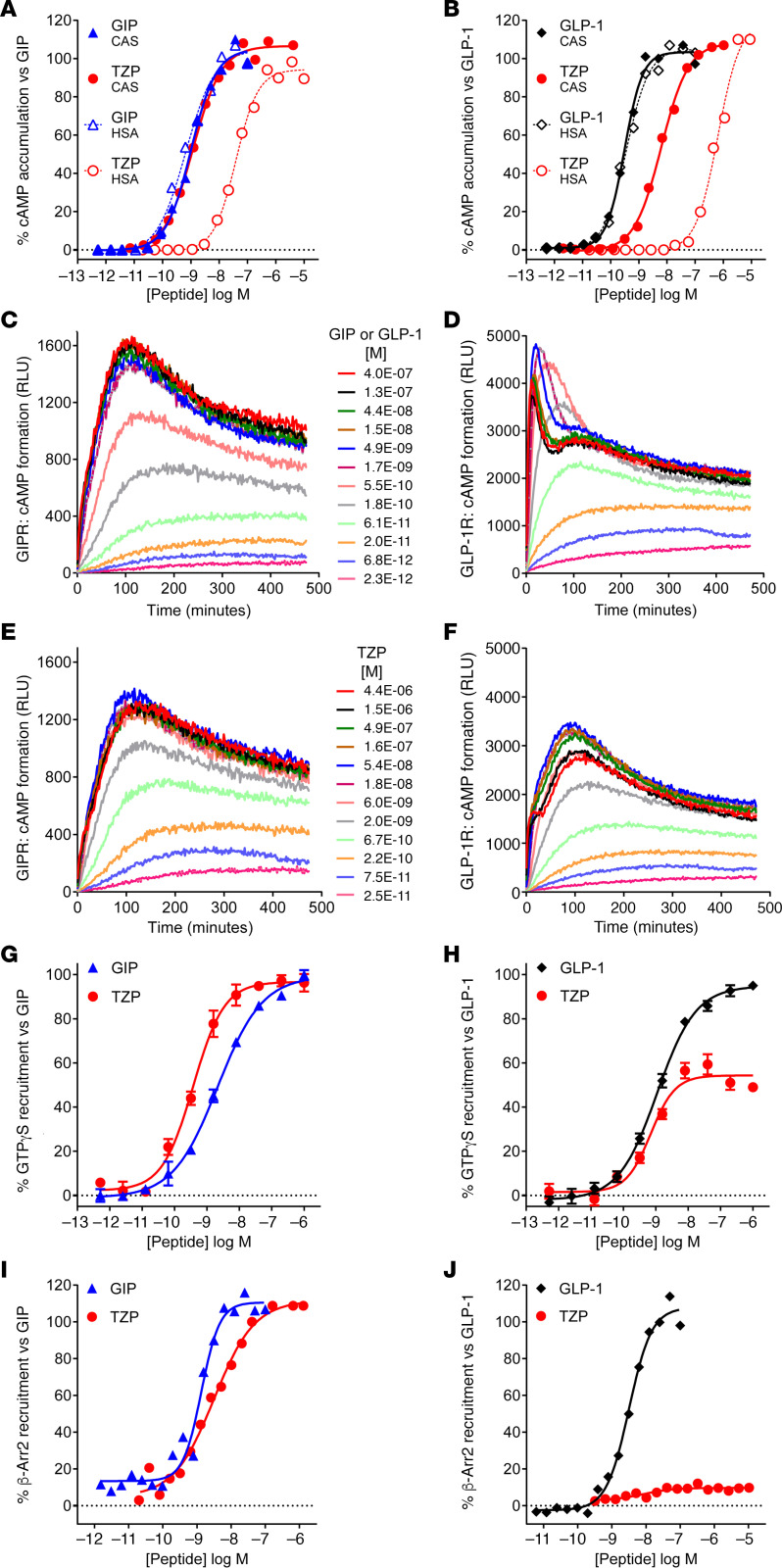
Figure 1. Tirzepatide (TZP) is an imbalanced agonist of the GIP and GLP-1 receptors and shows biased pharmacology at the GLP-1 receptor.
(A–F) Intracellular cAMP accumulation was measured in low-density human GIPR- and GLP-1R–expressing HEK293 cells. (A) The intrinsic potency of TZP (n = 23) in the presence of casein (CAS) is equivalent to GIP(1-42) (n = 49). In the presence of human serum albumin (HSA), the potency of TZP right shifts 26-fold (n = 5), while GIP(1-42) is unaltered (n = 15). (B) The intrinsic potency of TZP (n = 22) is approximately 18-fold lower than GLP-1(7-36) (n = 57). In the presence of HSA, TZP right-shifts 81-fold (n = 5), while the potency of GLP-1(7-36) is unaltered (n = 24). (C–F) Agonist induced generation of cAMP was measured kinetically using a luminescence biosensor. Data are representative of 3 experiments. At the GIPR, GIP(1-42) (C), and TZP (E) have identical kinetic profiles. On the GLP-1R, native GLP-1(7-36) (D) has a complex profile with a bi-phasic kinetic response at high ligand concentrations, while TZP (F) is monophasic even at the highest tested concentrations. (G and H) Agonist-stimulated GTPγS binding of Gαs in GIPR and GLP-1R in HEK293 cell membranes are presented as the mean ± SEM of 3 independent experiments. (G) On the GIPR, TZP is fully efficacious with an EC50 (SEM, n) of 0.379 nM (0.070, 3) versus GIP(1-42) of 1.43 nM (0.18, 27). (H) On the GLP-1R, TZP is a partial agonist 51% stimulation (5.2, 3) with an EC50 of 0.617 nM (0.190, 3) versus GLP-1(7-36) of 1.63 nM (0.21, 26). (I and J) The recruitment of ARRB2 to GIPR and GLP-1R in CHO-K1 cells. Representative data are presented. (I) The potency of TZP to recruit ARRB2 to GIPR is 2.34 nM (0.60, 7) and is comparable with GIP(1-42) of 1.58 nM (0.52, 6). (J) The potency of TZP to recruit ARRB2 to GLP-1R is difficult to determine due to low efficacy (n = 5), while GLP-1(7-36) is a full agonist with an EC50 of 3.26 nM (0.71, 14).
Figure 2
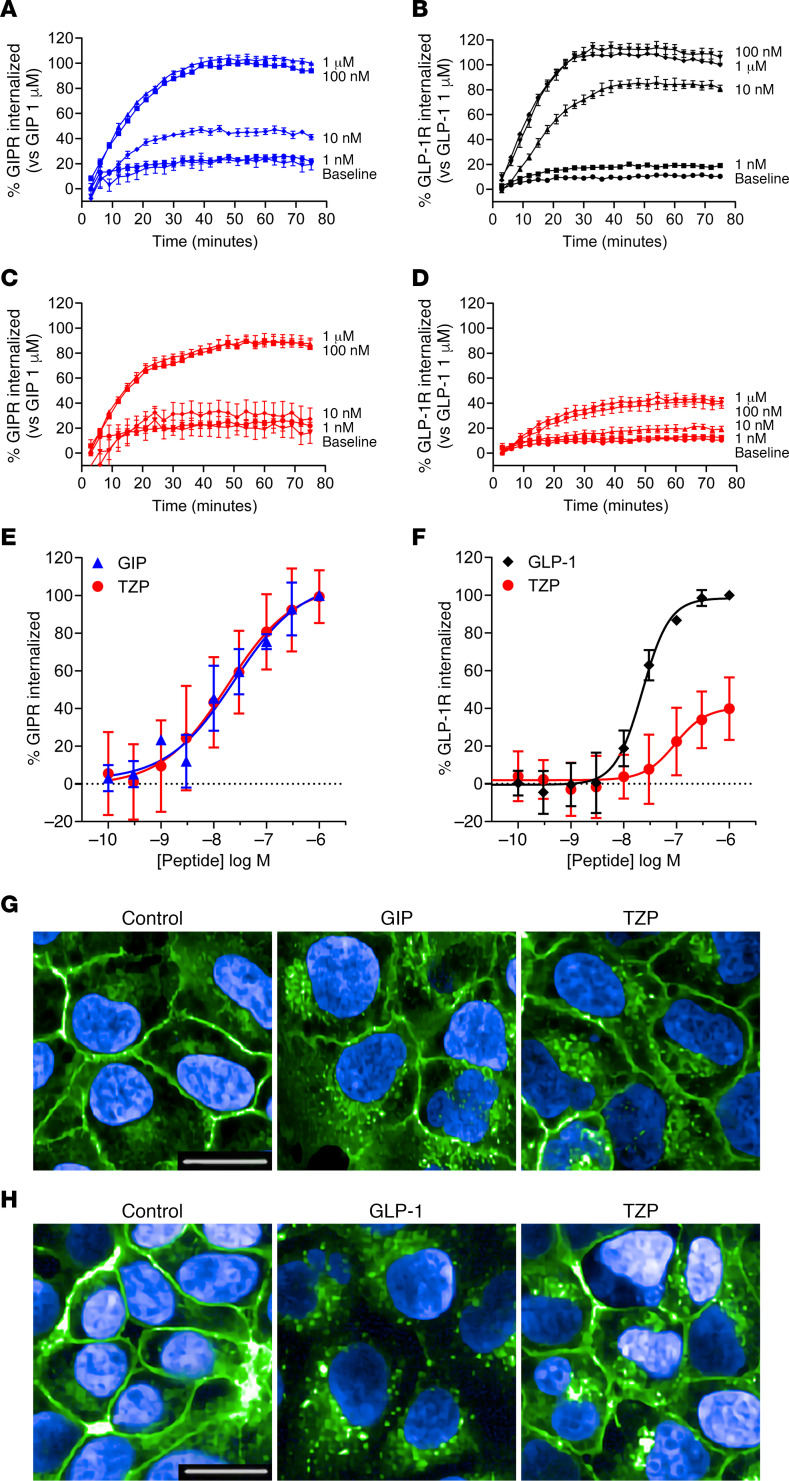
Figure 2. Tirzepatide (TZP) differentially induces internalization of the GIP and GLP-1 receptors.
(A–D) The time course of internalization of GIPR (A and C) and GLP-1R (B and D) was assessed using changes in cell surface presentation of SNAP-tagged receptors in HEK293A cells. Receptor internalization induced by increasing concentrations of GIP(1-42) (A), GLP-1(7-36) (B), or tirzepatide (C, GIPR; D, GLP-1R) over time relative to the maximum signal for either GIP(1-42) (1 μM) or GLP-1(7-36) (1 μM) is shown. (E–H) Studies using receptors containing an N-terminal HA-epitope tag and a C-terminal EGFP fusion are presented. (E) Changes in surface GIPR 60 minutes after treatment with ligand were measured by anti-HA immunofluorescence. Data are normalized to 1 μM GIP(1-42) values. For GIPR, tirzepatide induced internalization with an EC50 (SEM, n) of 18.1 nM (5.7, 4), while GIP(1-42) displayed a potency of 18.2 nM (9.7, 4). (G) Representative confocal images of HA-GIPR-EGFP cells detecting EGFP fluorescence following treatment with vehicle, 100 nM GIP(1-42), or 100 nM tirzepatide. (F) Changes in surface GLP-1R 30 minutes after treatment with ligand detected by anti-HA immunofluorescence. Data are normalized to 1 μM GLP-1(7-36) values. For GLP-1R, tirzepatide was partially efficacious at 43.6% (7.9, 3) with an EC50 of 101.9 nM (29.8, 3), while GLP-1(7-36) showed a potency of 22.2 nM (1.86, 3). (H) Representative confocal images of HA–GLP-1R–EGFP cells detecting EGFP fluorescence following treatment with vehicle, 100 nM GLP-1(7-36), or 100 nM tirzepatide. Scale bars: 20 μm.
Figure 3
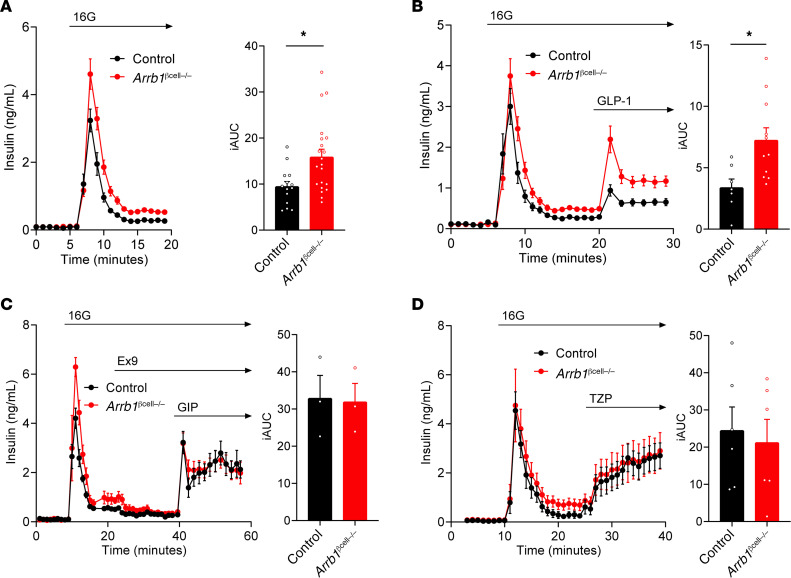
Figure 3. Deletion of β-arrestin1 in pancreatic β-cells increases GLP-1 receptor–activated insulin secretion.
Islets from littermate controls and Arrb1βcell–/– mice (male) were perifused ex vivo, and insulin secretion was measured in response to glucose (A), GLP-1 (B), GIP (C), or tirzepatide (TZP; D). Islets from Arrb1βcell–/– mice secreted more insulin compared with control islets in response to 16 mM glucose (A) and 300 pM GLP-1 (B). By contrast, insulin secretion was not different between the sets of islets in response to either 3 nM GIP (C) or 1 nM tirzepatide (D). Exendin-4(9–39) (Ex9; 1 μM) was used prior to GIP stimulation to normalize the elevated glucose stimulated insulin secretion. The integrated AUC (iAUC) was determined during the stimulation period: 6–19 minutes for 16 mM glucose (A), 20–29 minutes for GLP-1 (B), 40–58 minutes for GIP (C), and 24–39 minutes for tirzepatide (D). Each panel depicts results of a representative experiment from at least 2 independent experiments. *P<0.05, values are mean ± SEM. Statistical differences in iAUC values were determined by a 2-tailed student’s t test.

References

    1. Gignoux E, et al. Effect of Artesunate-Amodiaquine on Mortality Related to Ebola Virus Disease. N Engl J Med. 2016;374(1):23–32. doi: 10.1056/NEJMoa1504605. - DOI - PubMed
    1. Mahoney KM, Rennert PD, Freeman GJ. Combination cancer immunotherapy and new immunomodulatory targets. Nat Rev Drug Discov. 2015;14(8):561–584. doi: 10.1038/nrd4591. - DOI - PubMed
    1. Webster R, et al. Fixed Low-Dose Triple Combination Antihypertensive Medication vs Usual Care for Blood Pressure Control in Patients With Mild to Moderate Hypertension in Sri Lanka: A Randomized Clinical Trial. JAMA. 2018;320(6):566–579. doi: 10.1001/jama.2018.10359. - DOI - PMC - PubMed
    1. Phung OJ, Scholle JM, Talwar M, Coleman CI. Effect of noninsulin antidiabetic drugs added to metformin therapy on glycemic control, weight gain, and hypoglycemia in type 2 diabetes. JAMA. 2010;303(14):1410–1418. doi: 10.1001/jama.2010.405. - DOI - PubMed
    1. Ludvik B, et al. Dulaglutide as add-on therapy to SGLT2 inhibitors in patients with inadequately controlled type 2 diabetes (AWARD-10): a 24-week, randomised, double-blind, placebo-controlled trial. Lancet Diabetes Endocrinol. 2018;6(5):370–381. doi: 10.1016/S2213-8587(18)30023-8. - DOI - PubMed

Publication types