


Characterization of Different Commercial Dietary Supplements in the Peri-Weaning Period on Consumption and Growth Performance in C57Bl/6J Mice
- PMID: 32731440
- PMCID: PMC7460186
- DOI: 10.3390/ani10081284
Characterization of Different Commercial Dietary Supplements in the Peri-Weaning Period on Consumption and Growth Performance in C57Bl/6J Mice
Abstract
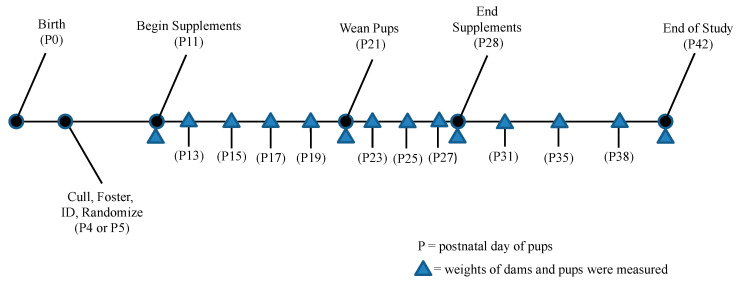
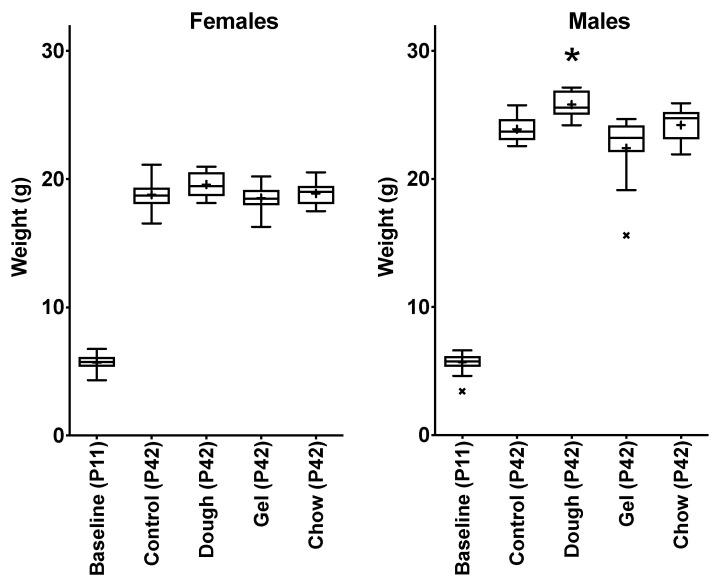
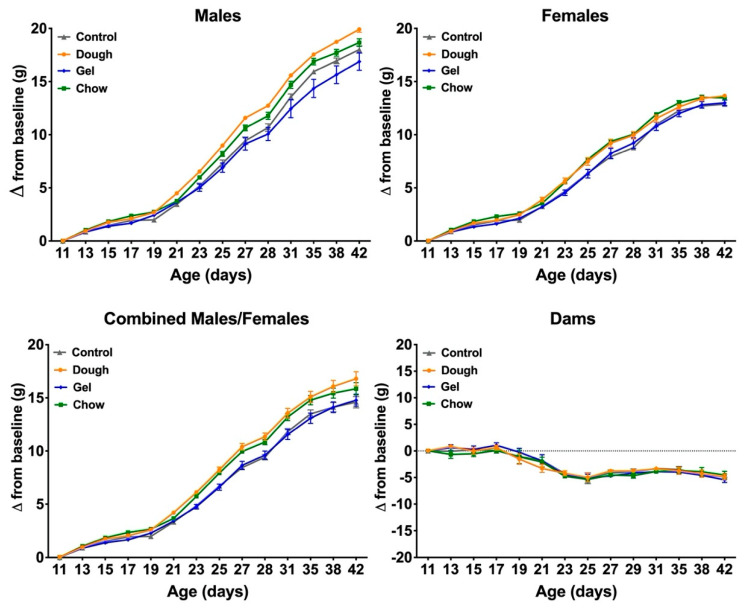
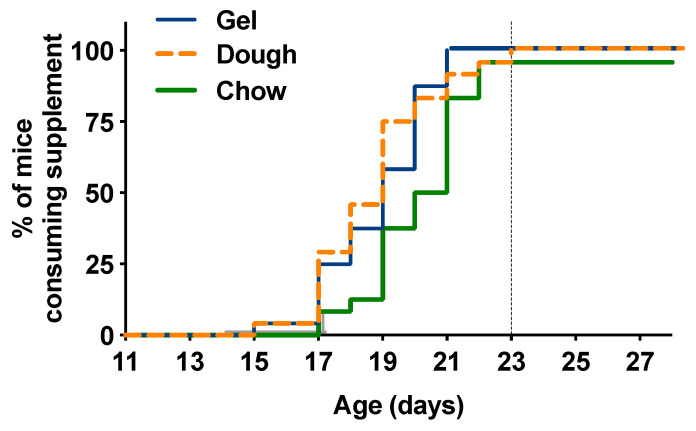
This experiment was conducted to investigate the effects of common commercially available dietary supplementation in the peri-weaning period on feed intake, growth, and survival in C57Bl/6J mouse pups and lactating dams. A total of 96 pups and their dams were randomized to the control group or one of three nutritional supplement treatment groups: (i) control group without supplementation, or (ii) weanling-targeted Clear H2O gel (Gel), (iii) transgenic-targeted Bio-Serv dough (Dough), or (iv) dam diet as a mash (Chow), in the peri-weaning period (from 11 to 28 days). Stool was observed daily for a dye marker indicating supplement consumption. Pups were weaned at 21 days and followed for a total of 42 days. No pup morbidity or mortality was observed. There was a higher proportion of pups consuming dough and gel earlier than chow (p = 0.0091). The majority of treated pups (>95%) were consuming the supplement by day 23 (range 15-23), suggesting interplay between organoleptic properties of the supplement and pup maturity. All groups gained weight, with typical sexual dimorphism observed in the growth curves. Dough treatment led to significantly higher average daily gain in male pups (0.64 ± 0.03 g/d) as compared with controls (0.58 ± 0.03 g/d). The highest average daily gain in all groups was observed pre-weaning between days 21 and 28. Compared with controls, the weight gain slope was significantly higher in the Dough and Chow treatment groups and lower in Gel treatment groups, with a more pronounced effect in males. In this study, the composition of nutritional supplementation was the dominant factor in increasing the growth trend as opposed to energy density. Peri-weaning supplementation with Dough and Chow treatments improved pre- and post-growth performance in a comparable way and was more effective than Gel treatment during adaptation to solid feeding. Proper application of supplements to support weanlings can directly improve welfare and limit unintended experimental variability.
Keywords: C57BL/6; growth performance; mice; nutrition; protein; pups; refinement.
Conflict of interest statement
The supplemental and standard diets used in this study were selected based on their advertised purpose at the time of the experiment and organoleptic properties. The authors report no conflict of interest and received no compensation from the makers of the products.
Figures
References
-
- Whary M.T., Baumgarth N., Fox J.G., Barthold S.W. Laboratory Animal Medicine. 3rd ed. Elsevier; Amsterdam, The Netherlands: 2015. Biology and Diseases of Mice; pp. 43–149.
LinkOut - more resources
Full Text Sources
