. 2020 Jul 17:2020:6939315.
doi: 10.1155/2020/6939315. eCollection 2020.

Extracorporeal Cardiopulmonary Resuscitation (ECPR) for Out-of-Hospital Cardiac Arrest due to Pulseless Ventricular Tachycardia/Fibrillation

Affiliations

Extracorporeal Cardiopulmonary Resuscitation (ECPR) for Out-of-Hospital Cardiac Arrest due to Pulseless Ventricular Tachycardia/Fibrillation

Konstantinos Dean Boudoulas et al. J Interv Cardiol. .

Abstract

Background: Survival rates for out-of-hospital cardiac arrest are very low and neurologic recovery is poor. Innovative strategies have been developed to improve outcomes. A collaborative extracorporeal cardiopulmonary resuscitation (ECPR) program for out-of-hospital refractory pulseless ventricular tachycardia (VT) and/or ventricular fibrillation (VF) has been developed between The Ohio State University Wexner Medical Center and Columbus Division of Fire.

Methods: From August 15, 2017, to June 1, 2019, there were 86 patients that were evaluated in the field for cardiac arrest in which 42 (49%) had refractory pulseless VT and/or VF resulting from different underlying pathologies and were placed on an automated cardiopulmonary resuscitation device; from these 42 patients, 16 (38%) met final inclusion criteria for ECPR and were placed on extracorporeal membrane oxygenation (ECMO) in the cardiac catheterization laboratory (CCL).

Results: From the 16 patients who underwent ECPR, 4 (25%) survived to hospital discharge with cerebral perfusion category 1 or 2. Survivors tended to be younger (48.0 ± 16.7 vs. 59.3 ± 12.7 years); however, this difference was not statistically significant (p=0.28) likely due to a small number of patients. Overall, 38% of patients underwent percutaneous coronary intervention (PCI). No significant difference was found between survivors and nonsurvivors in emergency medical services dispatch to CCL arrival time, lactate in CCL, coronary artery disease severity, undergoing PCI, and pre-ECMO PaO2, pH, and hemoglobin. Recovery was seen in different underlying pathologies.

Conclusion: ECPR for out-of-hospital refractory VT/VF cardiac arrest demonstrated encouraging outcomes. Younger patients may have a greater chance of survival, perhaps the need to be more aggressive in this subgroup of patients.


Conflict of interest statement

The authors declare that they have no conflicts of interest.

Figures
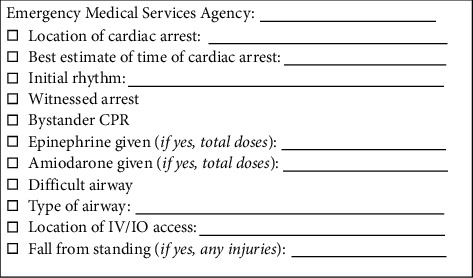
Figure 1
Figure 1
A handoff checklist used by the Columbus Division of Fire to assist in relaying pertinent information for patients being transferred from the field to our institution's cardiac catheterization laboratory as an extracorporeal cardiopulmonary resuscitation (ECPR) alert. CPR = cardiopulmonary resuscitation; IO = intraosseous; IV = intravenous.
Figure 2
Figure 2
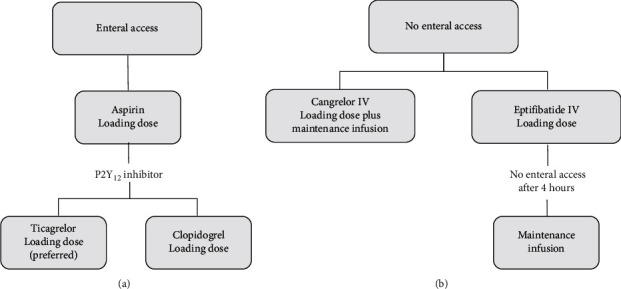
Algorithm for antiplatelet therapy for patients undergoing extracorporeal cardiopulmonary resuscitation (ECPR) and percutaneous coronary intervention based on the presence of (a) enteral access (e.g., nasogastric tube and oral gastric tube) or (b) no enteral access. IV = intravenous.
Figure 3
Figure 3
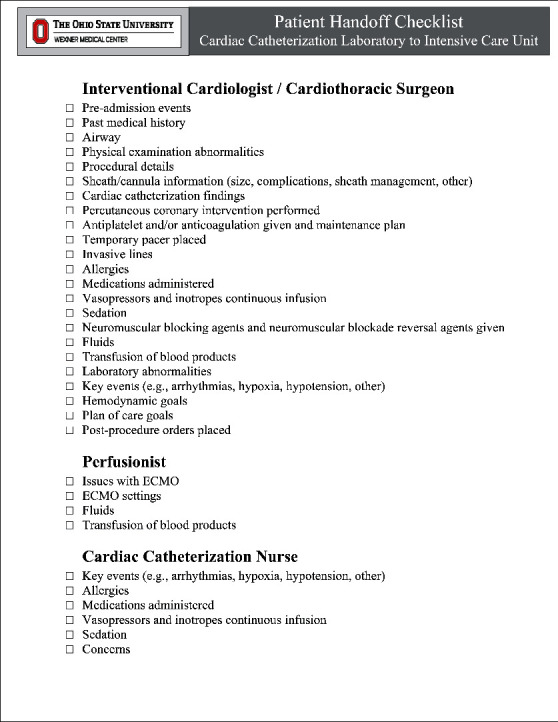
A handoff checklist used at our institution to assist in relaying pertinent information for extracorporeal cardiopulmonary resuscitation (ECPR) patients being transferred from the cardiac catheterization laboratory to the intensive care unit; ECMO = extracorporeal membrane oxygenation.
Figure 4
Figure 4
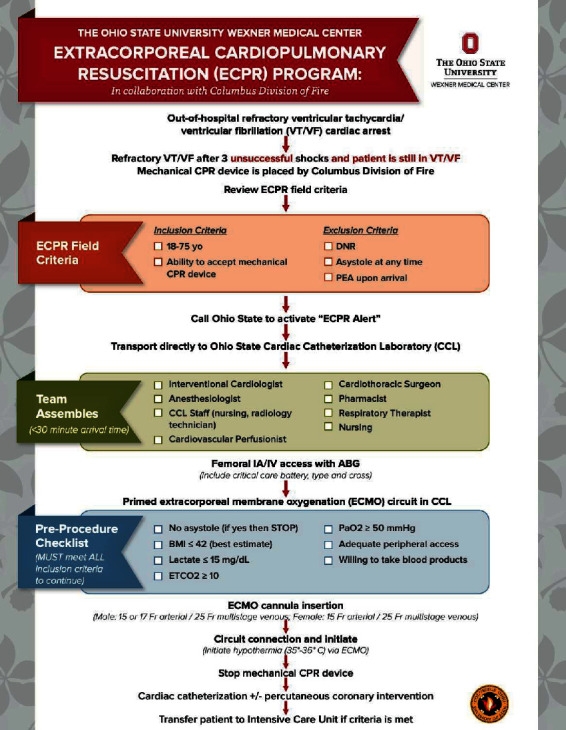
The Ohio State University Wexner Medical Center in collaboration with the Columbus Division of Fire extracorporeal cardiopulmonary resuscitation (ECPR) protocol for to out-of-hospital cardiac arrest due to refractory ventricular tachycardia and/or ventricular fibrillation. BMI = body mass index; CPR = cardiopulmonary resuscitation; DNR = do not resuscitate; ETCO2 = end-tidal carbon dioxide; IA = intra-arterial; IV = intravenous; PaO2 = partial pressure of oxygen; PEA = pulseless electrical activity.

References

    1. Mozaffarian D., Benjamin E. J., Go A. S., et al. Heart disease and stroke statistics-2016 update: a report from the American Heart Association. Circulation. 2016;133(4):447–454. doi: 10.1161/cir.0000000000000366. - DOI - PubMed
    1. Sasson C., Rogers M. A. M., Dahl J., Kellermann A. L. Predictors of survival from out-of-hospital cardiac arrest: a systematic review and meta-analysis. Circulation: Cardiovascular Quality and Outcomes. 2010;3(1):63–81. doi: 10.1161/circoutcomes.109.889576. - DOI - PubMed
    1. Vyas A., Chan P. S., Cram P., Nallamothu B. K., McNally B., Girotra S. Early coronary angiography and survival after out-of-hospital cardiac arrest. Circulation: Cardiovascular Interventions. 2015;8(10) doi: 10.1161/circinterventions.114.002321.e002321 - DOI - PMC - PubMed
    1. Tonna J. E., Selzman C. H., Mallin M. P., et al. Development and implementation of a comprehensive, multidisciplinary emergency department extracorporeal membrane oxygenation program. Annals of Emergency Medicine. 2017;70(1):32–40. doi: 10.1016/j.annemergmed.2016.10.001. - DOI - PubMed
    1. Haneya A., Philipp A., Diez C., et al. A 5-year experience with cardiopulmonary resuscitation using extracorporeal life support in non-postcardiotomy patients with cardiac arrest. Resuscitation. 2012;83(11):1331–1337. doi: 10.1016/j.resuscitation.2012.07.009. - DOI - PubMed

MeSH terms