


Light, Not Age, Underlies the Maladaptation of Maize and Miscanthus Photosynthesis to Self-Shading
- PMID: 32733493
- PMCID: PMC7358635
- DOI: 10.3389/fpls.2020.00783
Light, Not Age, Underlies the Maladaptation of Maize and Miscanthus Photosynthesis to Self-Shading
Abstract
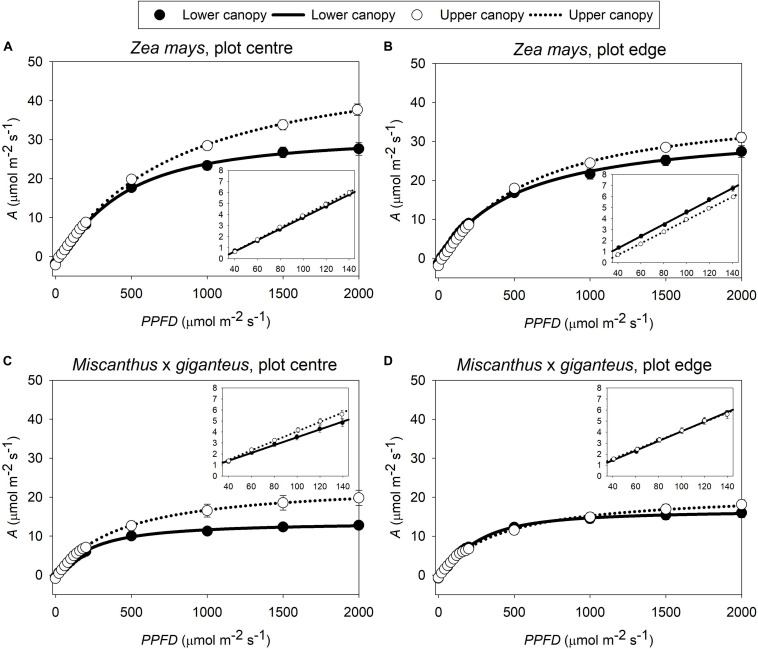
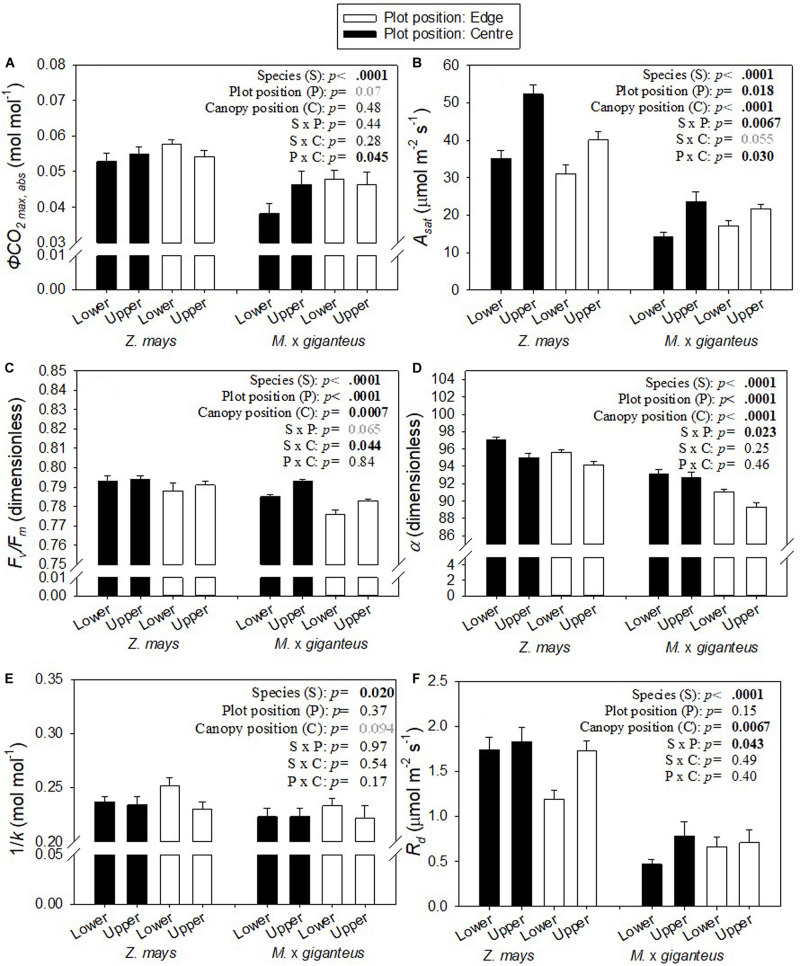
Zea mays and Miscanthus × giganteus use NADP-ME subtype C4 photosynthesis and are important food and biomass crops, respectively. Both crops are grown in dense stands where shaded leaves can contribute a significant proportion of overall canopy productivity. This is because shaded leaves, despite intercepting little light, typically process light energy very efficiently for photosynthesis, when compared to light-saturated leaves at the top of the canopy. However, an apparently maladaptive loss in photosynthetic light-use efficiency as leaves become shaded has been shown to reduce productivity in these two species. It is unclear whether this is due to leaf aging or progressive shading from leaves forming above. This was resolved here by analysing photosynthesis in leaves of the same chronological age in the centre and exposed southern edge of field plots of these crops. Photosynthetic light-response curves were used to assess maximum quantum yield of photosynthesis; the key measure of photosynthetic capacity of a leaf in shade. Compared to the upper canopy, maximum quantum yield of photosynthesis of lower canopy leaves was significantly reduced in the plot centre; but increased slightly at the plot edge. This indicates loss of efficiency of shaded leaves is due not to aging, but to the altered light environment of the lower canopy, i.e., reduced light intensity and/or altered spectral composition. This work expands knowledge of the cause of this maladaptive shade response, which limits productivity of some of the world's most important crops.
Keywords: C4 photosynthesis; bioenergy; canopy; food security; leaf aging; photosynthetic light-use efficiency; quantum yield; shade acclimation.
Copyright © 2020 Collison, Raven, Pignon and Long.
Figures
References
-
- Baker N. R., Long S. P., Ort D. R. (1988). Photosynthesis and temperature, with particular reference to effects on quantum yield. Symp. Soc. Exp. Biol. 42 347–375. - PubMed
-
- Boardman N. K. (1977). Comparative photosynthesis of sun and shade plants. Annu. Rev. Plant Physiol. 28 355–377. 10.1146/annurev.pp.28.060177.002035 - DOI
LinkOut - more resources
Full Text Sources
Miscellaneous
