


Genomic Diagnosis for Pediatric Disorders: Revolution and Evolution
- PMID: 32733828
- PMCID: PMC7360789
- DOI: 10.3389/fped.2020.00373
Genomic Diagnosis for Pediatric Disorders: Revolution and Evolution
Abstract
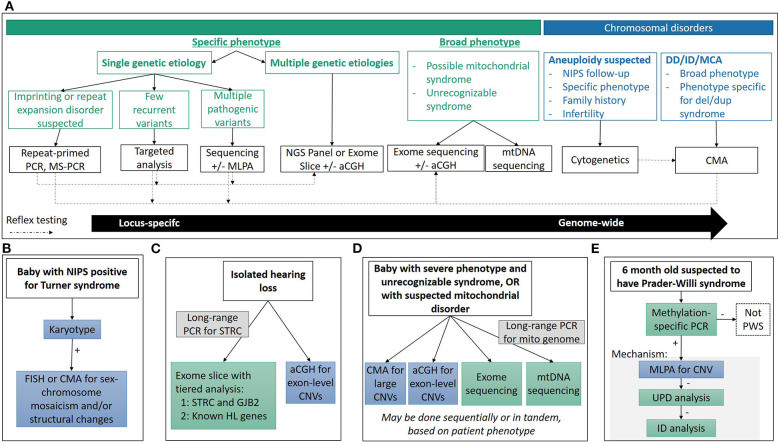
Powerful, recent advances in technologies to analyze the genome have had a profound impact on the practice of medical genetics, both in the laboratory and in the clinic. Increasing utilization of genome-wide testing such as chromosomal microarray analysis and exome sequencing have lead a shift toward a "genotype-first" approach. Numerous techniques are now available to diagnose a particular syndrome or phenotype, and while traditional techniques remain efficient tools in certain situations, higher-throughput technologies have become the de facto laboratory tool for diagnosis of most conditions. However, selecting the right assay or technology is challenging, and the wrong choice may lead to prolonged time to diagnosis, or even a missed diagnosis. In this review, we will discuss current core technologies for the diagnosis of classic genetic disorders to shed light on the benefits and disadvantages of these strategies, including diagnostic efficiency, variant interpretation, and secondary findings. Finally, we review upcoming technologies posed to impart further changes in the field of genetic diagnostics as we move toward "genome-first" practice.
Keywords: copy number variants; genetic syndromes; genetics; genomic diagnostics; next-generation sequencing; pediatrics; sequencing.
Copyright © 2020 Lalonde, Rentas, Lin, Dulik, Skraban and Spinner.
Figures
References
-
- Hsu T-C. Mammalian chromosomes in vitro: I. The karyotype of man. J Heredity. (1952) 43:167–72. 10.1093/oxfordjournals.jhered.a106296 - DOI
-
- Hsu T, Pomerat CM. Mammalian chromosomes in vitro: II. A method for spreading the chromosomes of cells in tissue culture. J Heredity. (1953) 44:23–30. 10.1093/oxfordjournals.jhered.a106344 - DOI
-
- Tjio JH, Levan A. The chromosome number of man. Hereditas. (1956) 42:1–6. 10.1111/j.1601-5223.1956.tb03010.x - DOI
-
- Lejeune J. Etude des chromosomes somatiques de neuf enfants mongoliens. CR Acad Sci. (1959) 248:1721–2. - PubMed
Publication types
LinkOut - more resources
Full Text Sources
