


Immune-mediated neurological syndromes in SARS-CoV-2-infected patients
- PMID: 32734353
- PMCID: PMC7391231
- DOI: 10.1007/s00415-020-10108-x
Immune-mediated neurological syndromes in SARS-CoV-2-infected patients
Abstract
Background: Evidence of immune-mediated neurological syndromes associated with the severe acute respiratory syndrome coronavirus (SARS-CoV-2) infection is limited. We therefore investigated clinical, serological and CSF features of coronavirus disease 2019 (COVID-19) patients with neurological manifestations.
Methods: Consecutive COVID-19 patients with neurological manifestations other than isolated anosmia and/or non-severe headache, and with no previous neurological or psychiatric disorders were prospectively included. Neurological examination was performed in all patients and lumbar puncture with CSF examination was performed when not contraindicated. Serum anti-gangliosides antibodies were tested when clinically indicated.
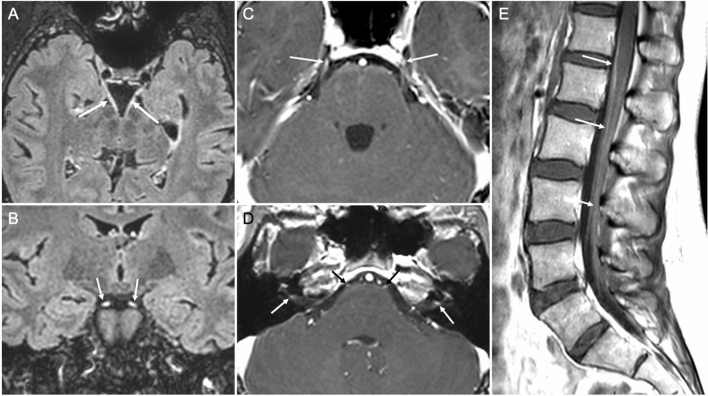
Results: Of the 349 COVID-19 admitted to our center between March 23rd and April 24th 2020, 15 patients (4.3%) had neurological manifestations and fulfilled the study inclusion/exclusion criteria. CSF examination was available in 13 patients and showed lymphocytic pleocytosis in 2 patients: 1 with anti-contactin-associated protein 2 (anti-Caspr2) antibody encephalitis and 1 with meningo-polyradiculitis. Increased serum titer of anti-GD1b antibodies was found in three patients and was associated with variable clinical presentations, including cranial neuropathy with meningo-polyradiculitis, brainstem encephalitis and delirium. CSF PCR for SARS-CoV-2 was negative in all patients.
Conclusions: In SARS-Cov-2 infected patients with neurological manifestations, CSF pleocytosis is associated with para- or post-infectious encephalitis and polyradiculitis. Anti-GD1b and anti-Caspr2 autoantibodies can be identified in certain cases, raising the question of SARS-CoV-2-induced secondary autoimmunity.
Keywords: Anti-GD1b; Cerebrospinal fluid; Encephalitis; SARS-CoV-2.
Conflict of interest statement
The authors declare that they have no conflicts of interest.
Figures
References
-
- Pilotto A, Odolini S, Stefano Masciocchi S, Comelli A, Volonghi I, Gazzina S, Nocivelli S, Pezzini A, Foca E, Caruso A, Leonardi M, Pasolini MP, Roberto Gasparotti R, Francesco Castelli F, Ashton NJ, Blennow K, Zetterberg H, Padovani A. Steroid-responsive encephalitis in Covid-19 disease. Ann Neurol. 2020 doi: 10.1002/ana.25783. - DOI - PMC - PubMed
-
- Moriguchi T, Harii N, Goto J, Harada D, Sugawara H, Takamino J, Ueno M, Sakata H, Kondo K, Myose N, Nakao A, Takeda M, Haro H, Inoue O, Suzuki-Inoue K, Kubokawa K, Ogihara S, Sasaki T, Kinouchi H, Kojin H, Ito M, Onishi H, Shimizu T, Sasaki Y, Enomoto N, Ishihara H, Furuya S, Yamamoto T, Shimada S. A first case of meningitis/encephalitis associated with SARS-Coronavirus-2. Int J Infect Dis. 2020;94:55–58. doi: 10.1016/j.ijid.2020.03.062. - DOI - PMC - PubMed
MeSH terms
Substances
LinkOut - more resources
Full Text Sources
Medical
Miscellaneous
