. 2021 Jul;11(6):966-974.
doi: 10.1177/2192568220947744. Epub 2020 Jul 31.

The Virtual Spine Examination: Telemedicine in the Era of COVID-19 and Beyond

Affiliations

The Virtual Spine Examination: Telemedicine in the Era of COVID-19 and Beyond

Alexander M Satin et al. Global Spine J. 2021 Jul.

Abstract

Study design: Narrative review.

Objectives: Describe a comprehensive spine telemedicine examination.

Methods: We discuss telemedicine examination techniques for commonly encountered spine conditions.

Results: Techniques to evaluate gait, the cervical spine, the lumbar spine, adult spinal deformity patients, and adolescent scoliosis patients via telemedicine are described. We review limitations of the spine telemedicine examination and discuss special considerations such as patient safety and criteria for in-person assessment.

Conclusions: While there are limitations to the spine telemedicine examination, unique strategies exist to provide important information to the examiner. Efforts have already been undertaken to validate and expand the capabilities of the spine telemedicine examination.

Keywords: COVID-19; telemedicine; virtual spine examination.


Conflict of interest statement

Declaration of Conflicting Interests: The author(s) declared no potential conflicts of interest with respect to the research, authorship, and/or publication of this article.

Figures

Figure 1.
Figure 1.
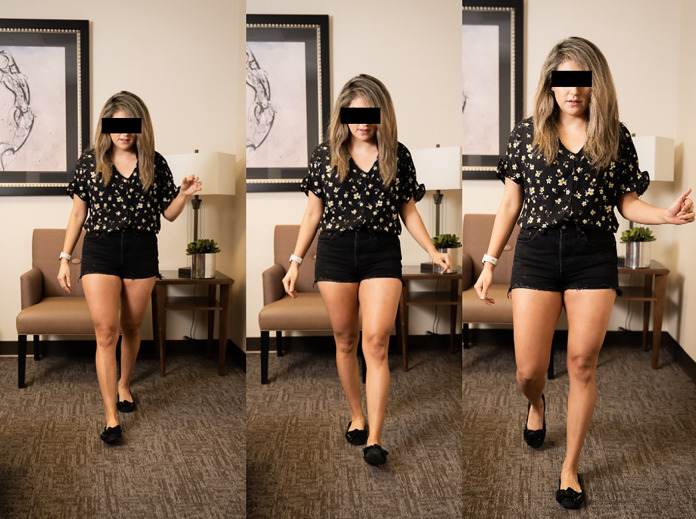
Gait examination. After repositioning their camera, the patient is instructed to ambulate. Ideally, the patient’s entire body will be visualized and allow for assessment of balance, posture, and gait pattern.
Figure 2.
Figure 2.
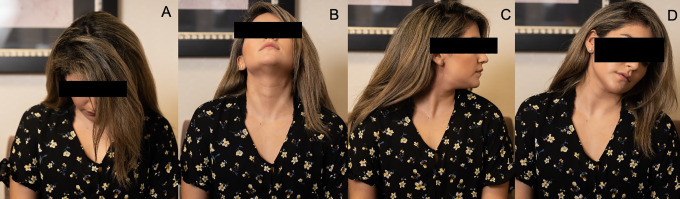
The nature of the telemedicine exam facilitates evaluation of head and neck motion. The patient is instructed to complete neck flexion (A), extension (B), and left and right rotation (C). The patient is instructed to complete an extension with lateral bending maneuver (D) if there is concern for an ipsilateral cervical radiculopathy.
Figure 3.
Figure 3.
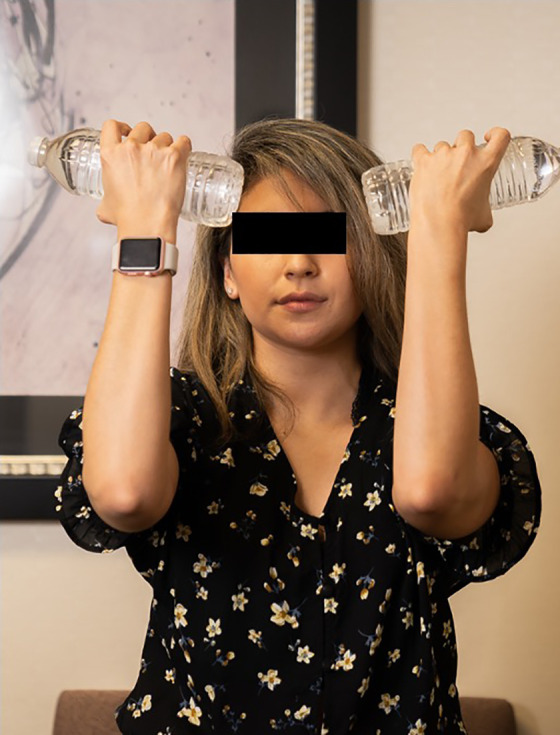
Upper extremity strength can be assessed beyond gravity using simple household objects. The patient is instructed to “curl” the object with both the right and left arm to assess strength and stamina differences of the biceps.
Figure 4.
Figure 4.
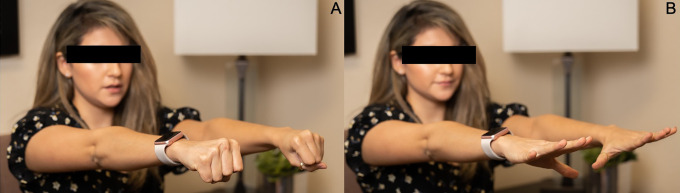
The grip-and-release test is a quantifiable test for myelopathy. Myelopathic patients are unable to make a fist (A) and release it (B) 20 times in 10 seconds.
Figure 5.
Figure 5.
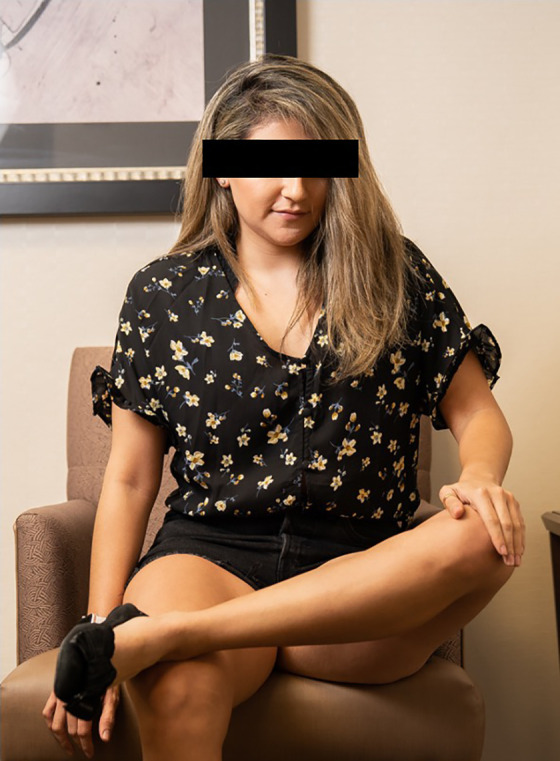
Seated FABER examination for sacroiliac joint (SIJ) pain. The patient is instructed to flex, abduct, and externally (FABER) rotate the hip on the affected side.
Figure 6.
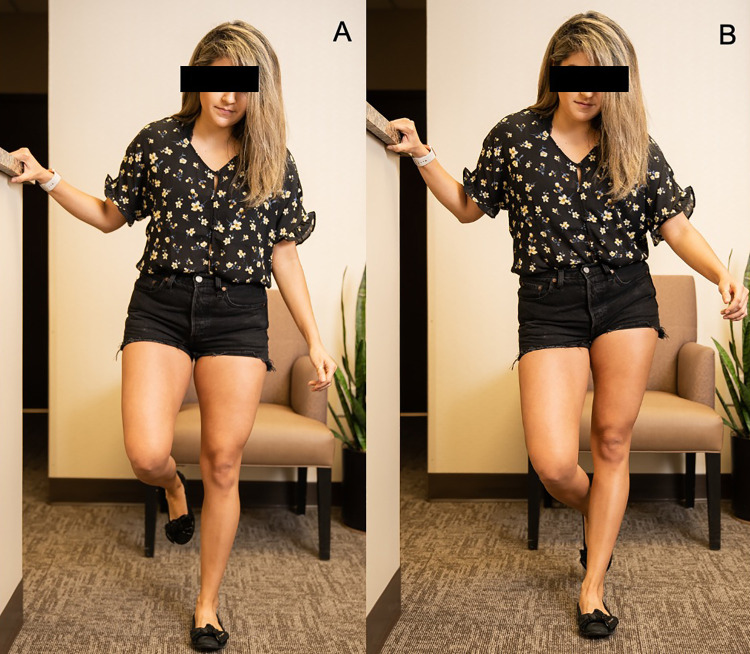
Figure 6.
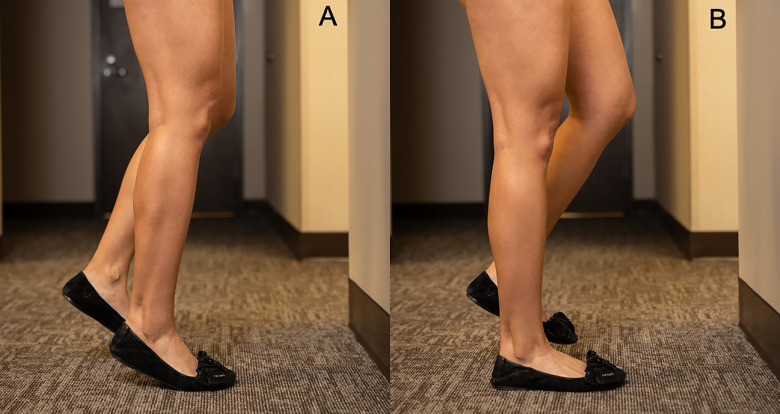
Drop test for sacroiliac joint (SIJ) pain. While standing and bracing the wall, the patient is instructed to raise the heel on the affected side bearing near fully body weight (A). Next, the patient forcefully drops their heel to the floor while keeping the knee extended (B).
Figure 7.
Figure 7.
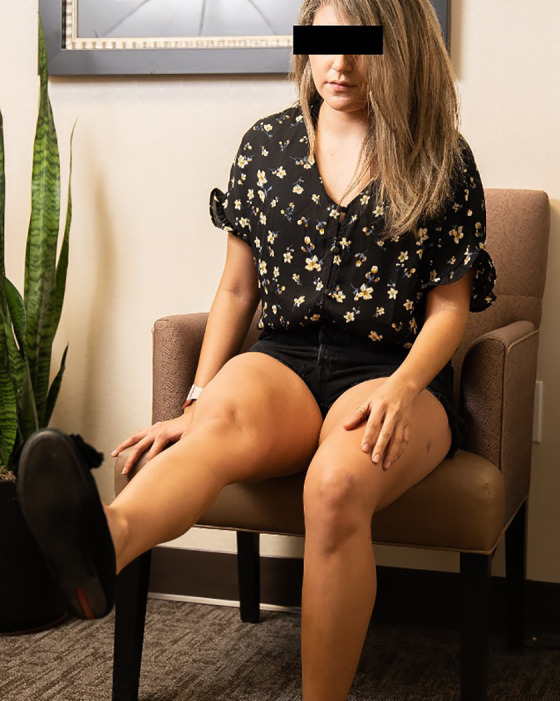
Seated straight leg raise (SLR) can be performed in patients with suspected lumbar radiculopathy. While seated, the patient is instructed to extend their knee joint.
Figure 8.
Figure 8.
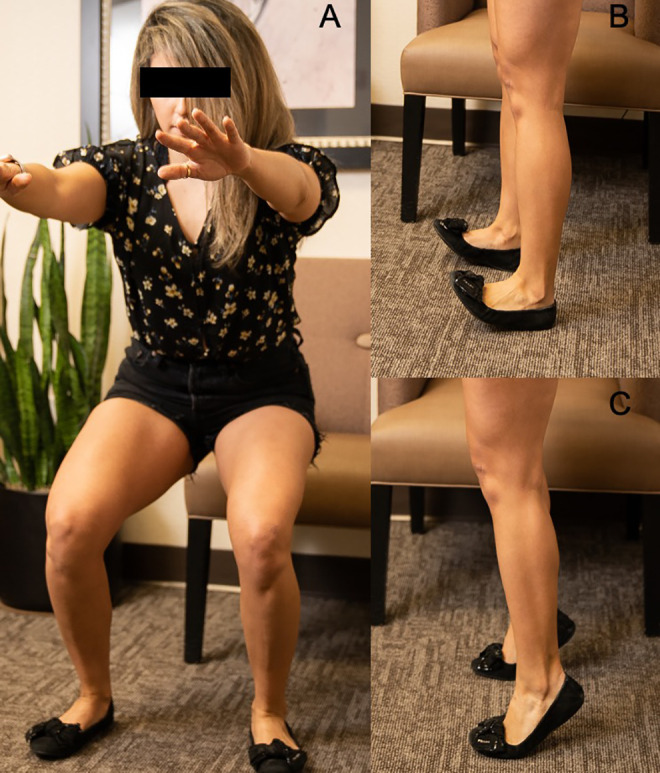
Squats (A), heel-walking (B), and toe-walking (C) can be used to further test lower extremity myotomes.
Figure 9.
Figure 9.
Modified Trendelenburg test for hip abductor strength. The patient stands perpendicular to a table or chair for support. The inside leg is lifted to test the outside hip abductors. Patients with normal hip abductor strength will be able to support the inside hemipelvis (A). Abnormal hip abductor strength will result in contralateral (inside) hemipelvis dipping (B).

References

    1. Jain NS, Alluri RK, Schopler SS, Hah R, Wang JC. COVID-19 and spine surgery: a review and evolving recommendations. Global Spine J. 2020;10:528–533. - PMC - PubMed
    1. Sarpong NO, Forrester LA, Levine WN. What’s important: redeployment of the orthopaedic surgeon during the COVID-19 pandemic: perspectives from the trenches. J Bone Joint Surg Am. 2020;102:1019–1021. - PMC - PubMed
    1. Vannabouathong C, Devji T, Ekhtiari S, et al. Novel coronavirus COVID-19: current evidence and evolving strategies. J Bone Joint Surg Am. 2020;102:734–744. - PMC - PubMed
    1. Liang ZC, Wang W, Murphy D, Hui JHP. Novel coronavirus and orthopaedic surgery: early experiences from Singapore. J Bone Joint Surg Am. 2020;102:745–749. - PMC - PubMed
    1. Halawi MJ, Wang DD, Hunt TR, 3rd. What’s important: weathering the COVID-19 crisis: time for leadership, vigilance, and unity. J Bone Joint Surg Am. 2020;102:759–760. - PMC - PubMed