


Listeria spondylodiscitis: an uncommon etiology of a common condition; a case report
- PMID: 32736610
- PMCID: PMC7395412
- DOI: 10.1186/s12879-020-05286-y
Listeria spondylodiscitis: an uncommon etiology of a common condition; a case report
Abstract
Background: Listeriosis is a severe food-borne infection caused by the Gram-positive rod, Listeria monocytogenes. Despite the low incidence (3-8 cases per million), Listeriosis has a case fatality rate of 20-30% as it occurs predominantly in immunocompromised individuals at extremes of age, diabetics and pregnant women. Listeriosis classically presents as a febrile gastroenteritis, isolated bacteremia, meningitis, or maternal-fetal infections. Focal bone and joint infection are rare and primarily involve orthopedic implant devices. Here, we present the first case of Listeria-associated spondylodiscitis.
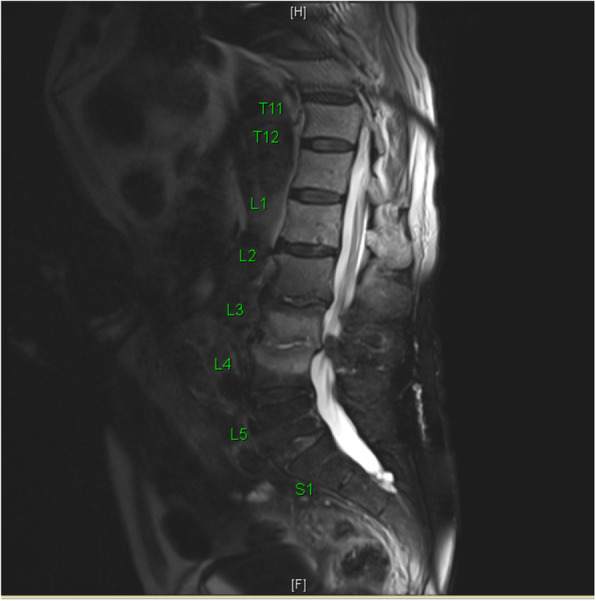
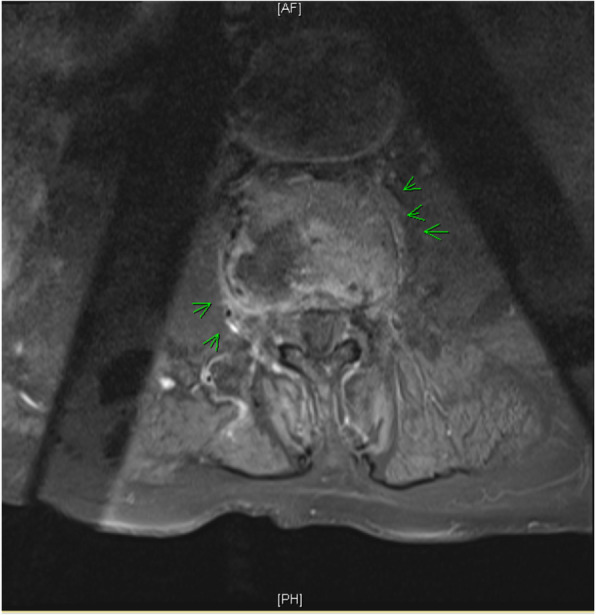
Case presentation: A 79-year-old male presents with acute-on-chronic back pain in the absence of risk factors or exposures, aside from age. On radiological imaging, spondylodiscitis of L3-L4 was diagnosed. Subsequently, a CT-guided biopsy was performed to aid in confirming microbiological aetiology. Listeria monocytogenes was grown in culture and patient received appropriate antibacterial therapy.
Conclusion: The case highlights the utility of image-guided tissue sampling in aiding diagnosis and management in patients with vertebral osteomyelitis. It also encourages consideration of uncommon organisms such as Listeria as an etiology of vertebral osteomyelitis, even in the absence of prosthetic implants.
Keywords: Bone & joint infection; Case report; Listeria; Listeriosis; Spondylodiscitis.
Conflict of interest statement
The authors declare that they have no competing interests.
Figures
References
-
- CDC . National Center for Emerging and Zoonotic Infectious Diseases. National Enteric Disease Surveillance:The Listeria Initiative. 2016. pp. 1–2.
Publication types
MeSH terms
Substances
LinkOut - more resources
Full Text Sources
Medical
