


The current landscape of pre-exposure prophylaxis service delivery models for HIV prevention: a scoping review
- PMID: 32736626
- PMCID: PMC7395423
- DOI: 10.1186/s12913-020-05568-w
The current landscape of pre-exposure prophylaxis service delivery models for HIV prevention: a scoping review
Abstract
Background: Strengthening HIV prevention is imperative given the continued high HIV incidence worldwide. The introduction of oral PrEP as a new biomedical HIV prevention tool can be a potential game changer because of its high clinical efficacy and the feasibility of its provision to different key populations. Documenting the existing experience with PrEP service delivery in a variety of real-world settings will inform how its uptake and usage can be maximised.
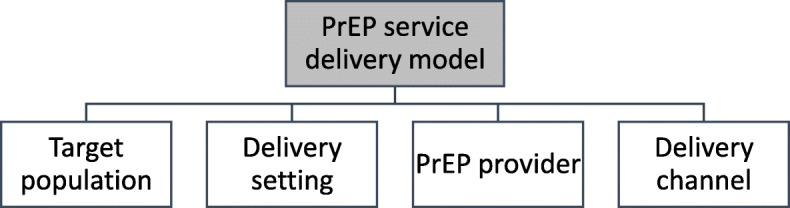
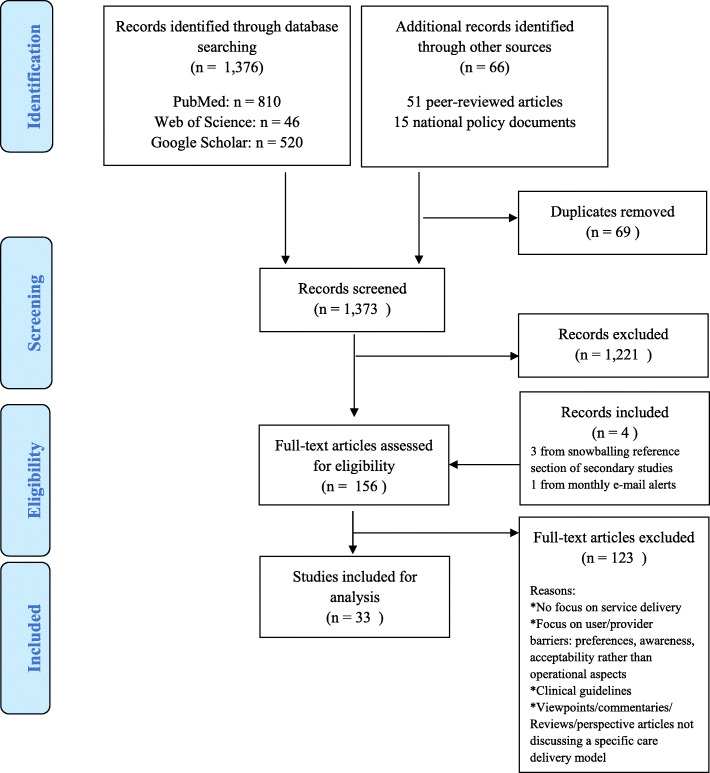
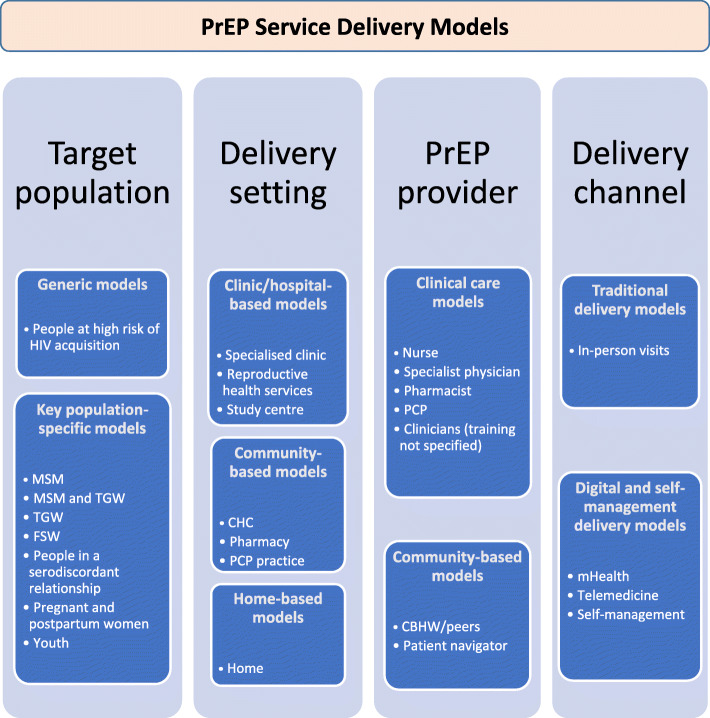
Methods: We conducted a scoping review using the five-step framework provided by Arksey and O'Malley. We systematically searched the existing peer-reviewed international and grey literature describing the implementation of real-world PrEP service delivery models reporting on four key components: the target population of PrEP services, the setting where PrEP was delivered, PrEP providers' professionalisation and PrEP delivery channels. We restricted our search to English language articles. No geographical or time restrictions were set.
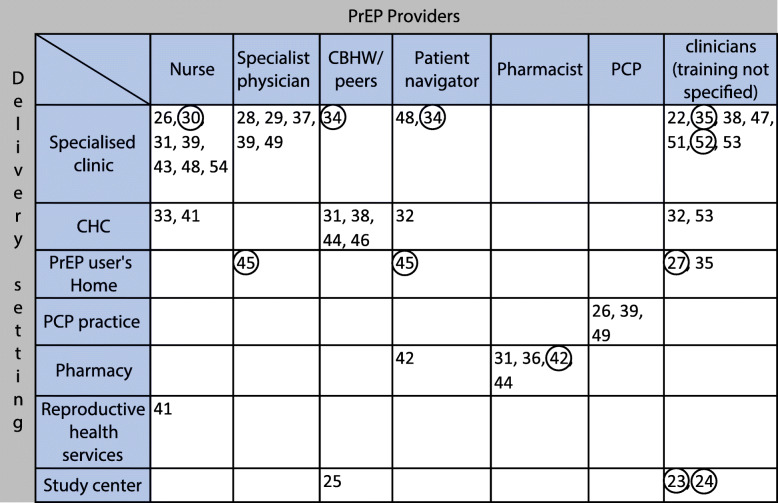
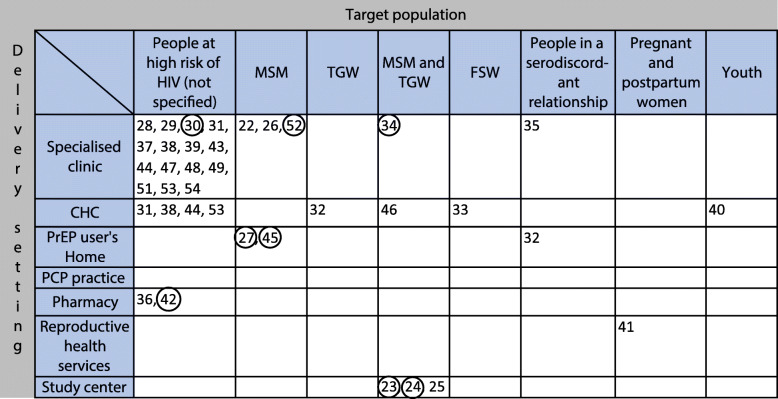
Results: This review included 33 articles for charting and analysing of the results. The identified service delivery models showed that PrEP services mainly targeted people at high risk of HIV acquisition, with some models targeting specific key populations, mainly men who have sex with men. PrEP was often delivered centralised and in a clinical or hospital setting. Yet also community-based as well as home-based PrEP delivery models were reported. Providers of PrEP were mainly clinically trained health professionals, but in some rare cases community workers and lay providers also delivered PrEP. In general, in-person visits were used to deliver PrEP. More innovative digital options using mHealth and telemedicine approaches to deliver specific parts of PrEP services are currently being applied in a minority of the service delivery models in mainly high-resource settings.
Conclusions: A range of possible combinations was found between all four components of PrEP service delivery models. This reflects differentiation of care according to different contextual settings. More research is needed on how integration of services in these contexts could be expanded and optimised to respond to key populations with unmet HIV prevention needs in different settings.
Keywords: Delivery of health care; HIV prevention; Health care providers; MSM; PrEP; Sexual health.
Conflict of interest statement
TR, CN, ML and BV received study drug donations from Gilead Science for a Belgian PrEP demonstration study (i.e. “Be-PrEP-ared”), outside the submitted manuscript. There are no other conflicting interests to declare.
Figures
References
-
- Dadonaite B. Antiretroviral therapy has saved millions of lives from AIDS and could save more. Our World In Data. 2019.
-
- Joint United Nations Programme on HIV and AIDS . UNAIDS 2019 Data UNAIDS. 2019.
-
- Joint United Nations Programme on HIV and AIDS. Understanding Fast Track: Accelerating Action to End the AIDS Epidemic by 2030: UNAIDS; Geneva; 2015. https://www.unaids.org/sites/default/files/media_asset/201506_JC2743_Und.... Accessed 28 Mar 2020.
Publication types
MeSH terms
Substances
Grants and funding
LinkOut - more resources
Full Text Sources
Medical
Miscellaneous
