


Impaired Succinate Response to a Mixed Meal in Obesity and Type 2 Diabetes Is Normalized After Metabolic Surgery
- PMID: 32737141
- PMCID: PMC7510048
- DOI: 10.2337/dc20-0460
Impaired Succinate Response to a Mixed Meal in Obesity and Type 2 Diabetes Is Normalized After Metabolic Surgery
Abstract
Objective: To explore the meal response of circulating succinate in patients with obesity and type 2 diabetes undergoing bariatric surgery and to examine the role of gastrointestinal glucose sensing in succinate dynamics in healthy subjects.
Research design and methods: Cohort I comprised 45 patients with morbid obesity and type 2 diabetes (BMI 39.4 ± 1.9 kg/m2) undergoing metabolic surgery. Cohort II was a confirmatory cohort of 13 patients (BMI 39.3 ± 1.4 kg/m2) undergoing gastric bypass surgery. Cohort III comprised 15 healthy subjects (BMI 26.4 ± 0.5 kg/m2). Cohorts I and II completed a 2-h mixed-meal tolerance test (MTT) before the intervention and at 1 year of follow-up, and cohort II also completed a 3-h lipid test (LT). Cohort III underwent a 3-h oral glucose tolerance test (OGTT) and an isoglycemic intravenous glucose infusion (IIGI) study.
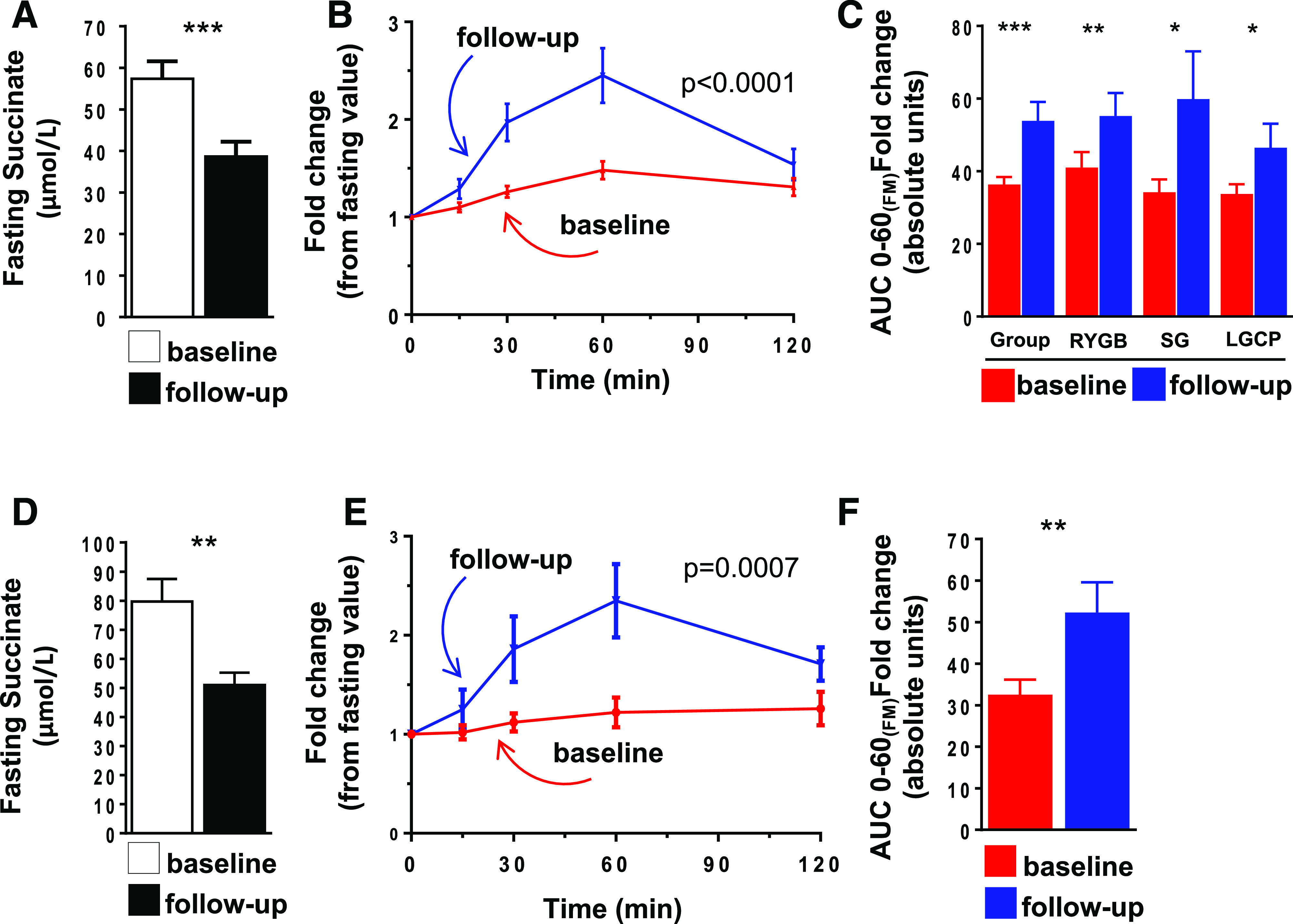
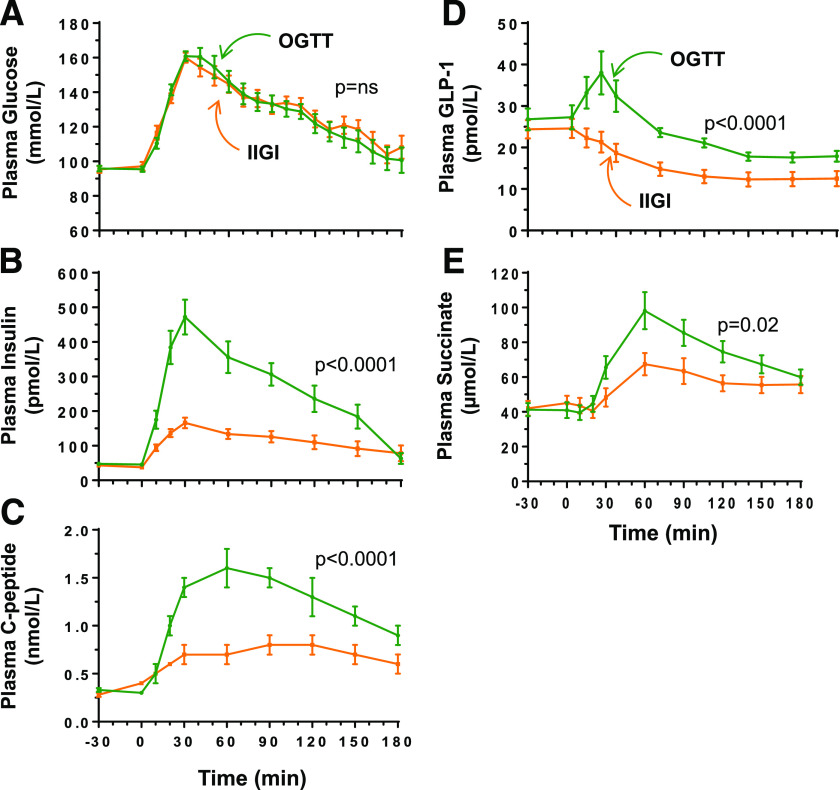
Results: In cohort I, succinate response to MTT at follow-up was greater than before the intervention (P < 0.0001). This response was confirmed in cohort II with a greater increase after 1 year of surgery (P = 0.009). By contrast, LT did not elicit a succinate response. Changes in succinate response were associated with changes in the area under the curve of glucose (r = 0.417, P < 0.0001) and insulin (r = 0.204, P = 0.002). In cohort III, glycemia, per se, stimulated a plasma succinate response (P = 0.0004), but its response was greater in the OGTT (P = 0.02; OGTT versus IIGI).
Conclusions: The meal-related response of circulating succinate in patients with obesity and type 2 diabetes is recovered after metabolic surgery.
© 2020 by the American Diabetes Association.
Figures
References
Publication types
MeSH terms
Substances
Associated data
LinkOut - more resources
Full Text Sources
Medical
